

What decades of teaching movement — from young children to adults in their late 80s — have taught me about learning, memory, patience and the art of coaching older adults.
There is a situation I have experienced countless times while coaching older adults.
I introduce a movement. I demonstrate it, explain it and guide the client through the different steps.
Initially, they struggle. Sometimes what they do looks completely different from what I demonstrated.
I make a few corrections. We practise again.
Gradually, things improve.
By the end of the session, the client is performing the movement reasonably well. They seem to understand what they are doing, and I feel satisfied with the progress.
Two or three days later, they return.
I ask them to repeat the same movement.
And sometimes something extraordinary happens.
They look at me as if they have never seen it before.
Or they attempt it and perform something almost unrecognisable.
The movement we spent so much time learning has apparently disappeared.
For a coach who is not familiar with this situation, it can be incredibly frustrating.
But imagine how frustrating it can be for the client.
They may begin to think:
"Why can't I remember?"
"What's wrong with me?"
"Why does everyone else seem to learn faster?"
"Am I becoming too old to do this?"
And this is where I believe one of the most important responsibilities of a movement coach begins.
We must understand not only how to teach movement, but how the person in front of us is actually learning it.
From Three to Eighty-Nine: A Different Perspective on Movement Education

I have spent around four decades teaching physical activity and movement.
My professional experience includes teaching children as young as three and working with adults up to 89 years old — an age difference of 86 years.
In 2014, I began working more regularly with older adults. One of my first clients in this age group was 69.
Over the following years, particularly through the development of Empowered Ageing, I began noticing important differences in the way some older clients responded to movement instruction.
Many had spent most of their adult lives doing very little structured physical activity.
Some had never learned to coordinate their body through complex movements.
Others had exercised occasionally but had spent decades performing a limited range of familiar activities.
This matters enormously.
Because when I introduce a new movement, I am not simply asking someone to move their arms or legs.
I may be asking them to develop physical awareness, interpret information, coordinate unfamiliar actions, manage their balance, remember a sequence and overcome years of uncertainty about their own abilities.
All at the same time.
Of course, ageing affects people differently. Some adults in their 70s and 80s are excellent learners, particularly when they have maintained an active and varied movement life.
Others require much more time, repetition and support.
My experience has taught me that chronological age alone tells us very little about how effectively someone will learn a new physical skill.
Their movement history matters just as much.
The Missing Connection Between Understanding and Doing

One of the most fascinating things I observe is the difference between what a client thinks they are doing and what their body is actually doing.
Imagine I demonstrate a particular posture.
The client watches carefully.
I explain how to position the hands, shoulders, pelvis and legs.
They nod.
They seem to understand.
Then they attempt the movement.
And their body produces something completely different.
I correct one component. They improve it.
But when they repeat the movement, the same mistake returns.
Sometimes I can correct the same detail several times within a single session.
This is not necessarily a problem of intelligence, willingness or concentration.
Understanding a verbal instruction is not the same as possessing the movement skills required to execute it.
There are several processes involved.
The person must observe the demonstration, interpret what they are seeing, translate that information into a motor plan, organise the necessary muscular actions and use sensory feedback to evaluate the result.
They must also possess sufficient mobility, strength, coordination and body awareness to produce the intended movement.
A difficulty at any stage can affect the final result.
The client may genuinely believe they are doing what I asked.
But their movement tells a different story.
This has taught me something essential:
As coaches, we cannot assume that because someone understands our explanation, their body is ready to reproduce it.
Our role is to observe the difference between intention and execution, identify what is limiting performance and adapt the teaching process.
Sometimes the answer is a different demonstration.
Sometimes it is a simpler instruction.
Sometimes we need to change the physical demands of the movement.
And sometimes we simply need more practice.
Learning During a Session Is Not the Same as Remembering Next Week

This is perhaps one of the biggest lessons I have learned while working with older adults.
A client can perform a movement successfully today without having consolidated it sufficiently to reproduce it several days later.
There is a difference between temporary performance and lasting learning.
When we work with children and younger adults, we may often see relatively rapid progress in familiar or age-appropriate movement tasks.
In my experience, two sessions per week have frequently been enough for these students to develop and retain a considerable range of skills.
With some of my older clients, particularly those with little previous movement experience, the situation can be very different.
Two weekly sessions may produce meaningful improvements in physical fitness, but they may not provide enough practice to consolidate a large number of unfamiliar, complex movement patterns.
During a session, the client might perform a new skill only two or three times.
When they return several days later, much of what we introduced may need to be revisited.
This does not mean that older adults cannot learn.
They absolutely can.
But it means we must understand the relationship between practice, memory, task complexity and the time between learning opportunities.
A movement performed successfully once is not necessarily a movement that has been learned permanently.
Why Complex Movements Are Especially Challenging

At Empowered Ageing, I use what I describe as an Integrative Training System.
Rather than relying exclusively on conventional gym exercises, we explore a wide range of movement experiences.
These include Animal Flow training system, Body Expression, Dance, floor transitions, balance and coordination exercises, reaction games, safe landing skills, martial-arts-inspired activities and other playful movement challenges.
One of our objectives is to help people recover or develop the ability to move their body as an integrated whole.
Think about a child playing on the ground.
The child may roll, crawl, squat, reach, push, pull, balance, twist, climb and stand up repeatedly.
They are not consciously thinking about isolating their quadriceps or performing ten repetitions of a biceps curl.
They are exploring movement.
Their muscles, joints, sensory systems, nervous system and cardiovascular system work together to solve physical challenges.
This kind of movement integration is central to the Empowered Ageing approach.
But it also creates an educational challenge.
The person sits down, positions their legs and extends their knees against resistance.
Once the machine is correctly adjusted and the technique understood, the movement pattern is relatively straightforward to repeat.
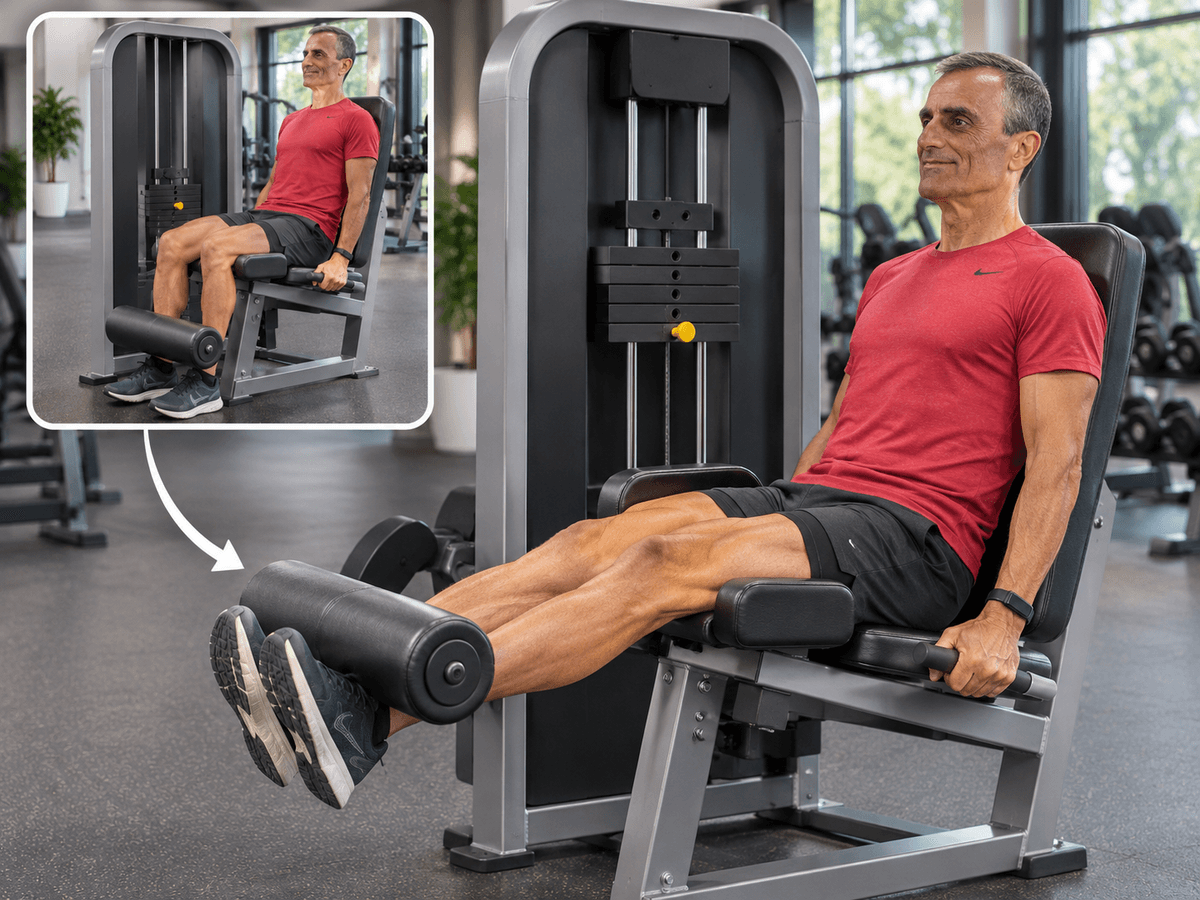
The same applies to many guided resistance exercises.
These exercises can be extremely valuable, particularly for improving strength, rebuilding confidence and working within physical limitations.
I am not suggesting that machines or simpler exercises are inferior.
They have an important place in physical training.
However, learning a movement sequence involving several positions, changes of direction, body-weight transfers and transitions requires a different level of motor organisation.
Imagine asking someone to move from standing into a plank, perform a controlled floor transition, roll, return to a supported position and eventually stand again.
Now add changes in direction, timing and coordination.
The task becomes considerably more demanding.
And because these movements may require significant strength, mobility, control and concentration, we cannot always practise them through large numbers of continuous repetitions.
Sometimes the full movement is performed only two or three times during a session.
This creates a challenge: the more complex the movement, the more opportunities for learning it may require — yet the physical demands can limit how many complete repetitions are appropriate.
The solution is not necessarily to perform more exhausting repetitions.
It may be to practise smaller components, reduce the physical load, revisit the sequence frequently or use carefully selected home exercises.
Why I Introduce Movement Details Gradually
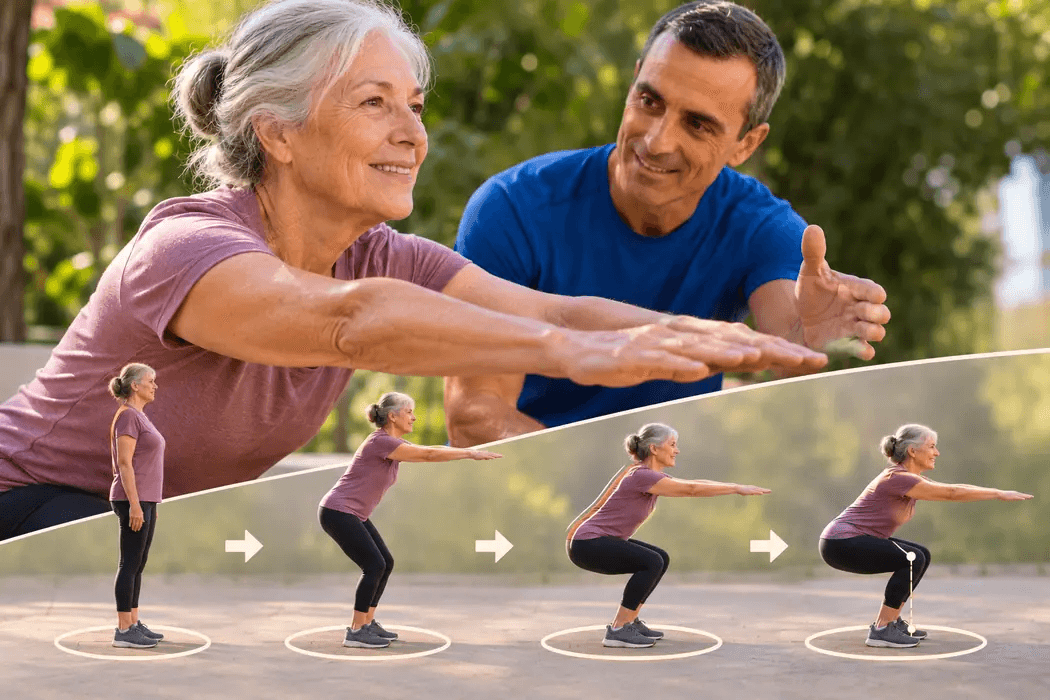
When I teach a new movement, I rarely introduce every technical detail immediately.
Imagine a movement that contains eight important technical components.
If I explain all eight at once, many clients will struggle to process and apply the information.
So I may begin with just one or two.
I choose the most important components for that person, particularly those related to safety and successful execution.
We practise.
When the client begins to integrate those components, I introduce another detail.
Then another.
Over several sessions, we gradually refine the movement.
This process requires constant observation.
Sometimes we need to simplify the task.
Sometimes we need to change the explanation.
Sometimes we need to return to an earlier progression.
One particularly interesting situation occurs when I introduce a new technical detail.
The client may have been performing the original components reasonably well for several sessions.
I add one new instruction.
Suddenly, something they were doing correctly begins to deteriorate.
I might think:
"But you already knew how to do that! I only asked you to add one new detail!"
And that is precisely where the coach must remain patient.
Adding a new component increases the demands on attention, memory and coordination.
What appeared to be a well-established movement may not yet be sufficiently automatic to remain stable when we introduce an additional challenge.
The client is not necessarily going backwards.
They are attempting to reorganise the movement while processing new information.
Sometimes what looks like regression is simply part of learning something more demanding.
Why Clients Return to Old Movement Patterns

Another situation I observe frequently concerns progressions.
Imagine a client has performed a particular movement in the same way for several months.
Eventually, they develop enough strength, mobility and coordination to attempt a more advanced variation.
I introduce the new version.
We practise it over one or two weeks.
The client begins to perform it reasonably well.
Then, during a later session, they unexpectedly return to the old variation.
Not because I asked them to.
Not necessarily because the new variation is physically impossible.
They simply return to the pattern that is most familiar.
Sometimes they do not even notice the difference.
I correct the movement, and they successfully perform the new variation again.
But one or two sessions later, the old version returns.
I have observed this pattern many times.
A familiar movement can become the easiest solution for the nervous system to retrieve.
A newer progression may still require greater conscious attention and practice.
The lesson for coaches is important.
Introducing a progression is not the same as consolidating it.
We must allow time for the new version to become familiar, recognisable and reliably reproducible.
And we must be careful not to interpret every return to an old pattern as lack of effort.
Animal Flow: When the Individual Movements Are Correct but the Sequence Falls Apart
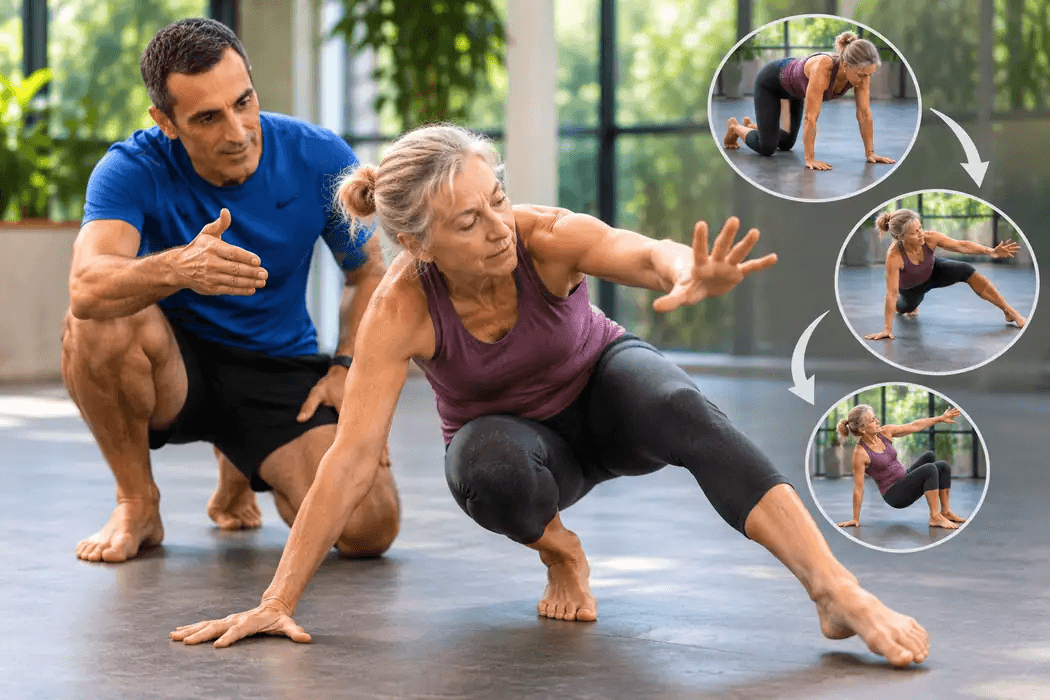
The Animal Flow training system, which I have adapted to the needs and abilities of older adults through my work with clients at Empowered Ageing, provides some of the clearest examples of these movement-learning challenges.
We might spend several weeks practising individual movements such as Beast, Loaded Beast, Underswitches, Side Kickthroughs or other transitions.
A client may eventually perform each movement reasonably well when requested individually.
Then we begin linking them into a Flow.
Suddenly, everything changes.
The client knows the first movement.
They know the second.
They know the third.
But when asked to connect them, the sequence becomes confusing.
They may alter the position of their hands, move the wrong leg, change direction unexpectedly or omit essential components.
Sometimes they perform a completely different movement without realising it.
When I separate the movements again, they can perform them.
When we connect them, the difficulties return.
Why?
Because learning individual movements and learning the transitions between them are not exactly the same task.
This challenge also occurs with younger people. However, in my experience, the difference can be substantial, particularly when working with older adults who have limited experience with complex movement patterns.
This is something we, as movement coaches for healthy ageing, must understand and take seriously. Recognising these differences allows us to adjust our expectations, adopt the right attitude, and develop more effective teaching strategies. Above all, it helps us remain patient, supportive and encouraging rather than allowing frustration to affect the learning experience.
A Flow requires the person to remember what comes next while simultaneously controlling their current position, maintaining balance, coordinating different parts of the body and preparing for the next movement.
For the coach, the sequence may seem simple. For the learner, it may represent an extraordinary challenge.
The transition itself is another movement skill.
This is why I often need to teach not only the movements, but the connections between them.
We may practise two movements together before introducing a third.
Then we revisit the sequence until it becomes more familiar.
This process can also challenge younger people, but in my experience, the difficulties can be particularly persistent among older adults with limited movement backgrounds.
For coaches, the message is simple:
Knowing the individual movements does not automatically mean knowing how to connect them.
The Strategy That Changed My Coaching: Practice Between Sessions

As these experiences accumulated, I began developing different strategies to help my clients consolidate their learning.
One of the most effective has been what I call homework.
But homework does not necessarily mean exercising at home.
It can mean going to a gym, returning to a studio or using another appropriate space to practise what was introduced during a coaching session.
When I worked at a gym in Sydney, Australia, some clients trained with me twice per week and returned independently on other days to follow their programmes.
That regular contact with the movements made an important difference.
Today, at Empowered Ageing, I continue to encourage suitable clients to create small opportunities for independent practice between sessions.
The objective is not necessarily a complete workout every day.
Sometimes a few minutes of carefully selected practice can be more appropriate than another demanding exercise session.
The person may simply review one movement, revisit its main technical components or repeat a short, safe sequence.
The important point is maintaining contact with what they are learning.
Instead of allowing several days to pass without revisiting a new skill, they have more opportunities to reinforce it.
For some clients, this makes the difference between returning to the next session feeling completely lost and returning with a sense of familiarity and progress.
Naturally, independent practice must be adapted to the person's abilities.
Challenging balance exercises, complex floor transitions or movements involving a significant risk of falling may require supervision.
Homework should reinforce learning, not create unnecessary risks.
Why Every Personal Training Client Needs Their Own Learning Resources

At Empowered Ageing, clients who choose personalised one-to-one coaching receive a basic exercise manual.
It contains many of the foundational movements we use and is regularly updated as the system continues to develop.
The manual provides a reference that clients can consult between sessions.
However, there is a limitation.
No single manual can contain every appropriate variation for every individual.
Every person arrives with a different movement history, different abilities, different restrictions and different needs.
A movement that is suitable for one client may require substantial modification for another.
This is why I frequently create personalised videos during coaching sessions.
Sometimes I record the client performing a specific variation, with guidance.
Other times I demonstrate the exact technique they should practise.
I may explain where to position the hands, how to transfer the weight, which part of the sequence to remember or what particular mistake to avoid.
Then I send the video through WhatsApp.
The next day, the client can watch it again.
They can review the instructions.
They can recognise the movement.
And, when appropriate, they can practise independently.
In my experience, this has been one of the most valuable teaching tools I have introduced.
A generic exercise video can be useful.
But a personalised video showing exactly what that client learned, at their current level, has a different educational value.
It reconnects the person with the learning experience.
The coaching session should not be the only place where learning can happen.
Of course, the strategy works best when the person actually uses the resources.
And this brings us to another important dimension of coaching.
Before Asking Someone to Practise, Help Them Understand Why

Not every client consistently follows their independent practice programme.
Sometimes the problem is physical.
Sometimes it is lack of confidence.
Sometimes the task is too complicated, the instructions are unclear or the person does not have an appropriate environment.
And sometimes it is connected with motivation and meaning.
I have worked with people who seem to have lost some of their enthusiasm for everyday life.
When someone is struggling to find direction, purpose or enjoyment, asking them to complete another set of exercises may feel like an additional burden.
This is why I believe movement coaching must go beyond technical instruction.
We need to understand what the person wants from life.
Why does becoming stronger matter to them?
What activities do they want to continue enjoying?
What abilities are they afraid of losing?
What would greater physical independence allow them to do?
For one person, it may be playing with their grandchildren.
For another, travelling independently.
For someone else, getting down to the floor and standing up without assistance.
Or simply feeling more capable and confident in daily life.
When the purpose becomes personally meaningful, practice has a better chance of becoming part of everyday life.
I have explored these questions in other Empowered Ageing articles, including The Eagle's Choice: Why Purpose Comes Before Movement and Wanting to Change Is Not Enough.
Here, the essential point is that motivation, learning and physical progress are closely connected.
People are more likely to invest in learning when they can connect that learning with something they genuinely value.
What Changes When a Client Is Living With Dementia?

The situations I have described so far concern many older adults who do not have a diagnosed neurocognitive disorder.
When someone is living with Alzheimer's disease or another form of dementia, the coaching challenges can become quite different.
I have worked with clients experiencing significant memory difficulties.
One particular experience stayed with me.
I was teaching a client relatively simple movements.
We practised Cat–Cow, a familiar movement used in yoga and mobility training.
Then we moved to another exercise.
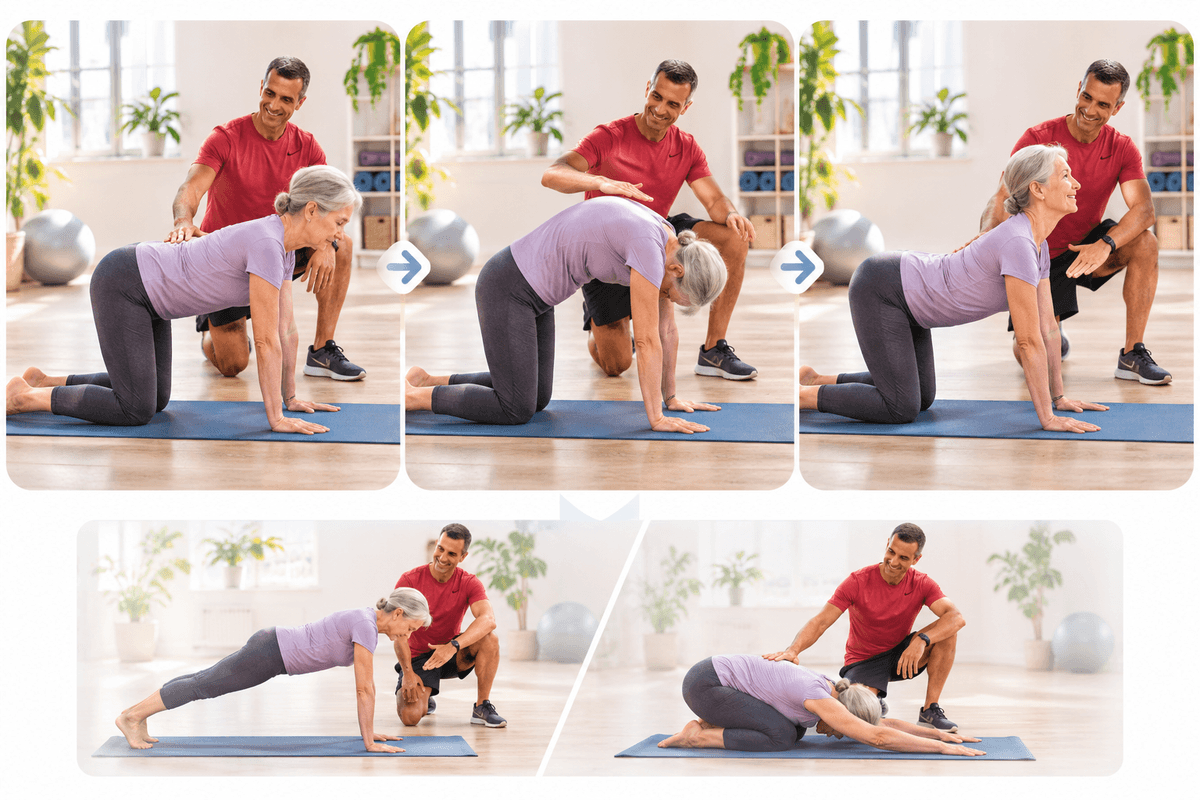
A few minutes later, I asked the client to return to Cat–Cow.
He could no longer remember what I was asking him to do.
This happened repeatedly.
From one session to another, the same difficulty returned.
I realised that continuing to insist on unfamiliar movement sequences was creating little meaningful progress and risked becoming frustrating.
So I changed my approach.
I investigated his previous movement experiences.
I discovered that he had played tennis.
And that gave me an opportunity.
Instead of spending most of our time introducing unfamiliar complex movements, I began incorporating tennis into our sessions.
We played together.
I also used simple, familiar exercises such as squats and supported pushing movements, adapting them to his abilities.
My objective changed.
I was no longer focused primarily on developing increasingly complex sequences.
I wanted him to participate, move, experience success and enjoy what his body could still do.
This does not mean that everyone living with dementia is unable to learn new movements. Cognitive abilities and motor learning capacity can vary greatly according to the person and the progression of the condition.
It means we must adjust our expectations and teaching strategies to the individual.
Familiar activities, meaningful experiences, simple instructions and predictable routines can be valuable resources.
And when appropriate, physical exercise should remain part of their lives.
When remembering becomes difficult, dignity, enjoyment and meaningful participation become even more important than physical performance or achieving new goals.
The Emotional Damage of Unrealistic Coaching Expectations
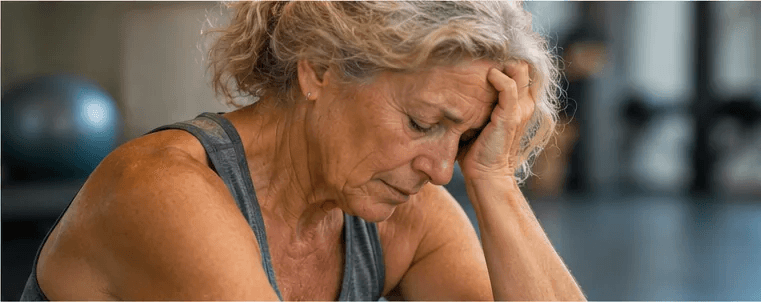
There is another aspect of this subject that deserves particular attention.
The emotional consequences of how we teach.
Imagine being 78 years old.
You have spent most of your life avoiding exercise because you never felt particularly coordinated or physically capable.
Finally, you find the courage to contact a trainer.
You arrive with doubts.
Perhaps you are afraid of falling.
Perhaps you worry that other people will judge you.
Perhaps your experiences in Physical Education during childhood left you believing that you were never good at movement.
Now the trainer introduces an exercise.
You struggle.
The trainer explains it again.
You still struggle.
They become impatient.
Their expression changes.
Perhaps they say:
"But we did this last week!"
Or:
"I've already explained this."
The trainer may not intend to hurt anyone.
But the client may hear something very different:
"I'm stupid."
"I'm too old."
"I can't learn."
"My body is failing me."
"Perhaps exercise really isn't for me."
That is a devastating outcome.
Because the person may have arrived hoping to rebuild confidence.
Instead, the training experience reinforces the very beliefs that kept them inactive for years.
This connects directly with an issue I explored in Does Physical Education Kill the Joy of Movement?.
Movement education is not simply about teaching physical skills.
It is also about the relationship people develop with their own body.
A coach can help rebuild that relationship.
Or unintentionally make it worse.
What I Would Recommend to Coaches Working With Older Adults
After years of observing, experimenting and refining my approach, these are some of the principles I consider particularly important:
- Learn the person's movement history before deciding how to teach. Age is relevant, but previous experience, confidence, health and physical abilities are equally important.
- Demonstrate, observe and adapt. Do not assume that understanding an explanation guarantees correct execution.
- Introduce technical information gradually. Prioritise safety and one or two essential components before adding further details.
- Distinguish performance from learning. Performing a movement well today does not guarantee that it will be remembered next week.
- Create opportunities for regular, appropriate practice. Help clients revisit new skills between sessions rather than relying exclusively on supervised training.
- Use personalised learning resources. Manuals, short instructional videos and clear reminders can support greater independence.
- Teach transitions as well as individual movements. Linking movements creates new coordination and memory demands.
- Expect temporary setbacks. A client returning to an older pattern or struggling when a new component is introduced may simply need more time and practice.
- Protect confidence while maintaining appropriate challenges. Mistakes should be opportunities to learn, not experiences of embarrassment or failure.
- Connect movement with personal meaning. Help clients understand what their new abilities will allow them to experience in everyday life.
These are not rigid rules.
They are principles that guide my decisions, always adapted to the person in front of me.
Patience Is Not Enough. We Also Need Teaching Skills.
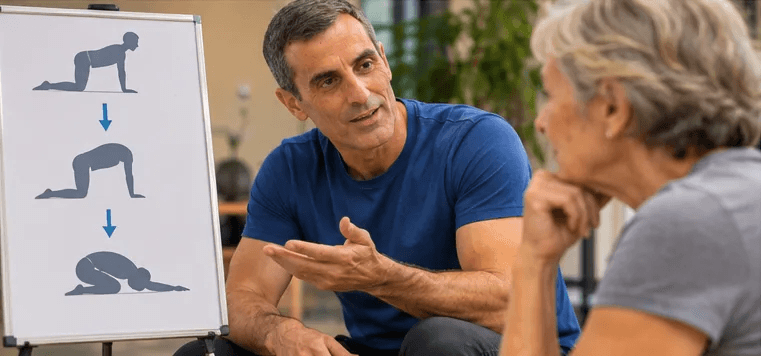
People sometimes say that working with older adults requires patience.
I agree.
But I believe patience alone is insufficient.
A patient coach may repeat the same explanation twenty times.
A skilled educator asks:
"Why isn't this explanation working?"
"What is the client actually understanding?"
"Is the movement too complex?"
"Am I introducing too many details?"
"Could I demonstrate it differently?"
"Would another progression be more appropriate?"
"Is the client struggling physically, cognitively, emotionally — or with several things at once?"
Patience creates the emotional space for learning.
Teaching skills help us use that space effectively.
And empathy helps us understand what the experience feels like from the client's perspective.
For me, these three qualities belong together.
The Real Objective Is Not to Perform an Exercise. It Is to Develop Autonomy.

I sometimes imagine what would happen if a client could perform every movement perfectly during our sessions but could not remember or reproduce any of them independently.
Have I truly helped that person become more autonomous?
Certainly, they may have gained physical benefits.
But there is another level of development that I consider equally important.
The ability to understand their body.
To recognise movements.
To practise independently.
To solve physical challenges.
To become more confident outside the training environment.
This is why I place so much importance on the learning process.
At Empowered Ageing, I do not simply want clients to become better at performing exercises while I stand beside them.
I want them to gradually become more capable of living and moving independently.
I want them to develop a relationship with movement that continues beyond the coaching session.
And I want them to feel that learning remains possible, regardless of their age.
A Final Message to Coaches
If you are accustomed to training younger people, working with older adults who have little movement experience may challenge some of your expectations.
Progress may be slower.
Movements may need to be revisited repeatedly.
A client may forget something you thought they had learned.
A new progression may temporarily disrupt an established movement.
A sequence that appears simple to you may be extraordinarily complicated for the person in front of you.
If these situations regularly make you impatient or frustrated, I encourage you to reflect on whether your teaching approach is appropriate for this population.
Because your frustration can become the client's discouragement.
And that discouragement may reinforce a lifetime of negative experiences with physical activity.
Older adults do not need trainers who make them feel inadequate for what they cannot yet do.
They need movement educators who are capable of recognising potential, adapting challenges, celebrating meaningful progress and creating an environment where learning feels possible.
At 70, 80 or 90, the body may not learn in exactly the same way it did at 20.
But learning can still happen.
Confidence can still develop.
New movement skills can still emerge.
And the pleasure of discovering what our bodies can do does not have an expiry date.
Perhaps the greatest skill of a movement coach is not knowing how to perform a difficult movement.
It is knowing how to help another human being discover that they are capable of learning it.
And sometimes, the most meaningful progress is not the movement itself.
It is the moment someone who once believed they were incapable begins to believe:
"Maybe I can learn this after all."
Movement Educator, Healthy Ageing Coach, former Physical Education Teacher and Founder of Empowered Ageing.
References & Further Reading
Chen, T. T., et al. (2023). Attentional Focus Strategies to Improve Motor Performance in Older Adults: A Systematic Review. International Journal of Environmental Research and Public Health. Examines how different types of instructions and attention influence movement performance among older adults.
Overview of Effects of Motor Learning Strategies in Neurologic and Geriatric Populations (2024). A mapping review of strategies including observational learning, errorless learning, analogy learning and task practice.
Rihova, M., et al. (2024). Adherence and Retention Rates to Home-Based Video Exercise Programs in Older Adults. Telemedicine and e-Health. Reviews participation and adherence in video-supported home exercise programmes.
Wang, B., et al. (2025). Self-Controlled Feedback and Behavioral Outcomes in Motor Skill Learning: A Meta-Analysis. Examines how learner-controlled feedback influences the acquisition, retention and transfer of motor skills.
World Health Organization (2023). Non-pharmacological Interventions for People Living With Dementia. Provides recommendations supporting appropriately structured physical activity for people living with dementia.