

“As We Get Older, People Stop Seeing Us”
Recently, one of my clients shared a thought that stayed with me.
As people grow older, they often begin to feel invisible. Younger generations seem to stop noticing them, listening to them or recognising their value.
I found this observation both sad and thought-provoking.
Why should someone who has lived for 70, 80 or even 90 years — accumulating decades of experiences, challenges, successes, failures and life lessons — feel that they no longer matter?
In some traditional cultures, older people have been respected as guardians of knowledge, storytellers, advisers and important members of their communities.
Yet, in much of modern Western society, ageing is frequently associated with decline, dependency, illness and becoming a burden.
How did growing older become associated with losing value rather than gaining wisdom?
After more than a decade working closely with older adults, I have started asking myself another, perhaps more uncomfortable, question:
Could some of the beliefs and behaviours we develop as we age unintentionally contribute to our withdrawal from life and society?
I believe this question deserves reflection — but also compassion.
Because there is an important difference between contributing to our own withdrawal and being responsible for how society treats us.
1. When Retirement Becomes Retirement From Life
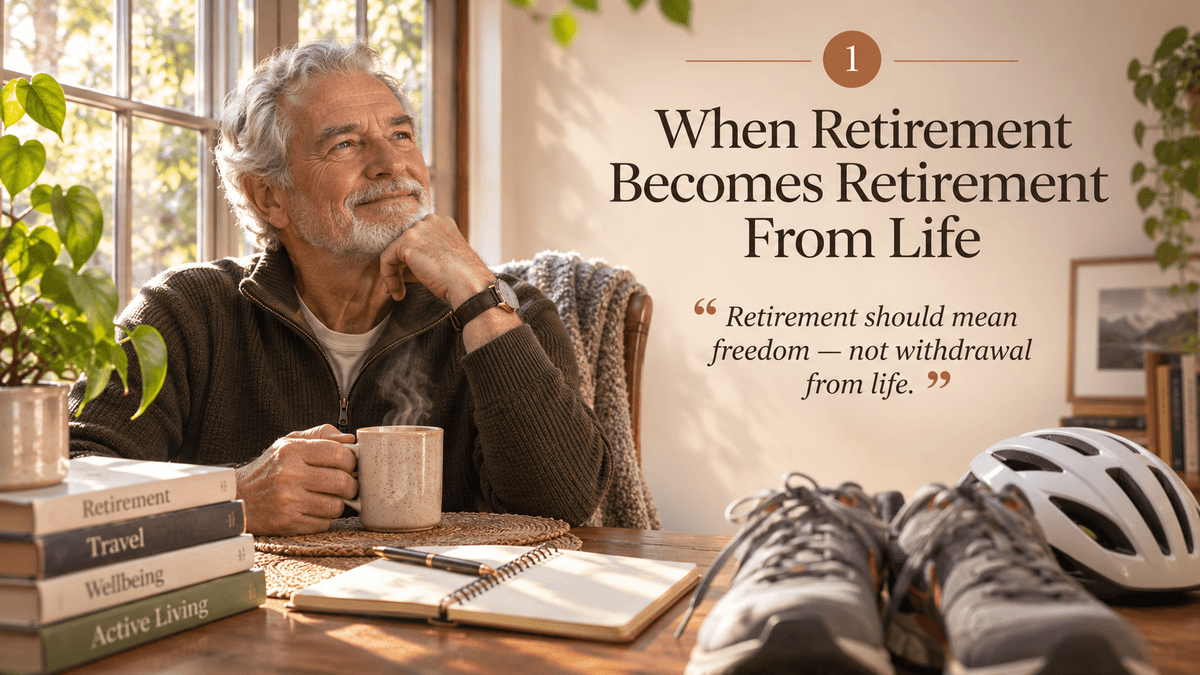
Throughout our working lives, we are constantly encouraged to be productive, achieve goals, fulfil responsibilities and contribute to society.
Then, one day, retirement arrives.
And with it, a familiar message:
"I've worked hard all my life. Now it's time to rest, relax and enjoy what's left."
There is absolutely nothing wrong with wanting to rest, travel, enjoy family time or experience greater freedom.
Retirement can be one of the most wonderful stages of life.
But I wonder whether we sometimes confuse retirement from employment with retirement from personal growth.
What happens when someone stops challenging themselves physically, mentally, emotionally and socially?
When learning becomes less important?
When curiosity starts disappearing?
When there is no longer a meaningful reason to get up in the morning?
Gradually, life can become smaller.
Not necessarily because of age itself, but because the opportunities to explore, learn, participate and develop are disappearing.
Retirement should mean freedom from compulsory work — not retirement from living, learning or growing.
2. The Invisible Trap: “I'm Too Old for That”
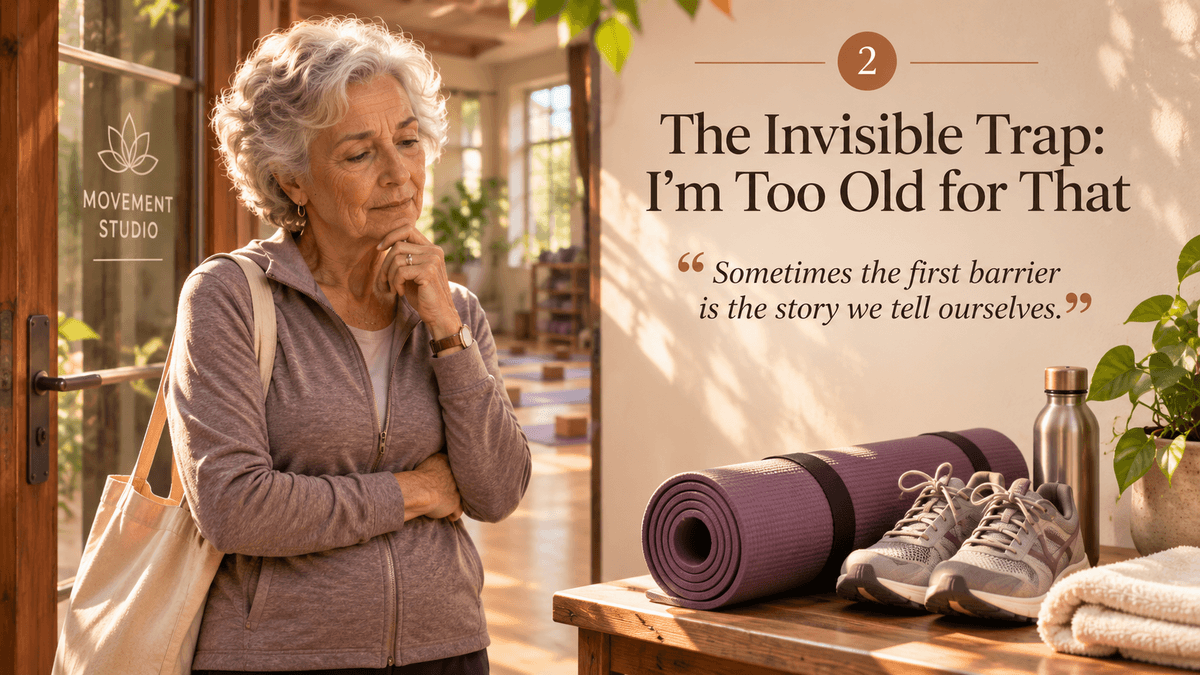
During my years working with older adults, I have heard countless variations of the same beliefs:
"I'm too old to start exercising."
"I could do that when I was younger."
"At my age, you have to accept your limitations."
"There's no point trying now."
Of course, ageing brings biological changes. Some physical and cognitive capacities can decline, and health conditions may create significant limitations.
But something else often happens.
People begin to believe that these limitations are greater or more permanent than they really are.
And those beliefs influence their behaviour.
They stop trying unfamiliar activities, avoid physical challenges, become afraid of making mistakes and gradually reduce their involvement in life.
Less activity can lead to further physical decline. Reduced confidence may lead to greater avoidance. And each unsuccessful experience reinforces the original belief:
"You see? I'm too old."
A self-reinforcing cycle begins.
Research by psychologist Becca Levy and colleagues at Yale University found that older adults with more positive perceptions of their own ageing tended to live longer than those with more negative perceptions.
This does not mean that positive thinking can prevent ageing or cure illness. But it suggests that what we believe about ageing can influence how we experience it.
And this is something I witness regularly in my work.
Sometimes, helping a person discover that they can learn a new movement, improve their balance or recover a physical ability becomes much more than a training achievement.
It becomes a challenge to a belief they have carried for years.
"Perhaps I'm still capable of more than I imagined."
That discovery can change how someone approaches other areas of life.
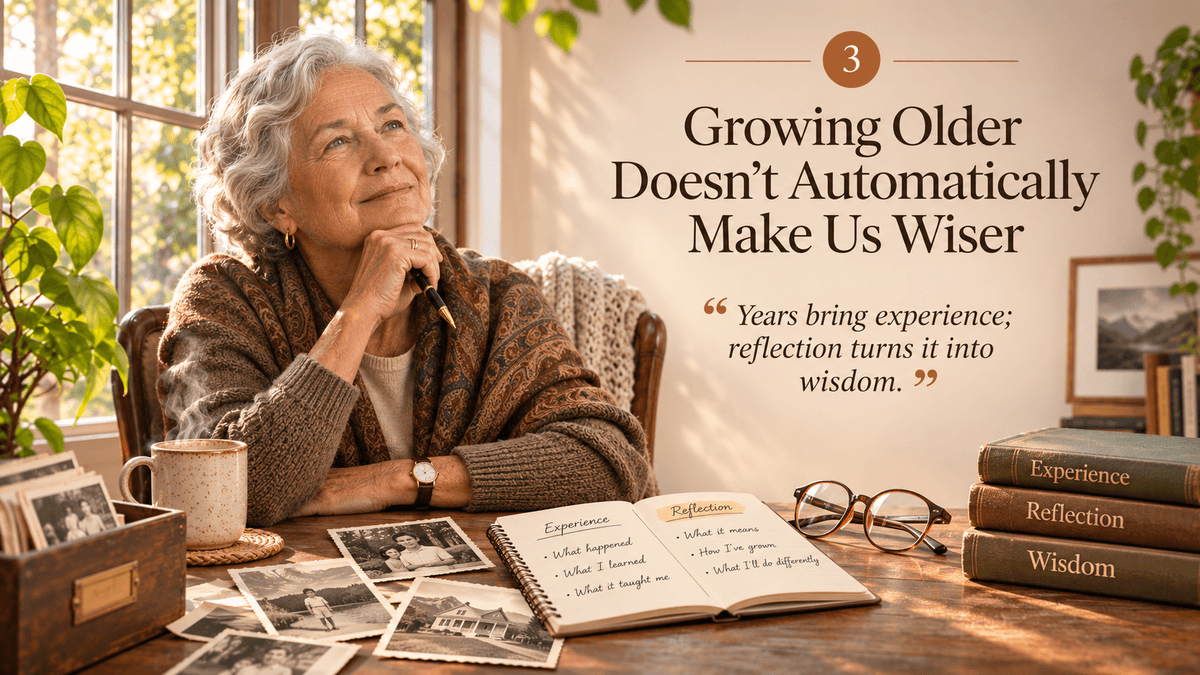
3. Growing Older Doesn't Automatically Make Us Wiser
There is another aspect of ageing that I find fascinating.
We often associate older age with wisdom.
And certainly, many older people possess extraordinary knowledge, perspective and emotional maturity.
But does living longer automatically make us wiser?
I don't believe so.
Experience provides opportunities for wisdom. It does not guarantee wisdom.
Someone may spend 80 years repeating the same emotional reactions, holding on to the same limiting beliefs and making similar mistakes without ever questioning them.
Another person may use difficult experiences, failures and relationships as opportunities to develop greater understanding, compassion and self-awareness.
The difference is not simply the number of years lived.
It is how those years have been experienced, observed and integrated.
In some traditional communities, older people have held important roles in transmitting knowledge, teaching younger generations and preserving collective memory.
Of course, traditional societies are diverse and should not be idealised. Not all cultures have treated older people with equal respect.
But I believe there is something valuable we can learn from those communities:
Ageing can represent a transformation of our role in society, rather than simply the loss of one.
Instead of asking, "What can I no longer do?", perhaps we should also ask:
"What have I learned that I can now share?"
And equally:
"What do I still need to learn?"
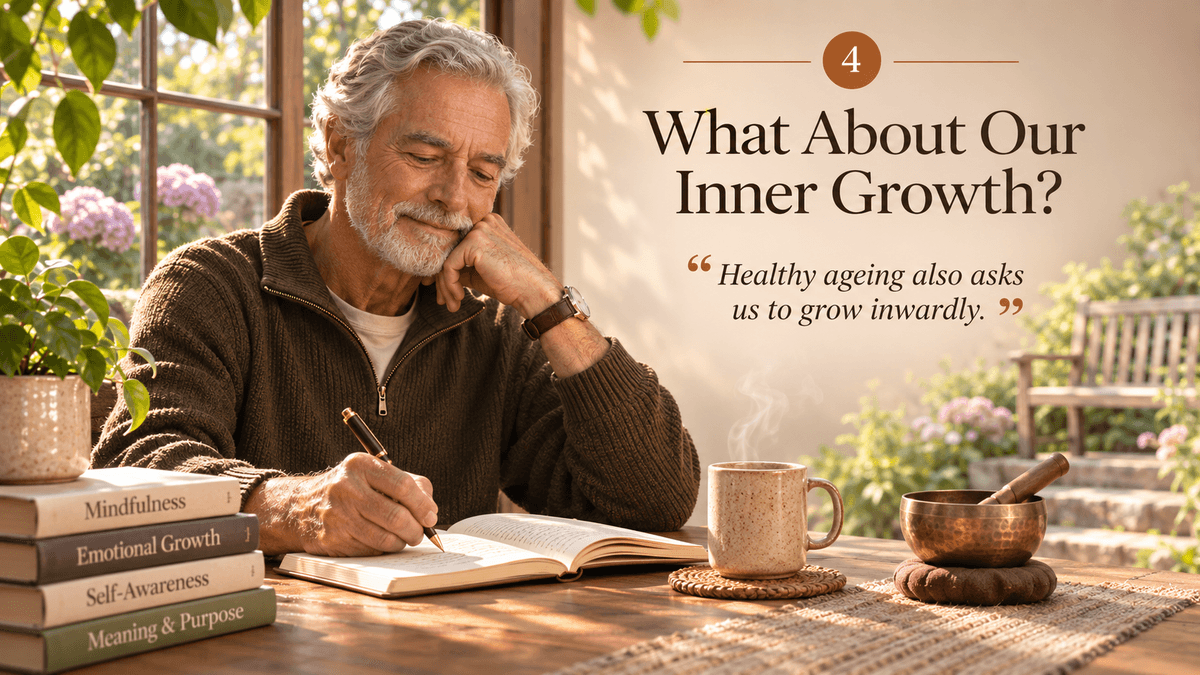
4. What About Our Inner Growth?
We talk extensively about physical ageing.
We discuss muscle loss, balance, mobility, cardiovascular health and cognitive decline.
But how often do we discuss our development as human beings?
Our emotional maturity?
Our ability to recognise limiting beliefs?
Our capacity to observe ourselves, understand our reactions, develop empathy and create healthier relationships?
For me, this is an essential dimension of healthy ageing.
Some people call it personal development. Others describe it as emotional growth, self-awareness or spiritual evolution.
Whatever language we choose, the underlying invitation is similar:
To continue developing our consciousness and understanding of life for as long as we live.
And this development does not require belonging to a religion or adopting a particular spiritual philosophy.
It can begin with simple questions:
Why do I react this way? Why am I afraid of change? What beliefs are limiting my life? How can I develop more understanding, gratitude and compassion?
Perhaps retirement offers something extraordinary that many people have never had before:
Time to explore themselves beyond their professional identity.
Time to reflect.
Time to reconnect with what genuinely matters.
Time to become not merely older, but more conscious.
I find it difficult to imagine a meaningful definition of healthy ageing that focuses only on preserving the body while neglecting the development of the person living inside it.
5. We All Need a Reason to Participate in Life
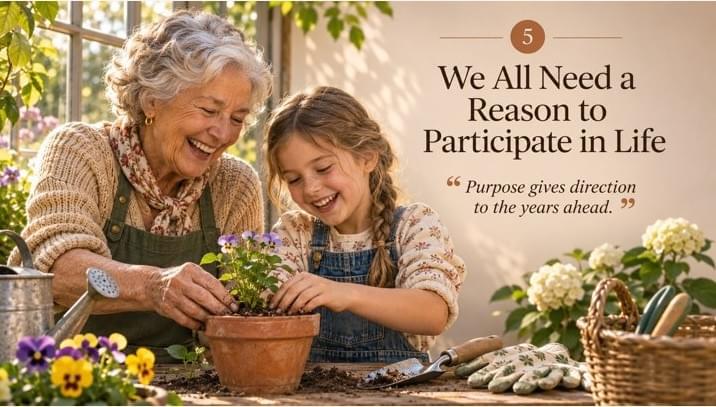
One of the greatest risks of retirement is not simply becoming less physically active.
It is losing our sense of purpose.
For decades, our identity may have been closely connected to our profession, raising children or fulfilling responsibilities.
When those roles change, we may struggle to answer a surprisingly difficult question:
"What am I here for now?"
Scientific research increasingly supports the importance of purpose in later life.
A large meta-analysis published in 2026, involving almost 489,000 participants, found that people reporting a stronger sense of purpose tended to have a lower risk of mortality.
This is an association, not proof that purpose alone extends life.
Nevertheless, the findings reinforce an important idea: feeling connected to meaningful activities and relationships matters.
And purpose does not need to be something extraordinary.
It might involve helping others, learning a language, practising music, mentoring younger people, volunteering, spending meaningful time with grandchildren, discovering new physical abilities or simply becoming more present in everyday life.
Purpose is not necessarily about being productive. It is about having something meaningful to live for.
Even someone living with serious limitations or requiring daily assistance can experience purpose, connection and emotional fulfilment.
Our capacity to contribute may change with age.
Our fundamental human value does not.
6. Are Older People Responsible for Becoming Invisible?
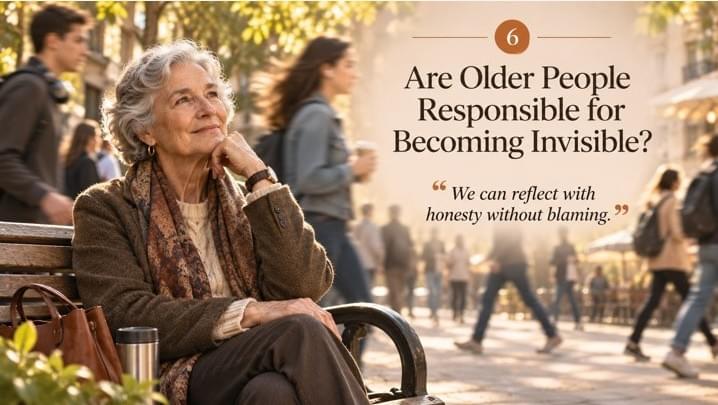
This is where I believe we must be especially careful.
Yes, some people gradually withdraw from life because they have accepted limiting beliefs about ageing.
They may stop learning, moving, socialising or exploring new possibilities.
And this withdrawal can reduce opportunities to connect with younger generations.
But we must never confuse this with blaming older people for being ignored or excluded.
Many face chronic illness, disability, financial difficulties, bereavement, loneliness or environments that offer few opportunities for participation.
Others have spent a lifetime receiving messages that they are becoming less capable and less important.
The World Health Organization describes ageism — stereotypes, prejudice and discrimination based on age — as a widespread problem with serious consequences for health and well-being.
We cannot ask older people to remain engaged in society while simultaneously creating a society that excludes them.
Younger generations also have responsibilities.
To listen.
To include.
To recognise the experiences and perspectives of older people.
And to understand that independence, physical ability and economic productivity are not measures of human worth.
Perhaps one of the most meaningful things we can do is create more opportunities for generations to learn from one another.
Older people have experiences to share.
Younger people have perspectives, knowledge and experiences that older generations can also learn from.
Wisdom should not travel in only one direction.
7. At Empowered Ageing, Movement Is Only the Beginning
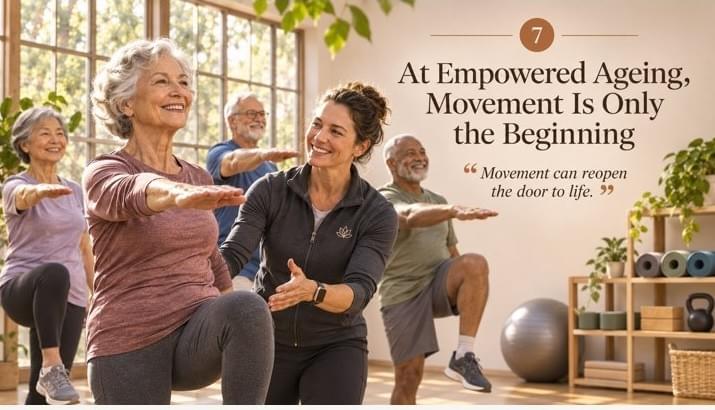
This reflection connects deeply with the philosophy behind Empowered Ageing.
When I work with someone in their 60s, 70s, 80s or even 90s, my objective is not simply to improve their strength, mobility, balance or coordination.
These capacities are extremely important because they support physical autonomy, confidence and quality of life.
But I am also interested in what happens beyond the physical improvements.
What happens when someone who believed they could no longer learn discovers a new ability?
When someone who was afraid to move begins to trust their body again?
When someone who had accepted physical decline as inevitable realises that improvement is still possible?
These moments are powerful.
Not because they turn older people into younger people.
But because they remind them that they are still capable of learning, adapting and developing.
The World Health Organization's definition of healthy ageing supports this broader perspective. It includes our ability to move, learn, make decisions, build relationships and contribute to society.
Movement is one important part of that picture.
At Empowered Ageing, I see physical training as an opportunity to develop not only physical capacity, but also curiosity, confidence, autonomy and a more positive relationship with ageing.
Ultimately, the goal is not merely to add years to life.
It is to create more opportunities for meaningful living within those years.
8. Perhaps We Need to Rethink What Ageing Really Means
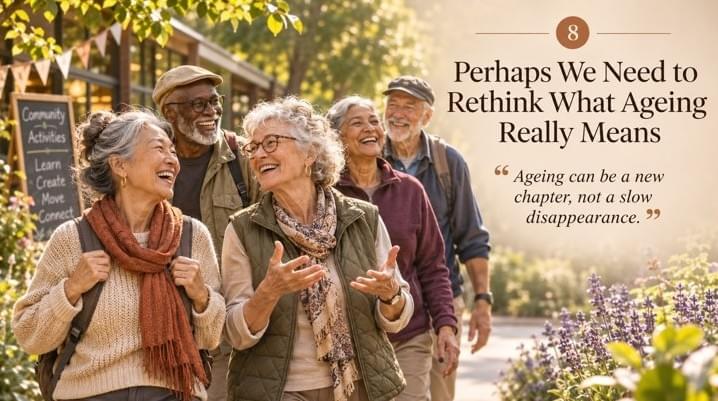
Imagine a society where retirement was not presented as the beginning of life's final chapter, but as the beginning of a different one.
A society where people were encouraged to continue learning, exploring, creating and developing throughout their lives.
Where older adults were invited to participate in community life, share their experiences and connect with younger generations.
Where physical training, education, creativity and inner growth were considered lifelong opportunities rather than activities reserved for the young.
And where people who could no longer participate actively were still treated with the same dignity, attention and respect.
Perhaps we would begin to see ageing differently.
Not as an inevitable journey towards irrelevance.
But as a changing relationship with life — one that can continue to offer meaning, learning, connection and growth.
A Final Reflection: Are We Still Growing, or Just Growing Older?
I would like to leave you with a few questions.
Whatever your age today, ask yourself:
Am I still curious about life?
Am I continuing to develop my physical, mental and emotional abilities?
Am I learning from my experiences, or simply repeating familiar patterns?
Am I building meaningful connections with others?
Do I still give myself permission to try, to fail, to learn and to grow?
And perhaps, most importantly:
Am I actively participating in my life, or am I gradually becoming a spectator?
These questions are not intended to judge anyone.
They are an invitation to reflect.
Because healthy ageing is not about denying the passage of time or pretending that limitations do not exist.
It is about recognising what remains possible, finding meaning in changing circumstances and continuing to engage with life in whatever ways we can.
And for younger generations, there is an equally important invitation: to see, listen to, include and respect older people, regardless of their abilities.
We all have a role to play.
We do not lose our value when we grow older.
And we should never lose the opportunity to keep growing.
Perhaps the real challenge is not simply learning how to live longer.
It is learning how to remain connected to life — and to one another — for as long as we live.
Arlindo Martins
Founder & Movement Coach — Empowered Ageing
Scientific References & Further Reading