

There is a question that has followed me for years.
I spent 16 years working as a Physical Education teacher. Later, my professional life changed and I began working much more closely with people, often one-to-one, as a movement educator and coach.
That change gave me access to something that is difficult to see when standing in front of a class of 25 or 30 children: people's personal stories and, particularly, their relationship with their own body.
Again and again, I began hearing variations of the same statements:
“I've always been uncoordinated.” “I was terrible at sport.” “Exercise has never been for me.” “I've never trusted my body.” “I hated Physical Education.”
At first, these may sound like simple personal preferences. After decades of working with human movement, I no longer think they always are.
Sometimes they are the remains of something that happened 40, 50 or even 60 years earlier.
And that leads me to a deliberately uncomfortable question:
Can Physical Education sometimes kill the joy of movement?
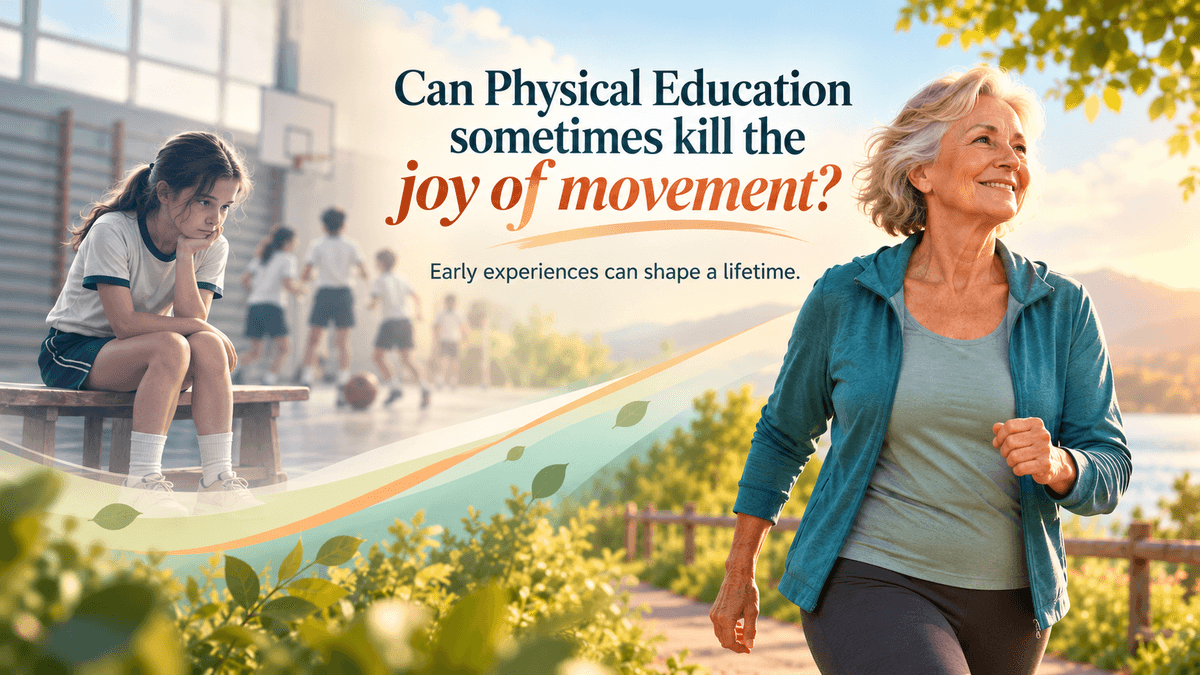
This Is Not an Attack on Physical Education Teachers
Before going further, I need to make something very clear.
I was a Physical Education teacher myself. I know the realities teachers face: large classes, limited facilities, insufficient equipment, very little teaching time, extensive curricula, assessment requirements, different abilities and motivations within the same class, and behavioural challenges. Teachers frequently work inside systems they did not create.
So this is not an attack on Physical Education teachers, nor am I claiming that every negative relationship with exercise originates at school. Human behaviour is far more complex than that.
This is a reflection based on 16 years teaching Physical Education, followed by decades working directly with adults from different countries and cultures.
What became striking was that concerns I already had while teaching began appearing again in the stories of the adults I later coached.
What I once questioned from inside the educational system, I began seeing decades later in people's lives.
When Assessment Comes Before Enough Learning
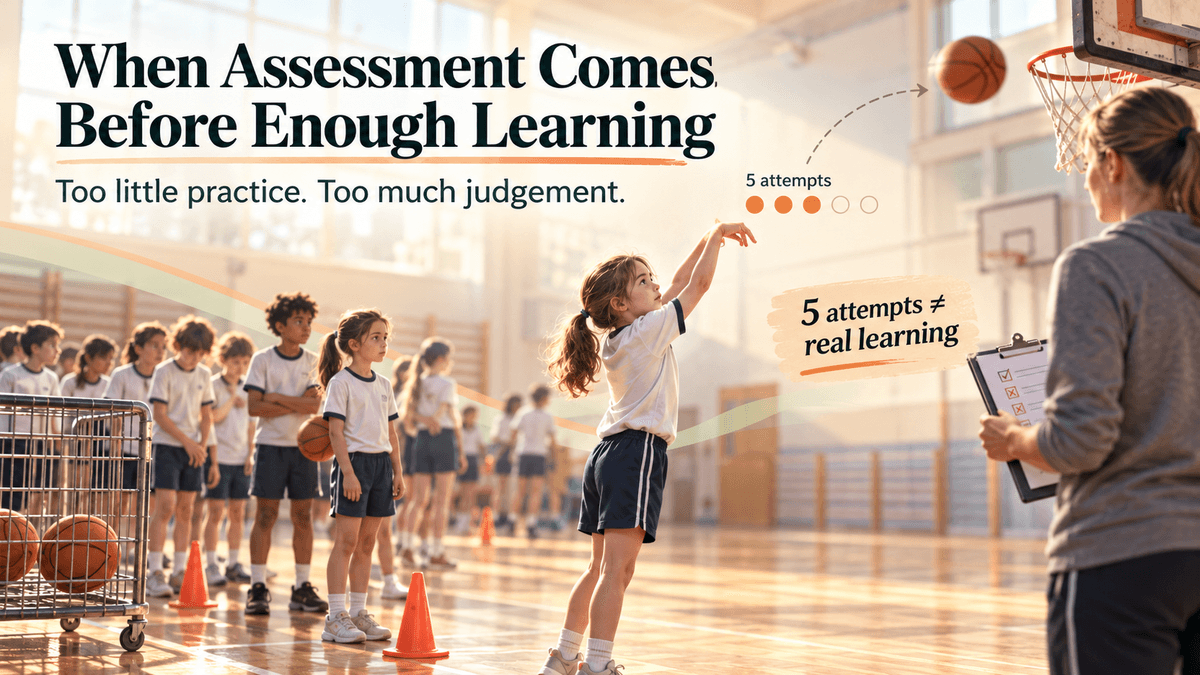
Imagine something very simple.
A school needs to teach many different activities during one academic year: basketball, volleyball, athletics, gymnastics, football, dance and other movement disciplines. Yet curriculum time is limited.
Imagine that I want to teach a jumping event. I may have only a small number of lessons available. One lesson might establish the student's initial level, a few lessons remain for teaching and practice, and then an assessment must take place.
Now place 25 or 30 students in that lesson. Perhaps there is only one appropriate jumping area. Students wait their turn, explanations need to be given, equipment organised and safety maintained.
How many meaningful repetitions does each child really get? Perhaps five or ten. Sometimes fewer.
And then we assess performance.
But human motor learning does not work like that. Coordination, timing and technique require repetition. Strength and power need repeated stimulation. Confidence develops through repeated experience. The nervous system needs opportunities to try, fail, adjust and try again.
Nobody would expect somebody to become competent at playing the piano after touching the keys ten times.
Yet sometimes we expect meaningful physical learning after an extremely small amount of meaningful practice.
And then we attach a grade to the result.
The Grade May Disappear. The Identity May Remain.
A teacher may simply think: This student achieved level X.
But the child may hear something completely different:
“I am bad at this.”
Later that can become:
“I am uncoordinated.”
Then:
“I'm not a physical person.”
And eventually:
“Exercise isn't for me.”
That progression matters enormously because Physical Education is no longer simply measuring a performance at one moment in time.
It may be contributing to the creation of an identity.
Why I Eventually Left School
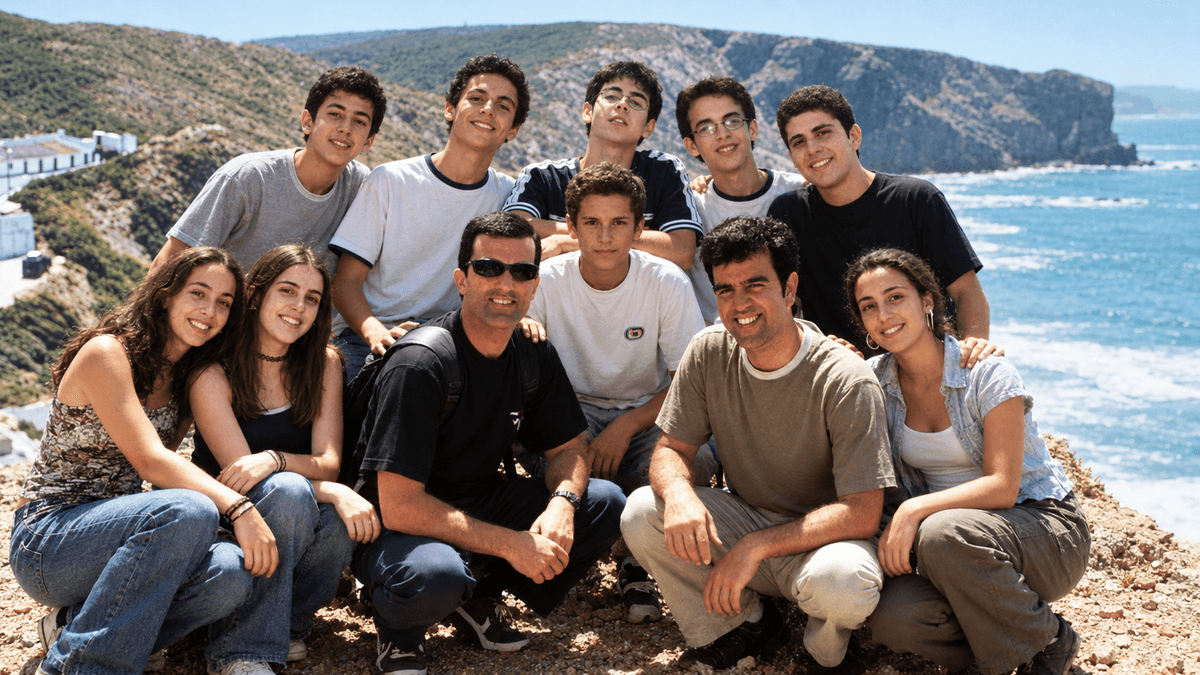
(A photo from one of the many educational visits I organised with my students during my years as a Physical Education teacher, together with my great friend Luís Antunes, who is now part of the Empowered Ageing team. I’m the one wearing sunglasses. This part of the story is very personal to me)
One of the important reasons I eventually left the school system was that I increasingly felt unable to reconcile my educational principles with what I was expected to do.
During the final two years I worked in a school, I was trying to teach according to many of the principles I am describing in this article. I wanted students to progress from their own starting point. I wanted them to feel safe enough to make mistakes. I wanted them to develop confidence rather than shame. And I wanted assessment to recognise learning and individual development instead of primarily classifying students according to predetermined performance standards.
From my perspective, and from the feedback I received from students, it was working. I saw engagement. I saw students participating who had previously avoided physical activity. I saw young people becoming more confident and beginning to discover that movement could belong to them too.
But professionally, I began encountering considerable resistance. Some colleagues strongly disagreed with my methodology. School leadership questioned the way I was teaching and assessing. Essentially, I was being told that I should do things more like everybody else and follow the established model.
But the conventional model included many of the things I was increasingly questioning: comparison, judgement, performance-based classification, inadequate learning time and situations that could leave less capable students feeling exposed or embarrassed.
Eventually I had to make a decision.
I could remain and compromise what I believed education should be, or I could leave.
I chose to leave.
I could not sell my principles for professional convenience.
If I genuinely believed that some practices could damage a young person's relationship with their body and movement, I could not continue simply because “this is how everybody does it.”
At that time I developed a dream: one day I wanted to create my own school — not necessarily a conventional academic school, but a place where I could apply these principles freely. A place where movement could be education rather than judgement, where people could learn without humiliation, and where the human being mattered more than the score.
It took many years.
Today, Empowered Ageing is part of the fulfilment of that dream.
Physical Failure Has an Audience
There is another characteristic that makes Physical Education different from many academic subjects.
Imagine getting a mathematics question wrong. You sit at a desk and write the wrong answer. Perhaps the teacher sees it; perhaps another student notices. But usually your entire body is not on display.
Physical Education is different.
You run slowly and everyone can see you. You cannot climb and everyone can see you. You miss the ball, lose your balance or perform a movement awkwardly, and everybody can see it.
Children and adolescents are not always gentle with one another. There can be laughter, comments, comparison, imitation and nicknames.
Suddenly the experience is no longer simply:
“I haven't learned this skill yet.”
It becomes:
“Everybody can see that there is something wrong with me.”
That distinction can be psychologically enormous.
Being Picked Last Is Not Always Forgotten

Think about one of the most traditional school rituals.
Two captains select their teams. One child is chosen, then another, then another, until eventually one child remains.
Everybody knows who nobody wanted.
We may consider it trivial. The child may experience:
“Nobody wants me because my body is not good enough.”
Research is increasingly finding that memories of Physical Education can remain associated with physical activity behaviour much later in life.
What adults dismiss as a five-minute school experience may remain somewhere inside a person for decades.
A Story That Arrived While I Was Writing This Article
Recently, an older woman considering working with Empowered Ageing completed one of my initial questionnaires.
I ask questions that go beyond disease, injuries and physical fitness because I want to understand a person's history with movement.
Her answers caught my attention.
She described herself as feeling relatively positive emotionally and spiritually, yet her relationship with her body was very different. As a child, she remembers feeling slower, physically awkward and less capable than her peers. Physical activities made her feel exposed rather than confident, and team selection reinforced the feeling that other children did not want her.
Instead of movement becoming associated with enjoyment, it became connected with insecurity, apprehension and embarrassment.
When school ended, she felt great relief that nobody could force her to participate in team sports anymore.
Later in adulthood she discovered activities that suited her better and gradually developed a more comfortable relationship with her body. But now, as ageing brings new physical challenges and her body feels less predictable, some old insecurities are beginning to surface again.
The circumstances are completely different, but emotionally something feels familiar:
“My body can't do what other people's bodies can do.”
Think about that.
A subject whose purpose includes developing physical competence and encouraging active lives can, for some people, become associated with relief when it finally ends.
That should make us think.
And Then There Is Michael
One of the most extraordinary examples I have encountered is a long-term client of mine in Sydney.
I will call him Michael. That is not his real name.
Michael first came to me at around 69 years of age. He did not come because he loved exercise. Quite the opposite.
He came because I was training a friend of his, Suzanne, who was then in her eighties. He trusted Suzanne enormously and his reasoning was essentially: If Suzanne trusts this man, perhaps I can trust him too.
But Michael was frightened and embarrassed. Even the idea of performing movement in front of me created anxiety.
Eventually I understood why.
Michael had experienced double vision since childhood. He was also overweight at school.
Imagine trying to play ball games while seeing two balls. Imagine trying to identify other players while seeing double images. Now imagine children laughing because you cannot perform like everybody else.
According to him, even some Physical Education teachers criticised or mocked his difficulties rather than understanding what was happening.
He developed a powerful conclusion about himself:
“I am uncoordinated. Physical activity isn't for me.”
When compulsory Physical Education ended, he essentially walked away from structured physical activity for more than half a century.
He walked considerably, but otherwise avoided the movement experiences that had caused him so much embarrassment.
Instead, he developed other dimensions of himself. He became a journalist, wrote a book and developed academically and intellectually.
But the story he carried about his body remained:
My body is the part of me that doesn't work properly.
What if “Uncoordinated” Was Never His Identity?
When Michael began working with me, I did not accept the conclusion that he simply could not coordinate movement.
I saw somebody who had never been given enough time, safety, patience and repetition to discover what his nervous system could learn.
So we practised.
We used balls, reaction activities, rackets, games and coordination challenges.
His double vision did not magically disappear. But something fascinating happened.
With sufficient exposure and practice, Michael became progressively better at identifying the relevant visual information. His perception adapted. His movement adapted. His brain learned.
He began participating in activities involving balls and objects that he had spent most of his life believing were impossible for him.
Gradually, his internal story changed from:
“I cannot do this.”
to:
“Apparently I can learn this.”
Michael is now around 79 and we have worked together for approximately ten years.
Today movement is a normal part of his life. He trains online with me twice every week. He also practises online with another long-term client, participates in Qigong, attends group activities in Sydney and continues walking.
A man who essentially avoided structured physical activity for more than 50 years now deliberately practises movement four or five times every week.
His story raises a question that I find difficult to ignore:
How many people have spent decades believing they were physically incapable when what they really lacked was the right environment in which to learn?
Another Client Taught Me Something Different
A more recent client helped me understand another consequence of negative Physical Education experiences.
This man liked Pilates and particularly enjoyed enormous technical detail: where the foot should be, what angle the leg should make, where the pelvis should be, what the shoulder should do and what should happen first.
Initially, I thought this was simply a personal preference.
During our conversations, however, I discovered that his experience of Physical Education had been extremely negative. He remembered himself as poorly coordinated, unsuccessful, judged and physically incapable.
Suddenly his love of technical detail made more sense to me.
Detail gave him certainty.
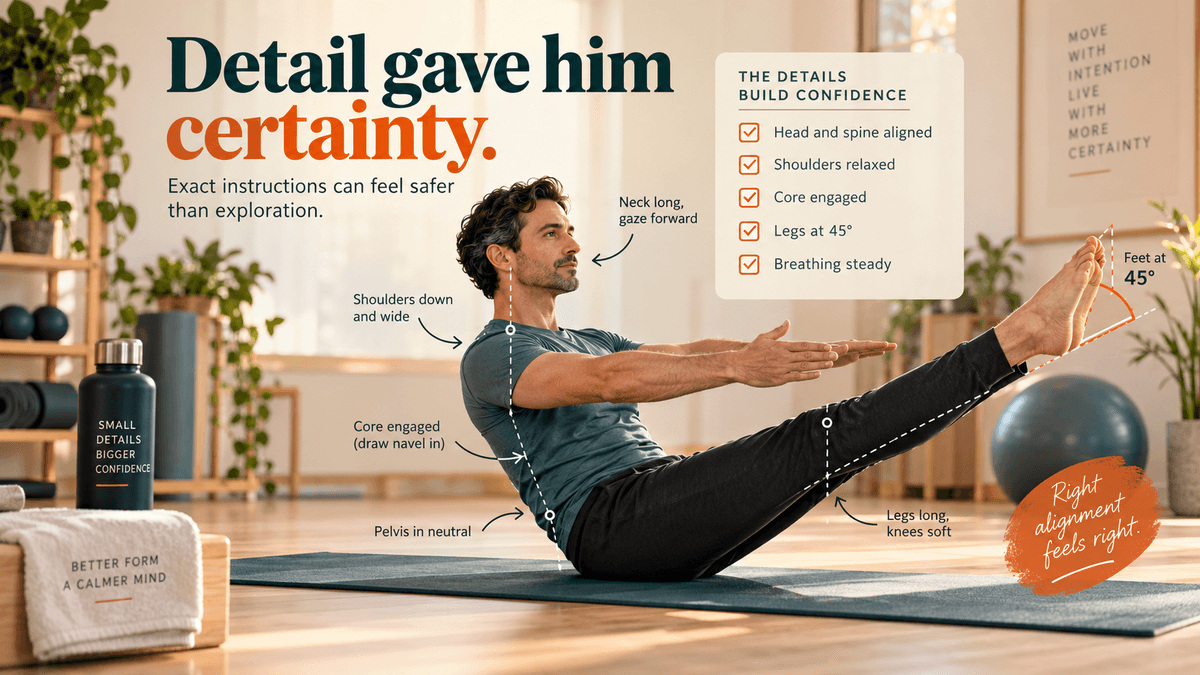
If someone could tell him exactly what to do and he could follow those instructions precisely, perhaps he could be safe. Perhaps he could finally know that he was “correct”.
Then I Removed the Correct Answer
At Empowered Ageing, some of our movement work takes a very different approach.
Instead of explaining exactly how every centimetre of a movement should happen, I may present a problem:
“Explore different ways of getting from the floor to standing.”
Could you use both legs together? Could one leg lead? Could you roll first? Could you turn? Could your hands assist? What other solution could you discover?
There is no single perfect answer. The objective is exploration, curiosity, problem-solving, body awareness and creativity.
When this client encountered that approach, he strongly disliked it.
I found that fascinating.
Suddenly the external rules had disappeared. Nobody was telling him exactly what was right. He had to trust himself, trust his body, explore, make mistakes and discover.
And that felt unsafe.
The experience helped me understand that sometimes a preference for extreme technical precision may also contain a search for emotional safety:
“Tell me exactly what is right because I don't trust myself to discover it.”
Perhaps Physical Education Can Damage More Than Motivation
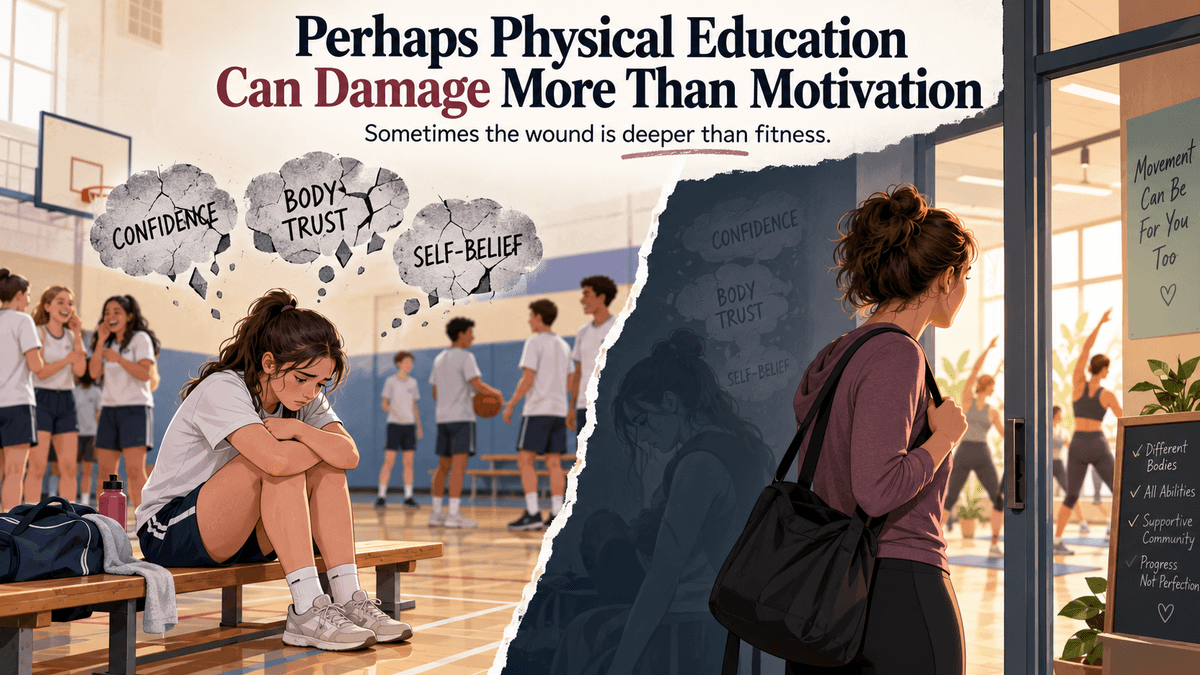
We often ask:
Why don't people exercise?
Then we reach for familiar explanations: laziness, lack of discipline, insufficient motivation or poor understanding of health.
But perhaps, for some people, something much deeper is happening.
Perhaps they do not trust their body. Perhaps they do not trust their ability to learn. Perhaps movement has become associated with judgement. Perhaps uncertainty feels dangerous. Perhaps making a mistake immediately reconnects them with the child who was laughed at.
This is not simply lack of fitness.
It is a relationship with the body.
Children Naturally Explore
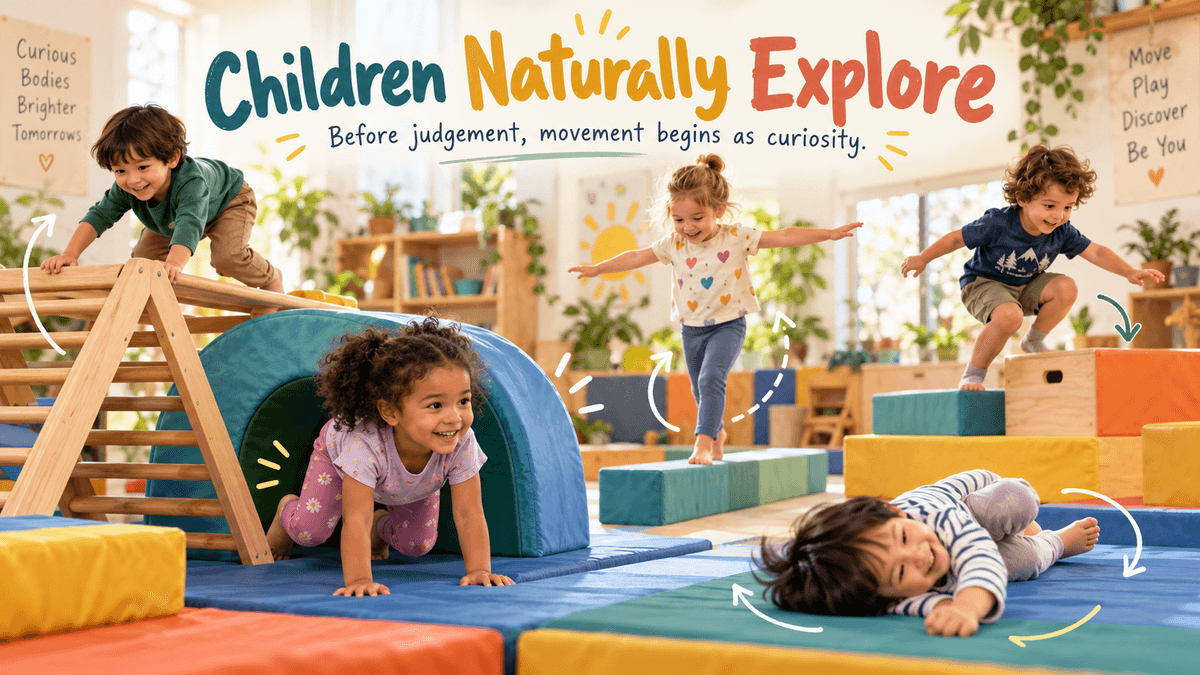
Watch very young children move.
They roll, crawl, climb, fall, get up, jump, turn upside down, invent games and experiment.
They do not normally ask:
“What is the technically correct way to roll across the floor?”
They explore.
Movement is discovery, problem-solving, play and creativity.
Somewhere along the way, many adults lose that.
Sometimes formal Physical Education may unintentionally contribute by turning movement predominantly into something that must be measured, corrected, compared, graded, won or lost.
The question shifts from:
“What can my body discover?”
to:
“Am I doing this correctly?”
That is a profoundly different relationship with movement.
The Irony of Physical Education
The intentions behind Physical Education are admirable: health, physical literacy, cooperation, autonomy, development and lifelong physical activity.
But intentions are not the same as lived experience.
A child does not experience a curriculum document.
A child experiences the lesson.
The waiting in line. Being selected last. The grade. The teacher's reaction. Classmates laughing. Success or failure in front of everybody.
Those experiences may influence the person's future relationship with movement far more than the beautiful intentions written into a programme.
Is Our Model Too Closely Connected to Sport Performance?
In Portugal, the curriculum is broader than competitive sport alone and includes areas such as dance, rhythmic-expression activities, traditional games and nature activities.
That deserves recognition.
Nevertheless, much of its architecture remains connected with organised sporting disciplines and defined performance criteria: basketball, football, handball, volleyball, athletics, gymnastics and racket sports.
These activities can be excellent. I have practised and taught many of them myself.
The problem is not basketball. The problem is not athletics. The problem is not competition.
The question is:
Should this model occupy such a dominant position in the way children are introduced to lifelong movement?
What About Movement Without Winning?
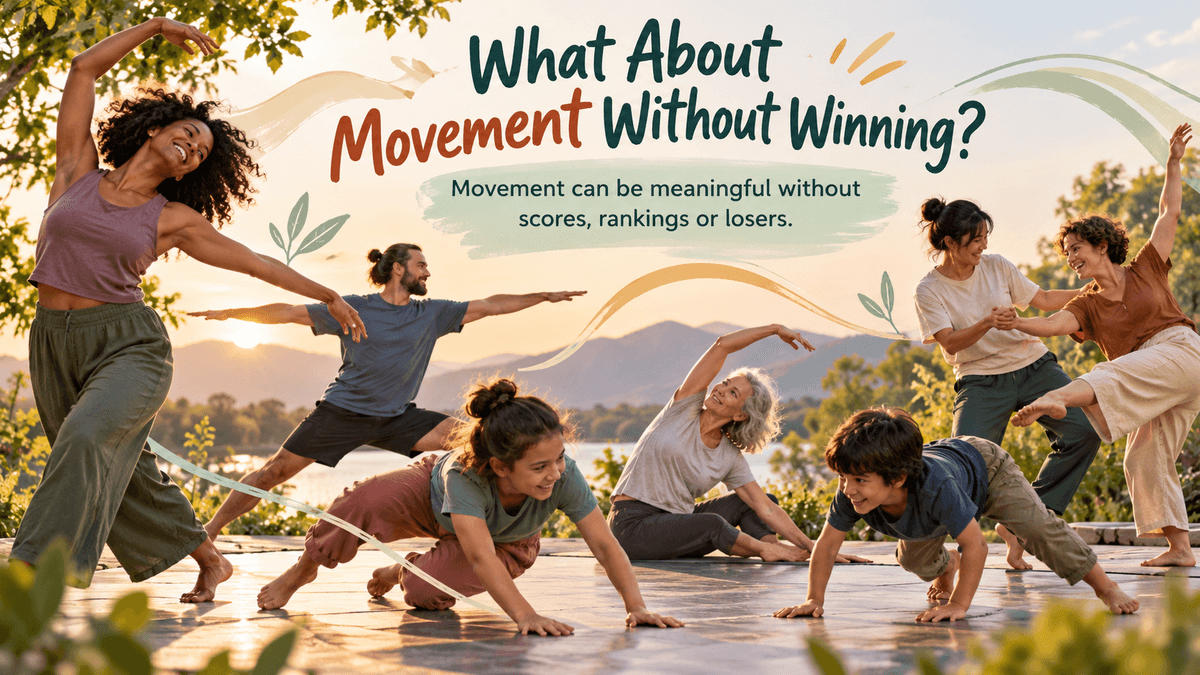
Where is the larger space for movement where nobody wins or loses?
Where no goal needs to be scored and no stopwatch is required?
Where students explore rather than simply reproduce?
Where is improvisation, playful locomotion, conscious movement, somatic exploration, partner work, creative problem-solving and movement discovery?
What space is given to approaches inspired by yoga, Pilates, Animal Flow, contact improvisation, floor exploration or movement puzzles?
I am not suggesting that all these disciplines must become formal subjects.
I am asking something more fundamental:
Should creativity in movement receive the same educational respect that creativity receives in art, music or writing?
There Is More Than One Kind of Physical Intelligence
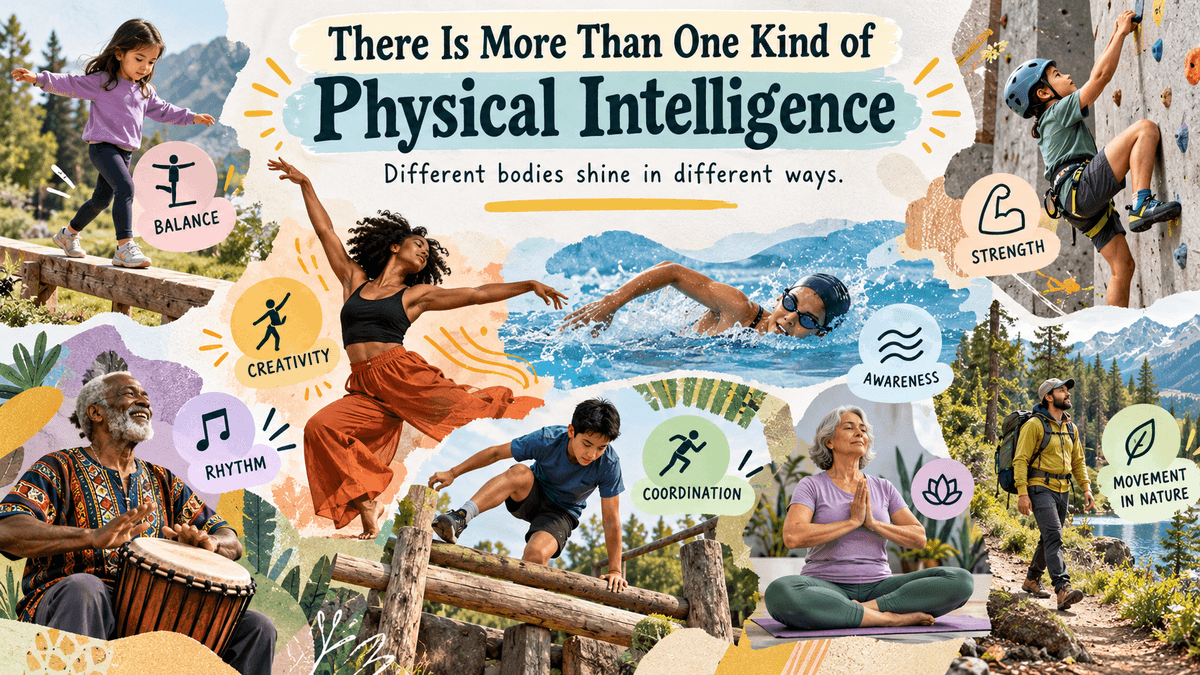
One child may be excellent at football. Another may dislike competitive games but possess beautiful body awareness. Another may have exceptional balance, enjoy rhythm, climbing, swimming, martial arts, walking in nature or expressive movement.
Another may need slower, more conscious practice. Another may love solving movement problems but dislike being told exactly how to move.
If Physical Education presents only a relatively narrow window into movement, some children may conclude:
“I don't like physical activity.”
When the truth could be:
“I don't like the particular kind of physical activity I was repeatedly exposed to.”
Those are completely different statements.
Even the “Best” Student Can Lose
There is another side to this story.
I know because I lived it.
I was the opposite of Michael. Movement came naturally to me. My physical abilities were well above average. I performed well, received high grades and was recognised by teachers and classmates.
Surely the system worked perfectly for me?
Not necessarily.
Because I may also have learned the wrong lesson.
Movement brought recognition. Performance brought approval. Being better brought status.
The reward was not necessarily movement itself.
The reward was being good at movement.
There is an important difference.
When competitive sport and environments that rewarded my performance disappeared from my life, my motivation also changed dramatically. For a period, physical activity largely disappeared.
Later I had to rediscover movement for a completely different reason: not because someone was scoring me, praising me or because I was beating somebody else, but because movement itself had meaning.
The struggling student can be harmed by a performance-centred system, but so can the talented student.
One may learn:
“I'm not good enough.”
The other may learn:
“This is valuable because I'm good at it.”
Neither necessarily learns:
“Movement belongs to me for life.”
We Cannot Ignore the Outcome
If one of the great ambitions of Physical Education is to contribute to active lives, eventually we must ask:
What happens to people afterwards?
Worldwide, physical inactivity remains a major public-health problem and becomes particularly significant as people grow older.
Portugal also presents uncomfortable figures. In the latest European Commission Special Eurobarometer published in 2026, 68% of respondents in Portugal reported that they never exercise or play sport, compared with 39% across the European Union.
Of course, it would be absurd to blame Physical Education alone.
Culture, economics, urban environments, work, health, age, family, time, opportunity and social inequality all influence physical activity.
But an uncomfortable question remains.
Many of these adults spent years experiencing compulsory Physical Education.
If one of our educational objectives is to cultivate lifelong movement:
Why are so many adults desperate to avoid it?
Research Is Beginning to Ask the Same Question
This is no longer only something I hear through coaching.
Research increasingly suggests that experiences in school Physical Education may remain relevant much later in life.
A 2026 study involving more than 2,000 adults in Germany found that people who remembered Physical Education more positively were considerably more likely to report participation in sport and exercise later in life.
The researchers suggested that school Physical Education may operate as a kind of motivational gatekeeper.
But there is also something hopeful.
Negative childhood experiences do not necessarily determine the rest of someone's life. Later experiences can provide new opportunities to develop a different relationship with movement.
That is exactly what I have witnessed.
It is Michael.
It is many of my clients.
And, in a different way, it is also me.
Maybe You Do Not Hate Exercise

Today, when somebody tells me:
“I hate exercise,”
or:
“Exercise is boring,”
I become curious.
Do you really hate movement?
Or did you hate being compared, chosen last, shouted at, watched, laughed at or made to feel stupid?
Did you hate competitive games?
Did you hate never understanding what everybody else seemed to understand?
Did you hate receiving a poor result for something you had barely been given time to learn?
Did you hate feeling that your body had betrayed you?
Maybe you did not hate movement.
Maybe you hated what happened to you while you were moving.
For me, that distinction changes everything.
Ageing Can Reopen the Old Wound
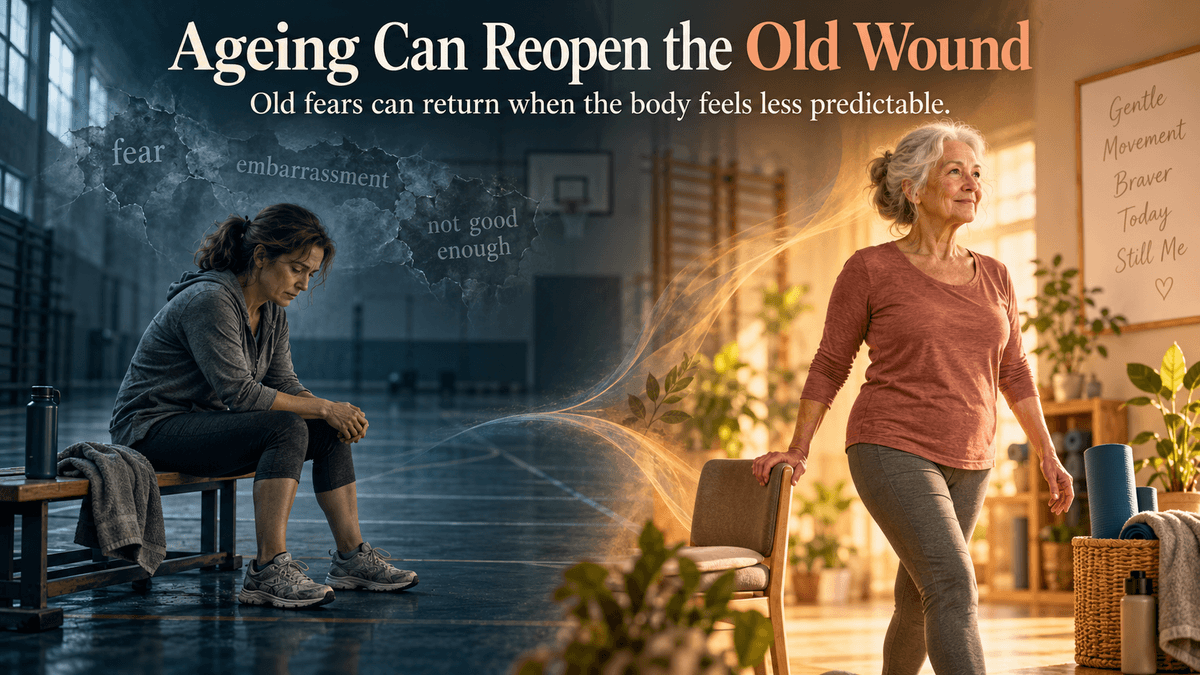
This becomes particularly important in my work with mature adults.
At 70 or 80, bodies change. Strength may decline, balance can become less reliable, reaction capacity can change, pain may appear and coordination can require more attention.
Suddenly, someone who has managed reasonably well for decades can begin feeling physically vulnerable again.
And an old story may return.
The woman I mentioned earlier experienced something similar. She developed a better relationship with her body during adulthood, but as her body now feels less predictable, some of the emotions she remembers from earlier life are returning: fear, self-consciousness and lack of confidence.
When we tell a 75-year-old:
“You need to exercise,”
we may be talking only to the rational mind.
They probably already know movement is good for them.
But another part may be saying:
“I don't want to feel like that person again.”
That is not laziness.
That requires a completely different response.
Before Prescribing Exercise, Ask About Movement History
This is why movement coaching should not begin only with physical measurements.
How much can you lift? How far can you walk? How flexible are you? What is your blood pressure?
These questions matter.
But I also want to know:
What has your body meant to you? Were you confident moving as a child? What happened in Physical Education? Were you embarrassed? Were you bullied or picked last? Did somebody make you feel incapable? When did movement feel joyful? What kinds of physical activity make you feel safe?
That history may explain why someone avoids groups, prefers machines, needs extremely precise instructions, feels anxious when asked to improvise or says:
“I'm just not a movement person.”
We Need a Different Definition of Success

Perhaps the most important question is not how high a child jumps or what grade they receive in basketball.
Perhaps it is:
What relationship with movement will this child still have 50 years from now?
A child who performs less well but develops curiosity, confidence and autonomy may have gained more than a technically excellent student who stops moving at 20.
The highest grade at 15 means very little if at 45 the person says:
“I hate exercise.”
Perhaps one of Physical Education's greatest success stories is the student who never became an athlete but, at 75, still walks, dances, swims, explores, plays, lifts, balances, learns and enjoys using their body.
What Would Education for Lifelong Movement Look Like?
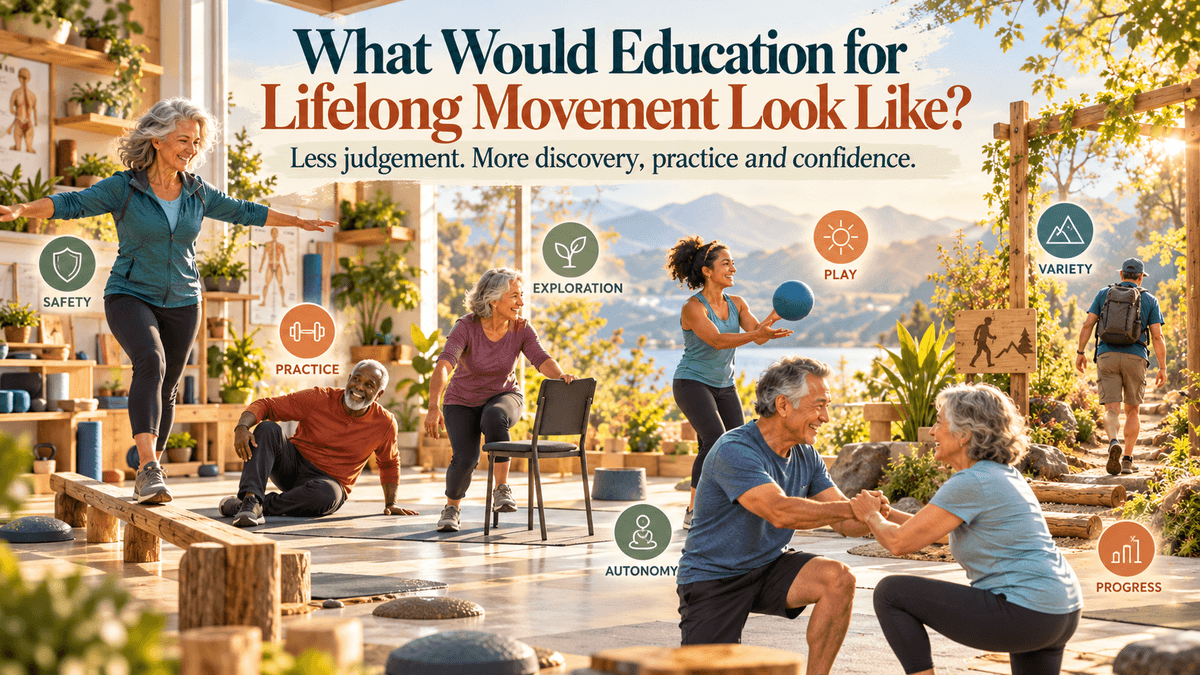
I do not have a simple solution.
But I believe we need a shift: from comparison towards personal development; from judgement towards learning; from premature assessment towards sufficient practice; from only reproducing techniques towards also solving movement problems; from embarrassment towards psychological safety; from exclusively external instruction towards self-discovery; and from predominantly competitive activities towards a much wider movement culture.
Sometimes, instead of:
“Do it correctly.”
we might ask:
“Explore what is possible.”
Instead of:
“Who is best?”
we might ask:
“What are you discovering?”
Most importantly, perhaps we should move from creating students capable of temporarily passing Physical Education towards creating human beings who still want to move when nobody is forcing them to.
This Is Also Why Empowered Ageing Exists
When I left the school system, I did not leave because I stopped believing in education.
In many ways, the opposite happened.
I left because I believed education could be something more.
I wanted an environment where I could teach according to principles I was unwilling to compromise.
Years later, Empowered Ageing became part of that project.
I am not interested only in making somebody stronger, fitter or more flexible, although all those things matter.
There can be another process underneath:
changing somebody's relationship with movement and with their own body.
Sometimes that means changing their relationship with failure, learning, uncertainty, confidence, fear, embarrassment and expectations.
The question is not merely:
“Can you perform this exercise?”
It can also become:
“Can you begin trusting your body again?”
Can you become curious about yourself? Can you make a mistake without immediately judging yourself? Can you recognise progress without comparing yourself with someone else? Can movement become something you practise with respect instead of punishment? Can you develop greater empathy towards your body?
And eventually:
Can you appreciate what this body is still capable of giving you?
That is much closer to what I understand movement education to be.
The Empowered Ageing Method Is More Than Exercises
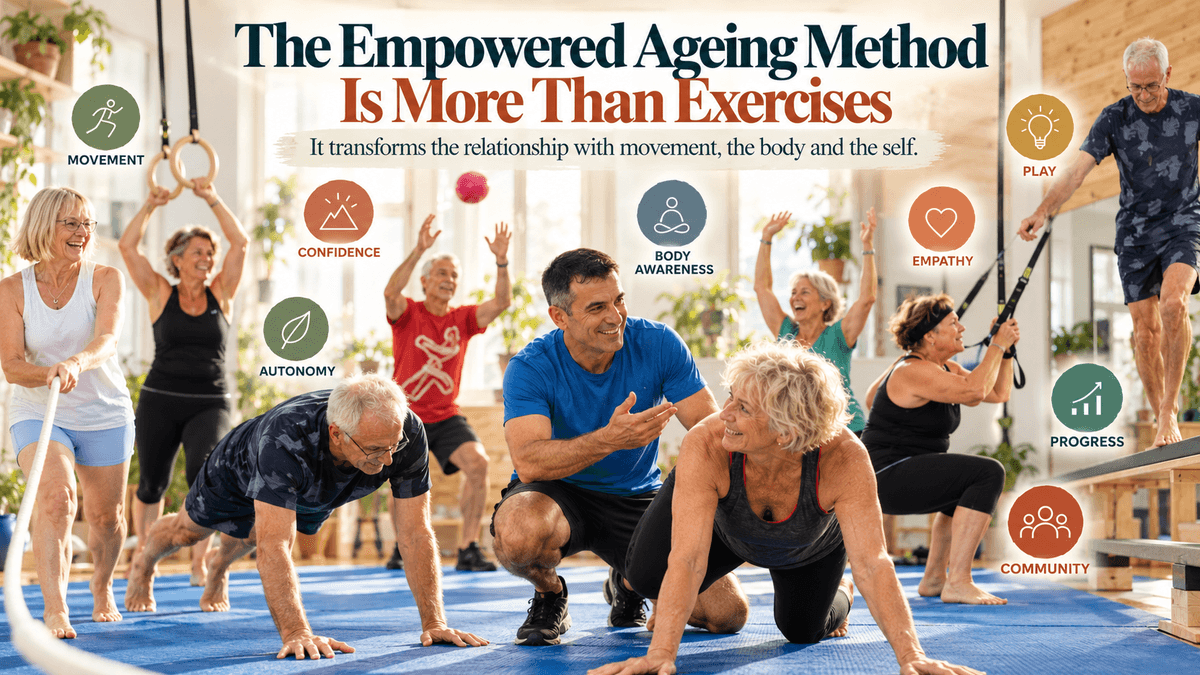
This is also one of the reasons I am now developing the Empowered Ageing Method more formally.
Exercises matter. Progressions matter. Strength, balance, coordination, mobility, reaction, agility and movement skills matter.
But anyone can collect exercises from the internet.
That is not the method.
The method is also how we teach.
How we observe and communicate. How we progress somebody. How we adapt difficulty without making them feel incapable. How we create success without removing challenge. How we encourage play and exploration. How we help someone tolerate mistakes, gradually rebuild confidence and respect their personal history.
It is understanding that a movement problem may have physical, neurological, cognitive and emotional dimensions at the same time.
And it is helping a person become progressively more autonomous rather than permanently dependent on a trainer.
My intention from 2027 onwards is to begin sharing this approach more systematically with other coaches and movement professionals.
Not simply to teach a collection of Empowered Ageing exercises.
But to teach a different way of:
seeing the person in front of the exercise.
Because if we want to change people's relationship with movement, perhaps we also have to change the way we teach movement.
A Child Should Never Leave Physical Education Believing Their Body Is the Problem
Perhaps this summarises everything I have learned.
A child should never leave Physical Education believing:
“I am not made for movement.”
The expression of movement may differ. Abilities, limitations, interests and learning speeds may differ.
But movement belongs to all of us.
Michael needed nearly six decades before somebody helped him question the conclusion he had formed about his body.
Imagine if he had discovered that at 12 instead of 69.
Imagine all the experiences that could have filled those years.
That is why this conversation matters.
Not because we want to blame schools or teachers.
But because education must be willing to examine the difference between what it intends to produce and what people actually experience.
Perhaps Physical Education's Greatest Responsibility Is Also Emotional
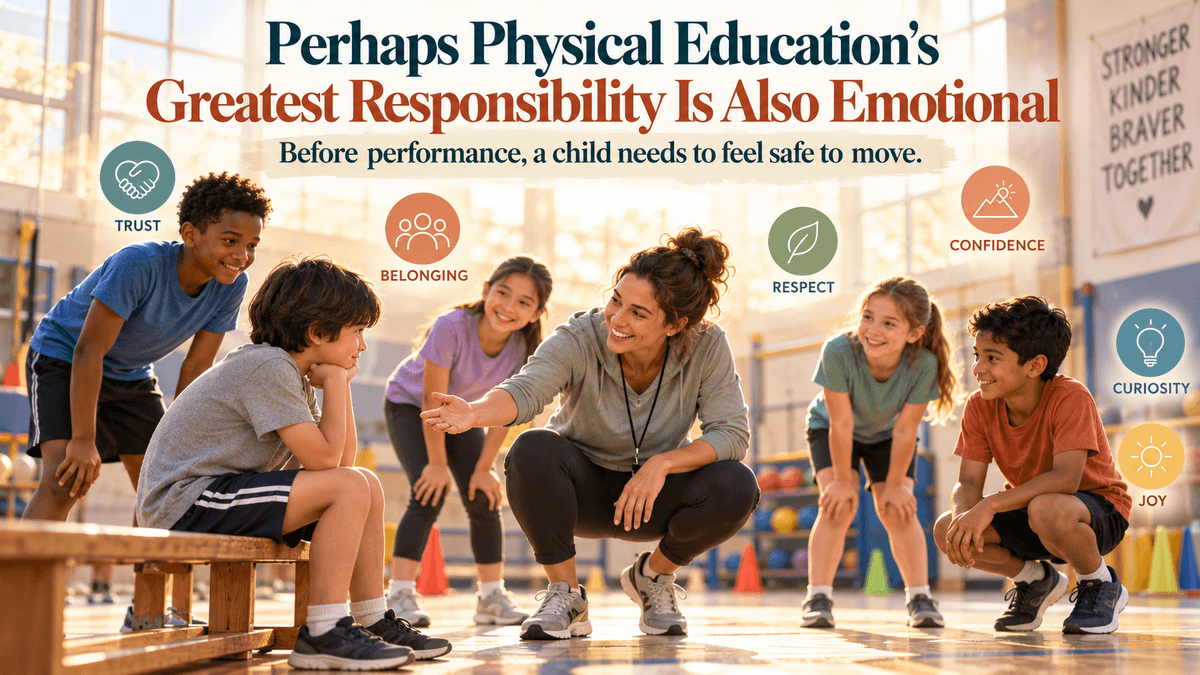
Perhaps we should help every child leave school believing:
My body can learn. My body deserves respect. I do not need to be the best. Making mistakes is part of learning. There are many ways to move. There is a form of movement for me. I can trust myself enough to explore. Movement can give me pleasure.
If we achieve that, perhaps we have created something more valuable than an athlete.
We may have created a person who remains physically engaged with life for decades.
Final Thought
We often ask why so many adults are inactive.
Perhaps we should also ask:
What did movement feel like when they first encountered it?
Childhood physical experiences do not always stay in childhood.
Sometimes the child who always felt too slow becomes the older adult who still feels uncomfortable entering an exercise group.
Sometimes the boy struggling to locate a ball because of double vision becomes the 69-year-old convinced that he is fundamentally uncoordinated.
Sometimes the adult who needs every movement explained in exact technical detail is still protecting the child who was terrified of getting it wrong.
Sometimes the talented athlete reaches adulthood and discovers that without praise, competition and recognition, the motivation to move disappears.
And sometimes a Physical Education teacher leaves the school system because he can no longer accept a way of teaching that conflicts with what he believes education should do for a human being.
But those stories do not have to end there.
A body can learn. Confidence can be rebuilt. Curiosity can return. Movement can be rediscovered. Our relationship with our body can change.
And a person who once believed:
“Movement is not for me”
may eventually discover:
“Perhaps nobody ever gave me the opportunity to find my way of moving.”
For me, Physical Education cannot simply be about producing performance during the school years, just as movement coaching cannot simply be about prescribing exercises during adulthood.
Both should ultimately help a human being develop a relationship with their body that supports them throughout life — a relationship built not primarily on comparison, judgement and fear, but on learning, curiosity, respect, confidence, empathy, autonomy and joy.
Perhaps that should be one of the deepest purposes of Physical Education:
Not merely teaching children how to perform movement, but helping them build a relationship with movement that they will want to keep for the rest of their lives.
Movement Educator, Healthy Ageing Coach and former Physical Education TeacherFounder of Empowered Ageing
References & Further Reading
Brand, R., & Kliegl, R. (2026). Affective memories of school physical education, life-phase timing of formative experiences, and adult sport and exercise participation: a quota-representative study in Germany. BMC Public Health, 26, 2172.
This study of 2,201 adults found that more positive memories of school Physical Education were associated with a greater likelihood of participating in sport and exercise later in life. The authors suggest that PE may act as a “motivational gatekeeper”, while also showing that positive later-life experiences can provide a second entry point into movement.
Read the full open-access study – Springer / BMC Public Health
Limmeroth, J., Leisterer-Härtig, S., Hagemann, N., & Ladwig, M. A. (2026). Last in Line, Lasting in Mind? A Retrospective Investigation of the Relationship Between Physical Education Experiences and Adult Physical Activity. Journal of Sport & Exercise Psychology, 48(1), 46–54. DOI: 10.1123/jsep.2025-0008.
In a study of 692 adults, greater remembered enjoyment of PE was associated with more adult physical activity, while memories of being selected last for teams were associated with lower physical activity. PubMed
Trigueros, R., Aguilar-Parra, J. M., Cangas, A. J., López-Liria, R., & Álvarez, J. F. (2019). Influence of Physical Education Teachers on Motivation, Embarrassment and the Intention of Being Physically Active During Adolescence. International Journal of Environmental Research and Public Health, 16(13), 2295. DOI: 10.3390/ijerph16132295.
This research involving 604 secondary-school students found important relationships between teacher behaviour, feelings of embarrassment, self-determined motivation and students' intention to remain physically active. PubMed
View the study on PubMed
World Health Organization. (2024). Physical Activity – Fact Sheet.
WHO reports that around 31% of adults worldwide — approximately 1.8 billion people — did not meet recommended physical-activity levels in 2022. WHO also notes that physical inactivity increases after the age of 60 in both men and women. World Health Organization
World Health Organization – Physical Activity Fact Sheet
European Commission. (2026). Special Eurobarometer – Sport and Physical Activity.
The latest survey reports that 39% of people across the European Union say they never exercise or play sport. In Portugal, this rises to 68%.
European Commission – Special Eurobarometer: Sport and Physical Activity
Direção-Geral da Educação – Portugal. Currículo Nacional: Educação Física.
The Portuguese Physical Education curriculum includes collective sports such as basketball, football, handball and volleyball, alongside gymnastics, athletics, racket sports, rhythmic and expressive activities, traditional games, nature activities and other areas. It also contains explicit technical, tactical and performance-related learning criteria. curriculonacional.dge.mec.pt
Portuguese National Curriculum – Physical Education
Author's Note