

At Empowered Ageing, I love helping people.
I love seeing someone become stronger, regain confidence, improve their balance, move with less fear, discover abilities they thought they had lost, or simply begin to feel more alive in their own body.
But after many years of teaching and coaching, I have also learned something important:
Help works best when the person being helped is willing to participate in their own change.
There is a big difference between someone who is struggling and needs support, and someone who repeatedly says they want things to change but is not yet willing to change anything themselves.
This does not necessarily mean that the person is lazy, difficult or deliberately making excuses.
Very often, it is much more complicated than that.
We may genuinely want a different result while simultaneously resisting the discomfort required to produce that result.
And modern psychology tells us that this conflict is extremely human.
Wanting something is not the same as doing something
Someone may genuinely say:
“I need to become stronger.”
“I know I should exercise.”
“My balance is getting worse.”
“I want more energy.”
“I need to lose weight.”
“I am becoming too stiff.”
“I am frightened of falling.”
“I want to be healthier.”
They may mean every word.
But there is an important difference between:
desire, intention and action.
Psychologists studying physical activity describe what is known as the intention–behaviour gap: people often intend to change their behaviour but fail to translate that intention into action.
A 2023 systematic review and meta-analysis involving approximately 29,600 people confirmed that this gap is substantial in physical activity.
An even larger meta-analysis published in 2025 examined 92 studies involving 47,548 participants. It found that exercise intention and actual exercise behaviour were only moderately related. Importantly, planning, preparing for obstacles and actively monitoring behaviour helped people translate intention into action. [1,2]
So saying:
“I want to exercise more”
is very different from saying:
“I will train every Monday and Wednesday at 10am, and if something interferes with one session, I already know what my alternative will be.”
The first is an intention.
The second is beginning to become a behaviour.
Why do we make excuses even when we know better?

This is where compassion and self-awareness are important.
Human beings naturally tend to avoid discomfort.
And meaningful change nearly always involves some discomfort.
Starting exercise when you feel weak can be uncomfortable.
Discovering that movements you once performed easily are now difficult can be uncomfortable.
Being a beginner can be uncomfortable.
Being corrected can be uncomfortable.
Changing routines can be uncomfortable.
Admitting that your body has deteriorated can be emotionally uncomfortable.
Spending time, effort and sometimes money on your health can be uncomfortable.
And confronting the possibility that change will take months rather than days can be uncomfortable too.
So the mind becomes very creative.
“I'll start next month.”
“I don't have time.”
“I need to get fitter before I join an exercise programme.”
“The weather isn't good.”
“My knees aren't great.”
“This week is too busy.”
“I'll see how I feel.”
“I already know what I need to do.”
Sometimes these are completely legitimate barriers.
But sometimes they also protect us from something else:
the discomfort of taking action today.
Avoidance produces immediate relief.
Unfortunately, what feels easier today may make life considerably harder five or ten years from now.
Complaining is not the same as changing
There is another pattern that I have observed many times.
Sometimes talking about a problem gives us the temporary sensation that we are doing something about it.
We explain it.
Analyse it.
Complain about it.
Watch videos about it.
Read about it.
Ask friends.
Ask professionals.
Seek another opinion.
And then perhaps another one.
There is nothing wrong with talking, learning or asking for help.
They can all be important parts of change.
But eventually information needs to become behaviour.
Otherwise, talking about the problem can gradually become a substitute for addressing it.
At some point, the most useful question may no longer be:
“Why is this happening to me?”
It becomes:
“What am I prepared to do about the things I can influence?”
That is a very different question.
It moves us from being only an observer of our circumstances to becoming an active participant in our future.
Part of you may want to change — while another part does not
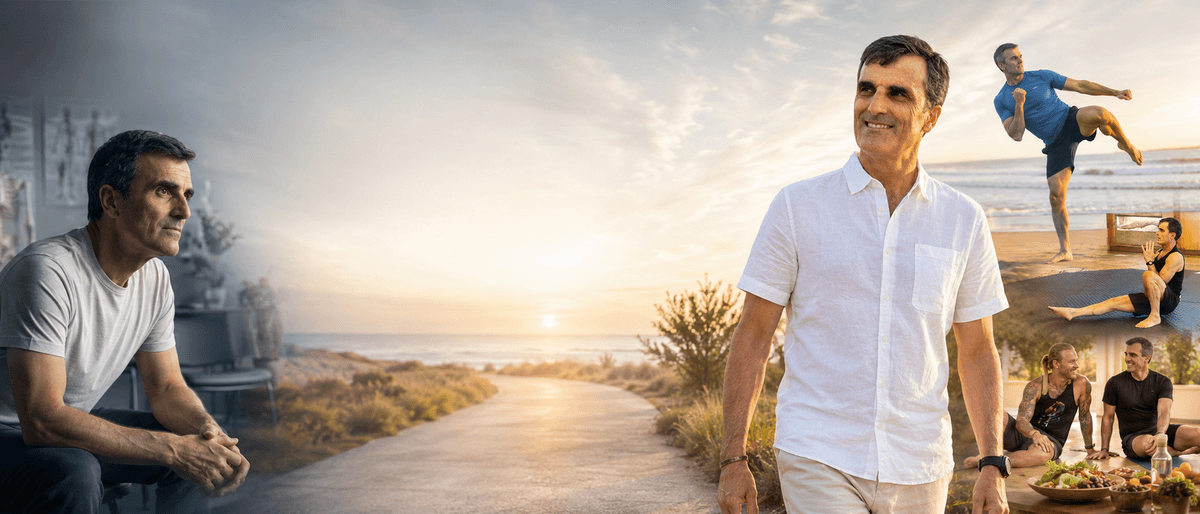
This internal contradiction is called ambivalence, and it is a normal part of behaviour change.
A person can honestly believe both of these things:
“I want to become healthier.”
and:
“I don't want to change my lifestyle.”
They may think:
“I want to become stronger.”
but also:
“I don't want exercise to feel difficult.”
Or:
“I want better mobility.”
but:
“I don't want to practise regularly.”
Or:
“I want professional help.”
but:
“I don't really want someone challenging the way I currently live.”
Both sides can coexist.
This is one reason modern approaches such as Motivational Interviewing do not simply lecture people or tell them what they should do.
Instead, they help people explore their own ambivalence and discover their own reasons for changing.
A major 2024 systematic review and meta-analysis published in The BMJ examined 97 randomised controlled trials involving 27,811 participants. Behavioural interventions that incorporated motivational interviewing were associated with improvements in physical activity compared with control approaches, although the certainty of the evidence varied and long-term effects were less clear. [3]
The important message is not that somebody can talk you into changing.
It is almost the opposite.
Lasting change becomes more powerful when the reasons for changing start becoming your reasons.
A coach cannot want your health more than you do
This principle is fundamental to the way I see coaching.
A good coach can:
- assess you;
- educate you;
- identify limitations;
- create appropriate exercises;
- adapt movements;
- encourage you;
- listen to you;
- correct you;
- provide feedback;
- create progression;
- help you understand your body;
- and support you when things become difficult.
But there are things a coach cannot do.
I cannot exercise for you.
I cannot sleep for you.
I cannot practise for you.
I cannot make you attend your sessions.
I cannot decide what you eat when you go home.
I cannot make you repeat something that needs repetition.
I cannot make health a priority in your life.
And ultimately, I cannot want your future more than you do.
Coaching is a partnership, not a rescue operation.
The professional brings knowledge, experience, guidance and support.
The client brings participation.
We need both.
You do not need confidence before you start
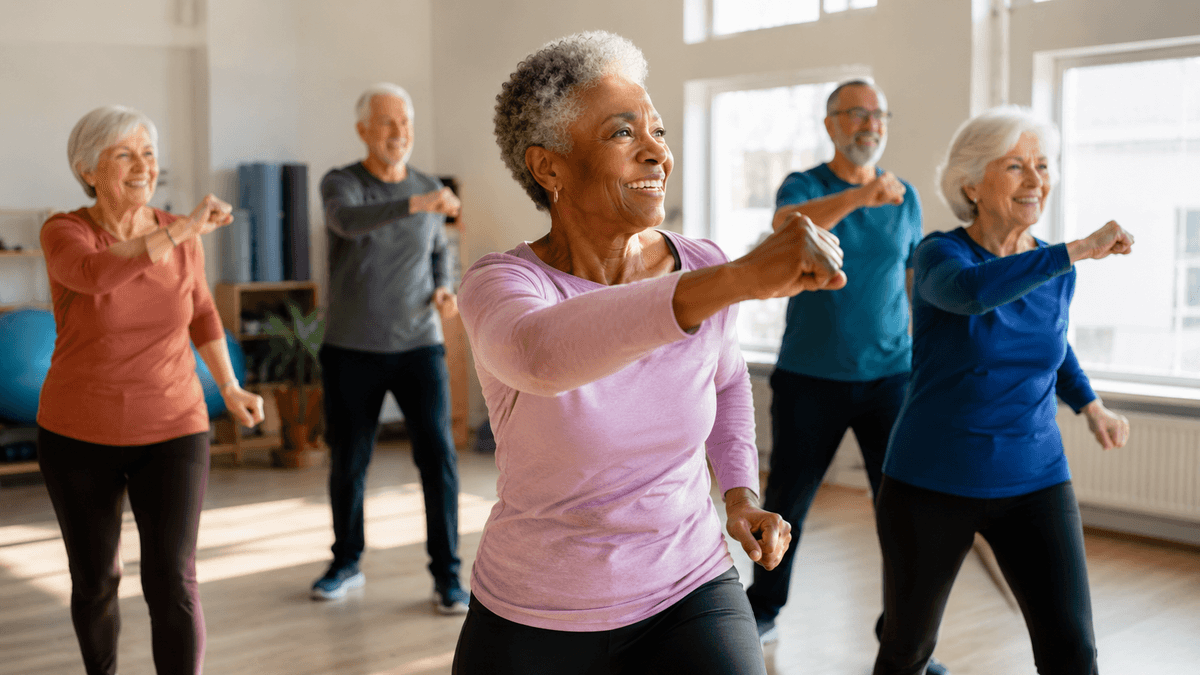
Another important psychological concept is self-efficacy.
Self-efficacy means, in simple terms:
“I believe I am capable of doing this.”
This becomes particularly important as we age.
A 2025 systematic review and meta-analysis examining older adults found a meaningful positive relationship between exercise self-efficacy and physical activity. People who feel more capable of exercising tend to be more physically active, while participation in physical activity may itself help reinforce that sense of capability. [4]
This creates an important lesson.
Many people wait:
“When I feel more confident, I will start.”
“When I have more energy, I'll exercise.”
“When I'm fitter, I'll join the class.”
“When I feel motivated, I'll do it.”
But sometimes confidence comes after action.
You perform one manageable movement.
You discover that you can do it.
You repeat it.
It becomes easier.
You progress slightly.
You discover something else you can do.
And gradually the story inside your head begins to change.
From:
“I can't do this.”
to:
“Maybe I can.”
Then:
“I did it.”
And eventually:
“What else might I be capable of?”
Action creates evidence.
And evidence can build confidence.
Motivation works better when it comes from within
Recent research based on Self-Determination Theory also gives us another important clue.
Not all motivation is the same.
Doing something because somebody is constantly pressuring you is different from doing it because you personally understand its value.
A 2025 review of systematic reviews found that feelings of competence, intrinsic motivation and personally valuing physical activity are important determinants of participation.
Research specifically examining adults aged 65 and over also highlights the importance of autonomy, social connection, supportive coaching, constructive feedback and activities adapted to the individual's abilities. [5,6]
This is very relevant to Empowered Ageing.
We do not simply want someone to exercise because:
“My doctor told me to.”
“My husband keeps telling me.”
“My daughter says I have to.”
“My trainer keeps chasing me.”
External pressure may get someone through the door.
But ideally, over time, something deeper develops:
“I understand why this matters to me.”
Maybe you want to travel.
Maybe you want to stay independent.
Maybe you want to play on the floor with your grandchildren.
Maybe you want to continue gardening.
Maybe you want to climb stairs confidently.
Maybe you want to recover if you lose your balance.
Maybe you simply want your body to remain a place in which you can continue living your life fully.
That is a very different kind of motivation.
Stop waiting to feel motivated
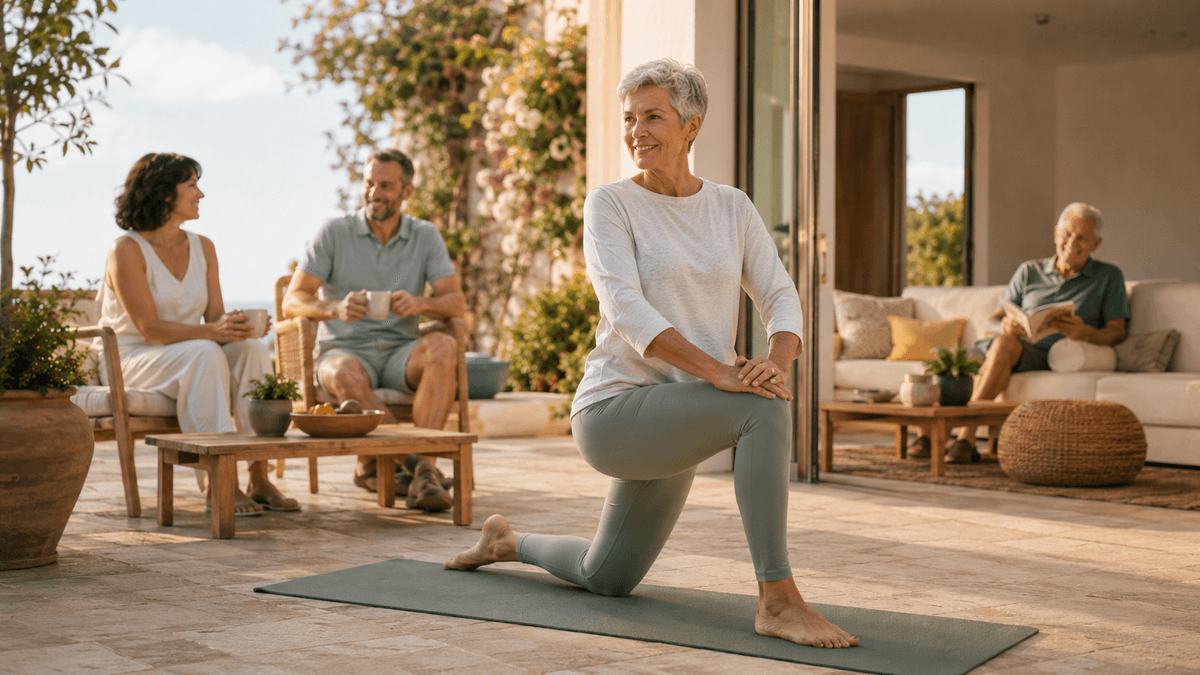
Motivation is useful.
But motivation is unreliable.
Some mornings we have it.
Some mornings we don't.
If our health behaviours depend entirely on asking:
“Do I feel like doing it today?”
consistency becomes extremely difficult.
This is why planning matters.
Research into the intention–behaviour gap shows that action planning, coping planning and action control can help turn intentions into behaviour. [2]
Instead of:
“I should exercise more.”
try:
“When exactly will I exercise?”
Instead of:
“I'll practise at home.”
ask:
“On which days, at what time, and for how long?”
And then go one step further:
“What will I do if I'm tired?”
“What if it rains?”
“What if somebody visits?”
“What happens if I miss one session?”
“What will I do when motivation disappears?”
This is where behaviour change becomes realistic.
Not by imagining the perfect week.
But by preparing for the imperfect one.
Make the healthier choice easier
Psychology also reminds us that behaviour is not created by willpower alone.
Our environment matters.
Our routines matter.
The people around us matter.
The way choices are presented matters.
A 2026 systematic review examining 2,730 frail older adults across 16 studies found that behavioural “nudge” strategies — small changes in the environment or choice structure designed to make healthier behaviours easier — could increase physical activity. [7]
This does not remove personal responsibility.
It helps us use our environment intelligently.
Put your walking shoes somewhere visible.
Book your exercise sessions in advance.
Train with people who expect you to turn up.
Reduce unnecessary decisions.
Prepare your clothes the night before.
Attach a new habit to something you already do.
Create an environment in which the healthier action becomes easier to perform.
Good behaviour change is not simply about becoming stronger than temptation. Sometimes it is about designing life more intelligently.
At Empowered Ageing, empowerment includes responsibility

The word Empowered is important.
Empowerment does not mean that somebody rescues you.
It means progressively developing the knowledge, capacity, confidence and responsibility to influence your own life.
Of course, we cannot control everything.
Genetics matter.
Illness matters.
Past injuries matter.
Financial circumstances matter.
Our environment matters.
Luck matters.
And ageing itself brings changes that none of us can completely avoid.
Taking responsibility does not mean blaming ourselves for everything that happens.
It means recognising the difference between:
what I cannot control
and
what I can still influence.
That second category is where empowerment lives.
Four questions worth asking yourself
If you repeatedly say that you want something to change, consider asking yourself four questions.
1. What exactly do I want?
Not simply:
“I want better health.”
What would better health actually allow you to do?
Walk further?
Travel independently?
Get off the floor?
Carry your shopping?
Play with grandchildren?
Feel more energetic?
Reduce your fear of falling?
2. What am I personally willing to do?
This is where desire begins becoming responsibility.
3. What discomfort am I willing to tolerate?
Because progress usually requires some combination of:
effort;
learning;
repetition;
patience;
frustration;
uncertainty;
and occasionally failure.
4. What will I actually do this week?
Not someday.
Not when life becomes quieter.
Not when January arrives.
Not when motivation suddenly appears.
This week.
Help works best when you meet it halfway
The people I most enjoy helping are not necessarily the fittest.
They are not necessarily the most confident.
They are not necessarily highly motivated every day.
They certainly are not perfect.
They have difficult weeks.
They sometimes miss sessions.
They get frustrated.
They occasionally go backwards.
They have fears and doubts.
That is normal.
The difference is that underneath all of that, there is still a willingness to participate.
To learn.
To practise.
To try again.
To take some responsibility.
And to return.
Those are the moments when coaching becomes incredibly rewarding.
Because slowly:
“I can't”
becomes:
“I'll try.”
Then:
“I did it.”
And eventually:
“What else can I do?”
That, to me, is Empowered Ageing.
Help can open the door.
A teacher can show you the way.
A coach can walk beside you.
A community can encourage you.
Science can tell you what is likely to work.
But eventually:
the steps have to be yours.
Age Empowered. Live Fully.
Scientific references
1. Feil K, Fritsch J, Rhodes RE. (2023). The intention-behaviour gap in physical activity: a systematic review and meta-analysis of the action control framework. British Journal of Sports Medicine, 57(19), 1265–1271.
DOI: 10.1136/bjsports-2022-106640
2. Yang Z, Li J, Liu X. (2025). “Inconsistency between words and deeds”: a meta-analysis of the moderating and mediating mechanisms of bridging the exercise-intentional-behavior gap. Frontiers in Psychology.
DOI: 10.3389/fpsyg.2025.1586176
3. Zhu S, Sinha D, Kirk M, et al. (2024). Effectiveness of behavioural interventions with motivational interviewing on physical activity outcomes in adults: systematic review and meta-analysis. The BMJ, 386:e078713.
DOI: 10.1136/bmj-2023-078713
4. Xie et al. (2025). Association between exercise self-efficacy and physical activity in elderly individuals: a systematic review and meta-analysis.
PubMed PMID: 40557371
5. Review of Self-Determination Theory and Physical Activity (2025). Does Self-Determination Theory Associate With Physical Activity? A Systematic Review of Systematic Reviews.
PubMed PMID: 40256835
6. Motivation, psychological needs and physical activity in older adults (2025). Qualitative review of 21 studies involving adults aged 65–97, published through Oxford University Press / Age and Ageing.
PubMed PMID: 40601367
7. The effectiveness of nudge-based physical activity interventions in frail older adults (2026). Systematic review of 16 studies involving 2,730 participants.
PubMed PMID: 42415027