

At some point in life, almost everyone who practices movement, exercise or sports will face a physical setback.
It may be:
- an inflammation
- a joint pain
- a muscle strain
- an illness
- fatigue
- a fall
- or a more significant injury
And when this happens, frustration is natural.
Especially when we were finally starting to feel:
- stronger
- more mobile
- more energetic
- more confident
- more independent
Many people immediately feel discouraged.
Some even feel the urge to stop completely.
And emotionally, this reaction makes sense.
Nobody enjoys seeing their progress slow down.
But this is where an important reflection begins.
The Body and Life Follow the Same Principle
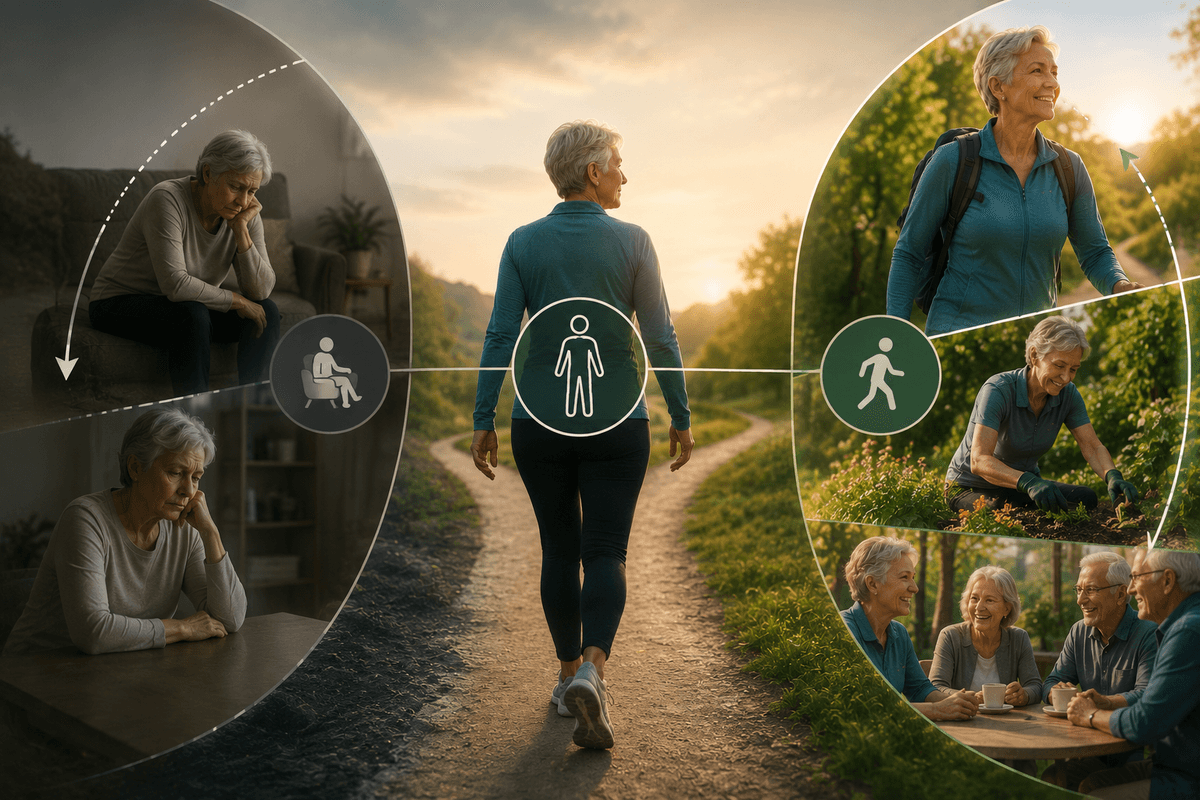
Life is not linear.
There are moments of acceleration, moments of adaptation, moments of recovery and moments where we must slow down and rethink our strategy.
The body works exactly the same way.
Even professional athletes, trainers and highly experienced movers get injured sometimes.
When that happens, they usually do not abandon movement completely.
Instead, they adapt:
- they reduce intensity
- modify exercises
- avoid painful movements
- simplify training
- shift focus temporarily
The goal changes.
Instead of maximizing progress, the focus becomes:
maintaining function while respecting recovery.
This same principle is even more important for mature adults.
The Biggest Mistake Mature Adults Can Make: Complete Inactivity
One of the greatest dangers during injury or illness is not only the injury itself.
It is the decision to stop moving entirely for long periods.
Why?
Because the body begins adapting very quickly to inactivity.
Research in exercise physiology shows that when movement stimulus decreases significantly, the body starts losing important capacities through a process called:
detraining.
And this process becomes more significant with ageing.
The Ageing Body Recovers More Slowly Than It Declines
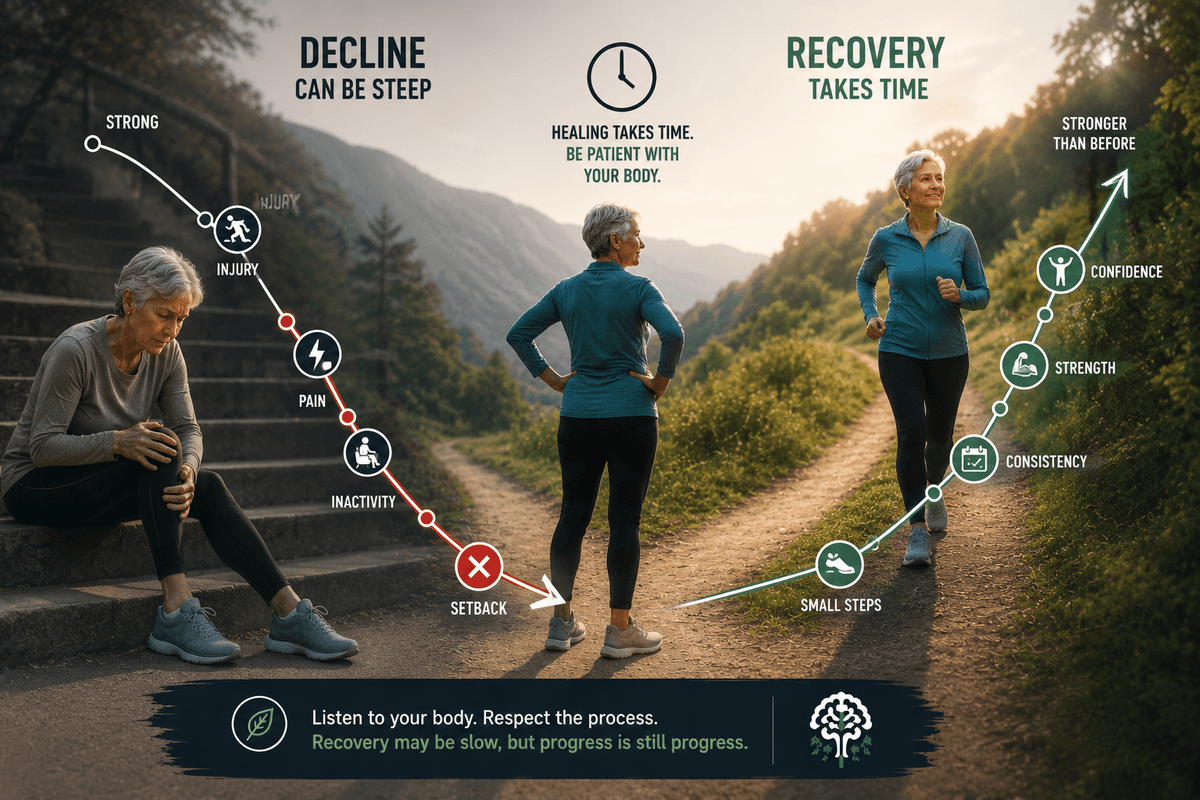
As we age, the body naturally experiences:
- slower recovery rates
- reduced muscle mass (sarcopenia)
- reduced anabolic hormone production
- lower tissue regeneration speed
- slower neurological adaptation
This does not mean older adults cannot improve.
Scientific evidence clearly shows that adults in their 60s, 70s, 80s and even 90s can still improve:
- strength
- balance
- coordination
- mobility
- reaction time
- confidence in movement
But there is an important reality:
mature bodies often lose physical capacity faster than they regain it.
This is why long periods of complete inactivity can have serious consequences.
Not only physically.
But neurologically, emotionally and psychologically too.
Movement Is Not Only Physical
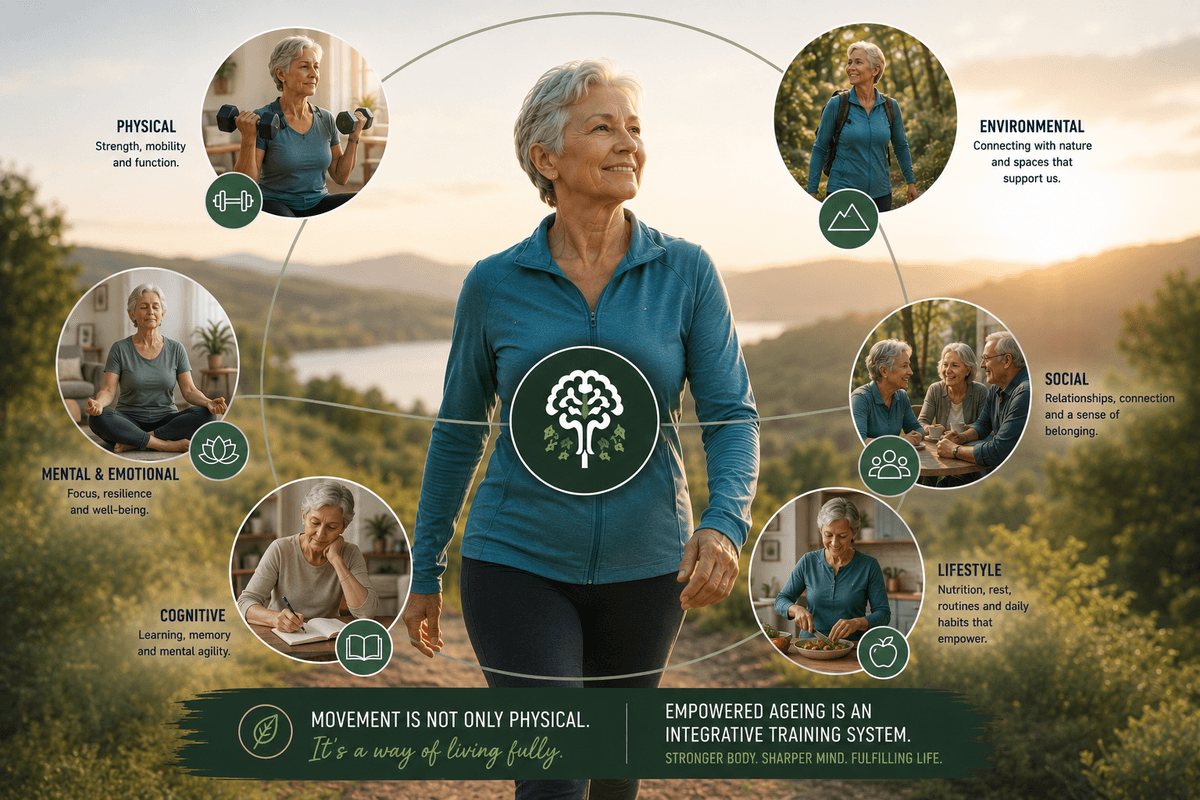
This Is Why Empowered Ageing Is an Integrative Training System
At Empowered Ageing, we increasingly use the term:
Integrative Training System
because what we do goes far beyond physical exercise.
Movement affects the entire human being.
When people stop moving completely, they do not only lose:
- strength
- flexibility
- endurance
- mobility
They may also gradually lose:
- confidence
- emotional resilience
- mental sharpness
- coordination
- reaction capacity
- motivation
- courage to try new things
- social connection
- sense of vitality
- sense of independence
And these losses can happen silently.
The Exercise You Practice Reflects the Beliefs You Hold About the Human Being
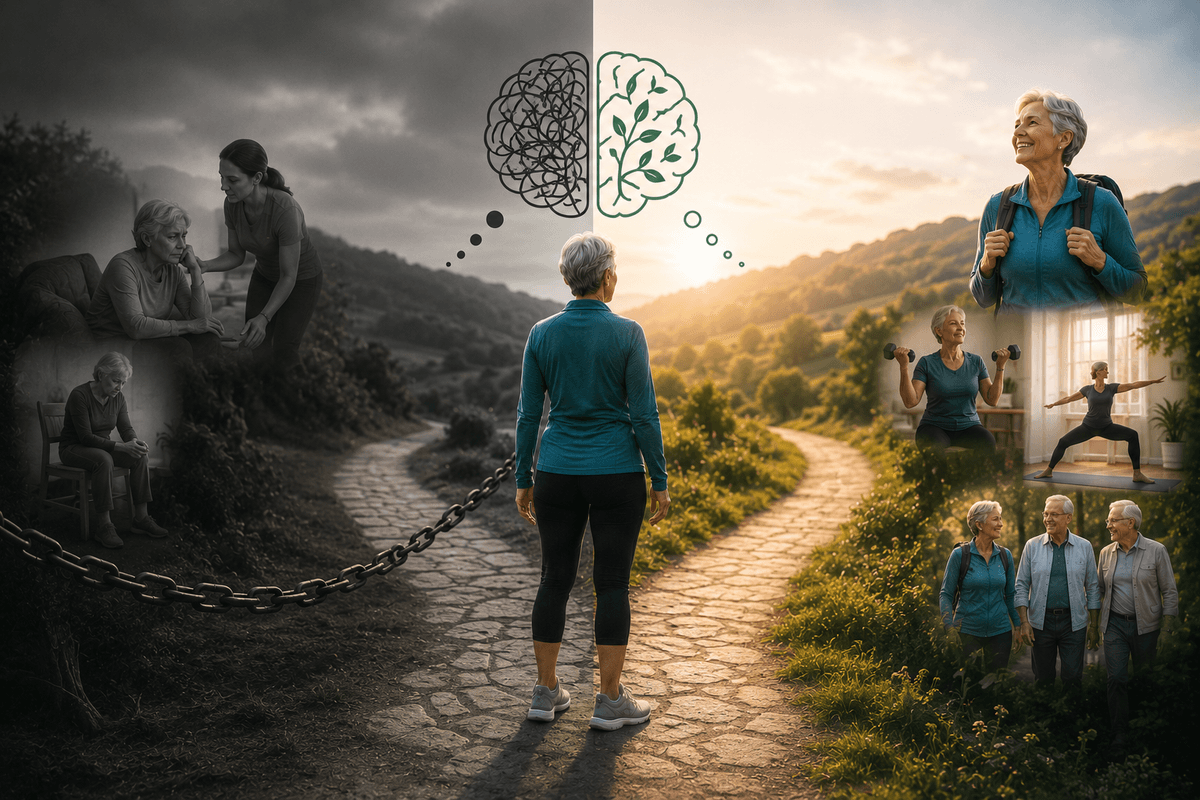
If exercise is seen only as:
- burning calories
- building muscle
- improving cardio
then injury simply becomes a pause in physical training.
But if movement is understood as something much deeper — as we believe in the Empowered Ageing Integrative Training System — then movement becomes:
- neurological stimulation
- emotional regulation
- cognitive training
- social connection
- adaptability training
- resilience training
- self-belief training
- nervous system nourishment
In this perspective, stopping movement completely means interrupting stimulation in many important human systems simultaneously.
Movement Helps Maintain the Brain
Movement is not only muscular.
Movement is neurological.
Every movement stimulates communication between:
- brain and body
- nerves and muscles
- balance systems
- sensory systems
- spatial awareness systems
Modern neuroscience shows that regular movement helps support:
- neuroplasticity
- neural connection development
- cognitive preservation
- emotional regulation
- mental wellbeing
This becomes critically important as we age.
Especially because ageing adults often need:
- more repetition
- more consistency
- more frequent stimulation
to maintain neurological function.
When movement disappears completely, the nervous system also loses stimulation.
And this affects much more than fitness.
It can affect:
- mood
- confidence
- memory
- coordination
- emotional state
- cognitive sharpness
Sometimes the Goal Is Not Improvement

Sometimes the Goal Is Preservation
One of the most important mindset shifts during injury recovery is understanding this:
During some phases of life, success is not measured by progression.
Sometimes success means:
- maintaining habits
- maintaining mobility
- maintaining consistency
- maintaining nervous system stimulation
- maintaining emotional resilience
This is extremely valuable.
Especially for mature adults.
Because preserving capacity often prevents a much larger decline later.
Adapted Movement Is Still Powerful Movement
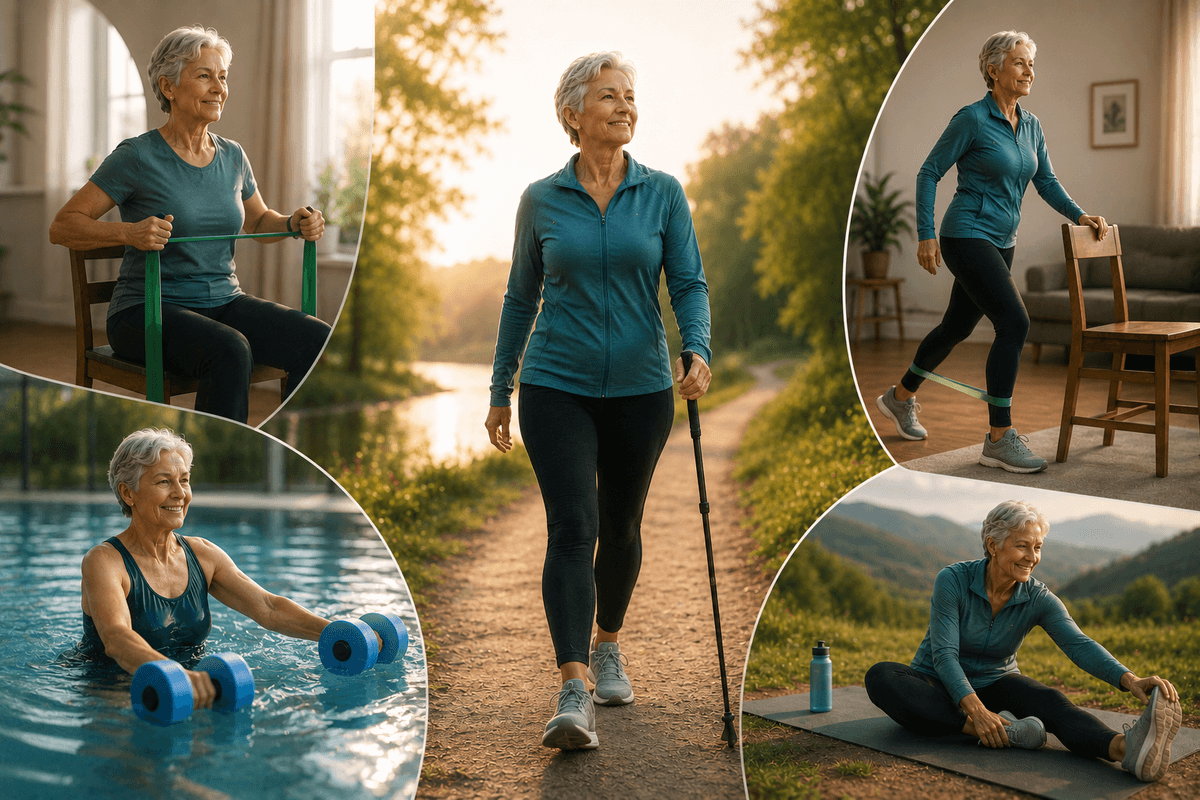
If the shoulder is injured, perhaps we can still train:
- walking
- breathing
- balance
- hip mobility
- lower body strength
If the knee is painful, perhaps we can still practice:
- upper body mobility
- coordination
- floor-based movement
- posture
- nervous system exercises
The body is incredibly adaptable.
And adapted movement helps preserve:
- function
- routine
- identity
- confidence
- hope
Pain Is Information
Sometimes the Body Is Asking for Help From Other Areas
Another very important principle within the Empowered Ageing Integrative Training System is this:
pain should not simply be accepted as “normal ageing.”
Unfortunately, many mature adults become so used to discomfort that they stop questioning it.
They say things like:
- “That’s just my age.”
- “I’ve had this pain for years.”
- “I just need to live with it.”
And while adaptation in movement is sometimes necessary, it is also very important to understand something:
pain can have many different causes.
A limitation or discomfort is not always solved only through exercise modification.
Sometimes the body may need support from other health professionals and therapeutic approaches.
The Human Body Is Extremely Complex
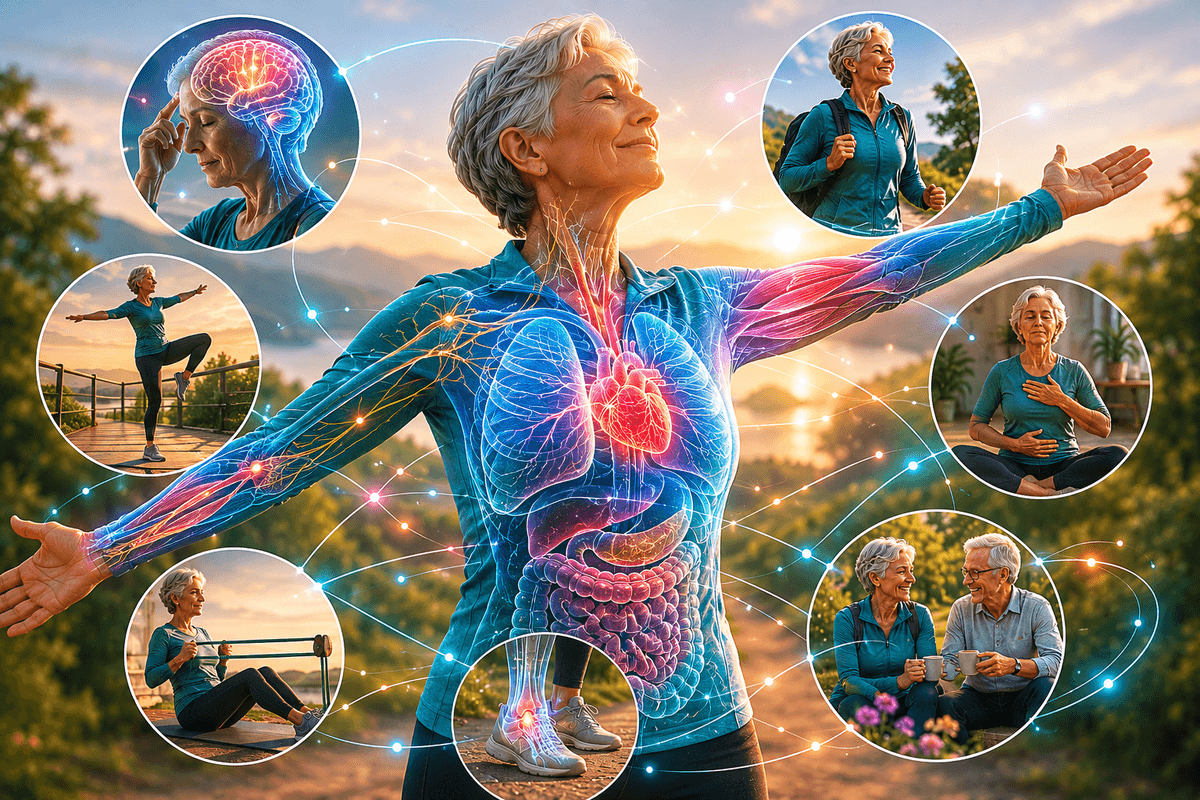
The body is an integrative system.
A pain in one area may actually originate somewhere else entirely.
For example:
- muscular tension and stress accumulation
- inflammation related to nutrition or lifestyle
- lack of sleep or chronic fatigue
- poor breathing mechanics
- dehydration
- excessive sitting and lack of movement variability
- emotional stress and nervous system overload
- mobility restrictions in another joint
- scar tissue or old injuries
- postural compensation patterns
- weakness or instability in surrounding muscles
Sometimes a person modifies training for months unnecessarily, when the issue could improve significantly with the right therapeutic support.
Sometimes Simple Interventions Create Huge Improvements
In our experience within Empowered Ageing, it is very common to see people improve significantly after receiving support such as:
- sports massage
- osteopathy
- physiotherapy
- mobility therapy
- myofascial release
- acupuncture
- breathing work
- nutritional improvements
- stress reduction strategies
- recovery-focused therapies
Sometimes one or two sessions with the appropriate specialist can dramatically reduce pain and restore function.
And when pain decreases, movement quality often improves again very quickly.
This may allow the person to return to more complete training, greater confidence and continued progression.
Integrative Training Also Requires Integrative Support

At Empowered Ageing, we believe movement training should not exist in isolation.
Because the human being is not only muscular.
The human being is:
- physical
- neurological
- emotional
- psychological
- energetic
- social
This is why an Integrative Training System should also include an integrative vision of health support.
Sometimes the best thing a trainer can do is encourage the person to seek additional professional guidance.
Not because movement failed.
But because true health often requires collaboration between different areas of expertise.
Adaptation Is Important — But So Is Investigation
Modifying movement is intelligent.
Reducing overload during pain is wise.
But it is equally important to ask:
“Why is this pain happening?”
And also:
“Could this situation improve more than I currently believe?”
Because many people unnecessarily accept years of discomfort when solutions may actually exist.
Not always.
But often more than they imagine.
Healthy Ageing Requires Curiosity, Not Resignation
One of the biggest differences between decline and empowerment is mindset.
Some people resign themselves to pain and limitation.
Others remain curious.
They explore.
They seek solutions.
They learn.
They ask questions.
They build support systems around their health.
This mindset is one of the foundations of the Empowered Ageing philosophy.
Because healthy ageing is not about pretending the body has no challenges.
It is about learning how to intelligently support the body through those challenges using movement, education, adaptation and collaborative care.
One of the Hidden Risks of Stopping Completely
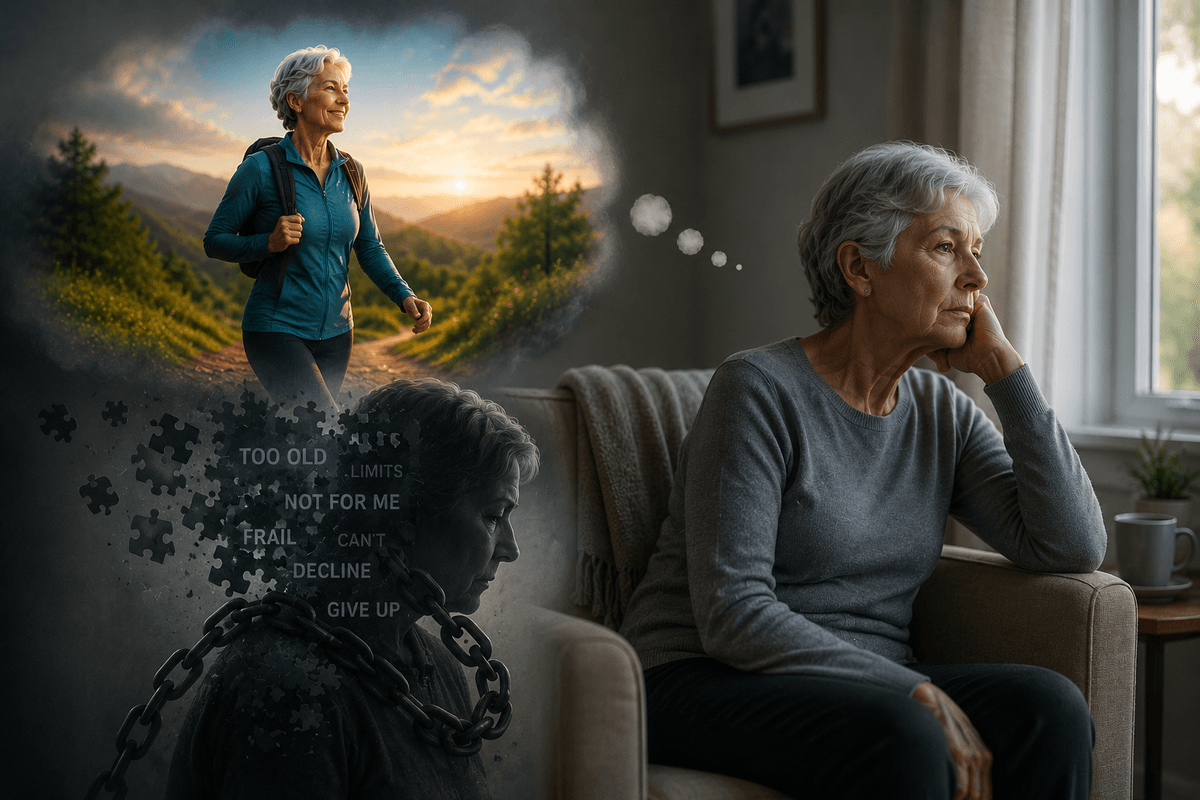
When people completely disconnect from movement for long periods, another risk appears:
the mind slowly starts accepting limitation as identity.
People begin saying:
- “I can’t.”
- “I’m too old now.”
- “My body is finished.”
- “Maybe this is just ageing.”
But often, what they are experiencing is not simply ageing.
It is the consequence of prolonged inactivity and reduced stimulation.
This is why maintaining some level of adapted movement is so important.
Movement helps preserve not only the body.
It helps preserve:
- possibility
- optimism
- adaptability
- self-belief
The Empowered Ageing Philosophy
The Empowered Ageing Integrative Training System is not based on perfection.
It is based on continuity.
We do not believe health means training hard all the time.
We believe healthy ageing means learning how to:
- adapt
- continue
- adjust
- respect the body
- stay connected to movement throughout all phases of life
Even during setbacks.
Especially during setbacks.
A Final Message

If you are currently injured, sick or physically limited, remember this:
You have not failed.
You are simply in a different phase of the process.
The path is still there.
And sometimes these slower phases teach the most important lessons:
- patience
- self-awareness
- resilience
- adaptability
- wisdom
Because true healthy ageing is not about avoiding difficulties.
It is about learning how to continue moving through life with intelligence, courage and respect for the body.
And sometimes, during the hardest phases, simply continuing to move gently is already a tremendous victory.
Need Support Adapting Your Movement Practice?
At Empowered Ageing, our Integrative Training System helps mature adults continue moving safely and intelligently through all phases of life — including injury recovery, physical limitations and health challenges.
If you would like professional guidance, support or an adapted movement plan, contact us to learn more about our classes and private coaching services.
Movement does not need to stop.
Sometimes it simply needs to evolve.
Recommended Reading & Research
For readers interested in exploring these topics further, the following books, researchers and educational resources offer valuable insights into movement, ageing, neuroplasticity, exercise science and integrative health:
Books & Authors
- Outlive: The Science and Art of Longevity — Dr. Peter Attia
- The Brain That Changes Itself — Dr. Norman Doidge
- Spark: The Revolutionary New Science of Exercise and the Brain — Dr. John Ratey
- Why We Sleep — Dr. Matthew Walker
- Move Your DNA — Katy Bowman
- The Blue Zones — Dan Buettner
- The Joy of Movement — Dr. Kelly McGonigal
- Atomic Habits — James Clear
- Built to Move — Kelly Starrett & Juliet Starrett
- Lifespan — Dr. David Sinclair
Scientific & Educational Areas Related to This Article
- Neuroplasticity and ageing
- Exercise physiology and detraining
- Sarcopenia and healthy ageing
- Nervous system adaptation
- Functional movement and mobility training
- Integrative and lifestyle medicine
- Movement and mental health
- Physical activity guidelines for older adults
Organizations & Guidelines
- World Health Organization (WHO) — Physical Activity Guidelines
- American College of Sports Medicine (ACSM)
- Blue Zones Research
- National Institute on Aging (NIA)
Written by Arlindo Martins
Founder of the Empowered Ageing Integrative Training System, dedicated to helping mature adults rediscover confidence, vitality, resilience and joy through movement and integrative healthy ageing practices.