

There is something deeply strange in the modern world.
Many people still treat movement as if it were a secondary part of life.
As if it were less important than “real” learning.
Less important than academic performance.
Less important than intellectual development.
But if we look at human life honestly, this idea collapses very quickly.
In the beginning of life, movement is everything.
A baby does not begin by studying concepts.
A baby begins by moving.
Reaching.
Rolling.
Crawling.
Balancing.
Exploring.
Touching.
Falling.
Trying again.
Playing.
Through the body, the child begins to build the brain.
Early childhood is a period of rapid brain and body development, and organisations such as the American Academy of Pediatrics and Harvard’s Center on the Developing Child emphasise that playful, responsive interaction and active exploration help build brain architecture and support later cognitive, social and emotional skills. The early years are especially active for neural connection-building, although learning and brain change continue throughout life.
And this is not only true for humans.
Across the animal world, the young play. They move, chase, wrestle, test boundaries, interact with the environment and with each other. Play is not trivial. It is part of preparation for life. The American Academy of Pediatrics describes play as essential for cognitive, physical, social and emotional well-being.
Movement is one of the foundations of development
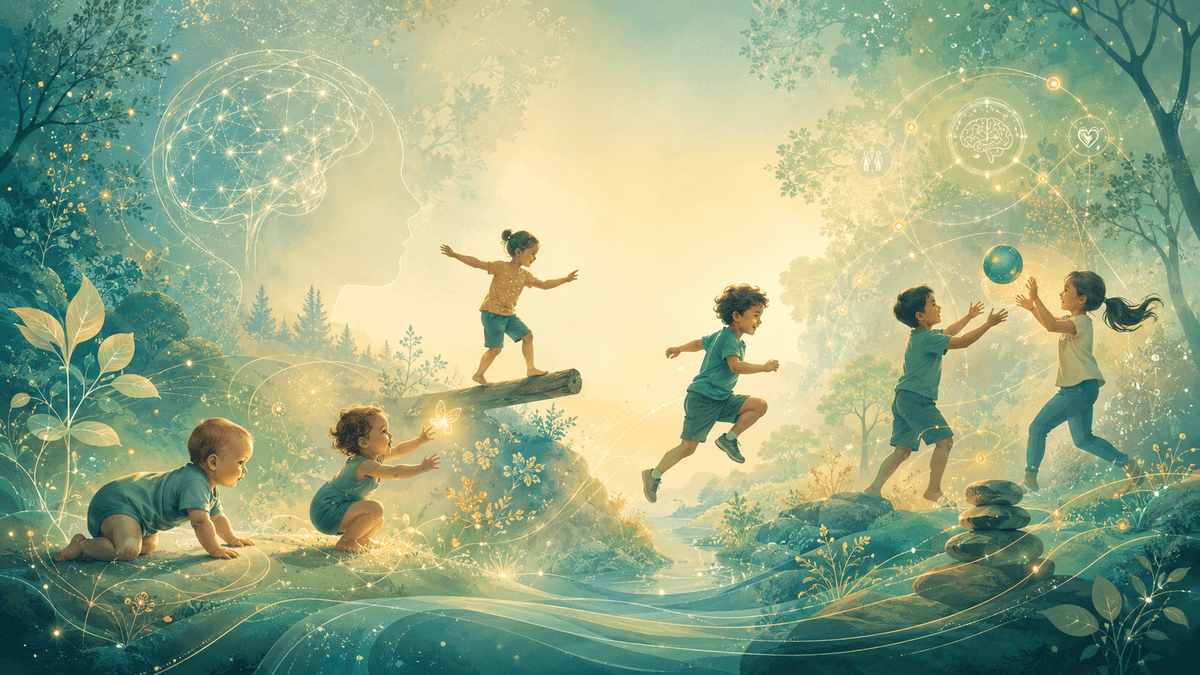
When children move and play, they are not only exercising muscles.
They are also developing:
- coordination
- timing
- balance
- spatial awareness
- emotional regulation
- curiosity
- adaptability
- frustration tolerance
- social interaction
- self-regulation
- attention
- problem solving
Research and professional guidance on child development consistently describe play and active engagement as supporting cognitive, language, social-emotional and self-regulation skills, while meta-analytic evidence also suggests physical activity benefits executive functions in young children.
So when a society treats movement as inferior, it reveals a serious misunderstanding of how human beings actually develop.
Try to imagine a baby prevented from moving freely, exploring the environment, reaching, crawling, playing and interacting physically with the world. We would not expect healthy development. Common sense already tells us that. And developmental science supports the same broad principle: healthy development depends on rich interaction between body, brain, relationships and environment.
What happens when movement is reduced?
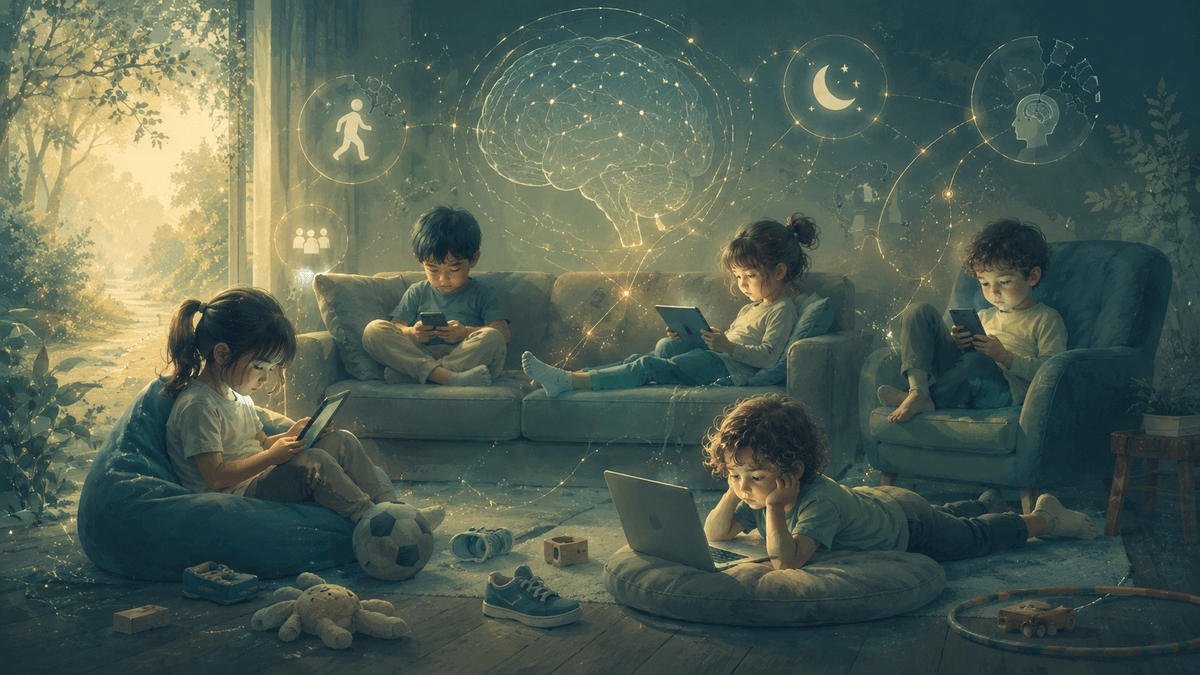
Today, many children spend far more time sitting, looking at screens and engaging with highly sedentary forms of stimulation than previous generations. The WHO recommends more active play and less time restrained or in screen-based sedentary behaviour for children under 5, and recent research links excessive screen time with poorer executive-function outcomes and shorter sleep.
This does not mean technology is evil.
But it does mean that when movement is reduced, something important is lost.
We risk raising children — and later adults — with less:
- body awareness
- resilience
- patience
- emotional tolerance
- adaptability
- real-world coordination
- confidence in physical action
- ability to meet challenge through experience, not just theory
Part of this is an inference from the developmental evidence: if active play and embodied interaction help build these capacities, then long-term reduction of those experiences is likely to weaken or delay them. That inference is consistent with the WHO’s recommendations and with research linking movement and reduced sedentary time to healthier developmental outcomes.
This matters throughout life — not only in childhood
The great mistake is to think that movement is crucial only for children.
Yes, in childhood movement helps build the human being.
But in adulthood and later life, movement helps preserve, restore and deepen the human being.
That is one of the core ideas behind Empowered Ageing.
At Empowered Ageing, movement is not just about getting fitter.
It is not just about strength.
It is not just about cardio.
It is not just about flexibility.
And it is certainly not just about burning calories.
Those things may have value. But they are only part of the picture.
Movement is also a tool to develop or maintain capacities that give life more quality, more dignity and more meaning.
Movement can strengthen resilience

Every movement challenge is an opportunity to practice resilience.
Trying again after difficulty.
Staying with discomfort without panic.
Learning a skill slowly.
Managing frustration.
Continuing after failure.
Adjusting rather than quitting.
This matters even more with ageing, because one of the hidden dangers of ageing is not only physical decline. It is the loss of challenge, the loss of engagement, and sometimes the quiet loss of belief in one’s ability to adapt.
Movement can interrupt that decline.
It reminds the person:
I can still learn.
I can still improve.
I can still face difficulty.
I am still alive inside this process.
Movement develops emotional strength
Movement brings emotions.
Fear.
Excitement.
Frustration.
Joy.
Doubt.
Satisfaction.
Vulnerability.
Confidence.
This is true in children at play, and it remains true in adults. The difference is that many adults have forgotten how much movement reveals their inner state.
A difficult balance challenge can expose fear.
A new coordination pattern can expose impatience.
A floor transition can expose insecurity.
A demanding sequence can expose self-criticism.
But that is precisely why meaningful movement is powerful.
It becomes a safe place to practice emotional steadiness.
Not by avoiding emotion.
But by staying present inside it.
Movement helps build attention, learning and mental sharpness
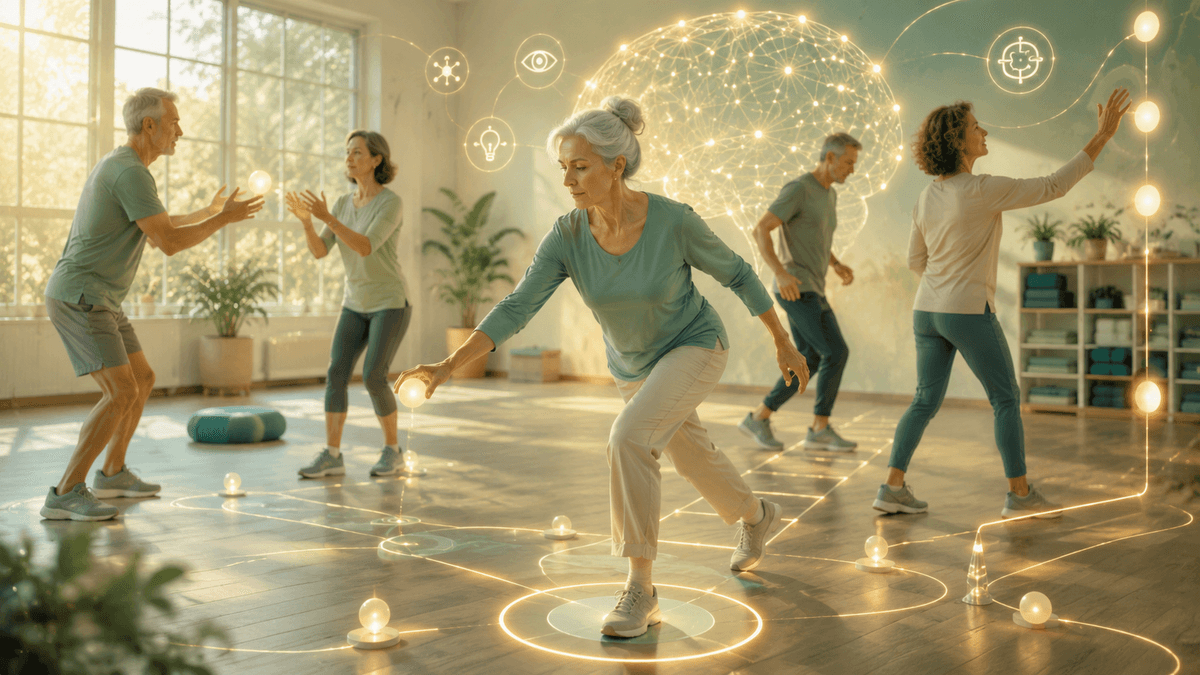
Movement is not mindless.
Good movement demands timing, attention, memory, body awareness, reaction, decision-making and adaptation. Evidence from developmental and embodied-cognition research supports the idea that cognition is not detached from the body; rather, thinking and learning are shaped by action, perception and interaction with the environment.
This is one of the reasons why reducing exercise to “cardio and strength” is such a narrow view.
Of course, cardio and strength matter.
But movement can also train:
- focus
- motor learning
- coordination
- rhythm
- responsiveness
- spatial intelligence
- confidence under challenge
At Empowered Ageing, this wider view matters. We do not want people only to exercise. We want them to engage, adapt, learn, feel, respond and grow.
Movement can reconnect body, breath and inner life
The body and breath influence the nervous system, emotional regulation and felt sense of presence. Some trauma and body-based literature argues strongly that lived experience is carried not only in thoughts but also in bodily patterns and sensations, although some authors and books in this space are debated in parts of the scientific community.
What matters here is simple:
When movement is practiced with awareness, it can help people become more connected.
Connected to posture.
Connected to breathing.
Connected to tension.
Connected to emotion.
Connected to the present moment.
This is where movement stops being “exercise” in the narrow sense and starts becoming something closer to integration.
For some people, that becomes personal growth.
For others, it becomes healing.
For others, it becomes spirituality in action.
Movement can strengthen motivation and sense of purpose

One of the saddest things that can happen in later life is not only physical weakness.
It is losing the feeling of having something meaningful to work toward.
Movement can restore that.
A goal.
A practice.
A routine.
A challenge.
A small victory.
A reason to keep evolving.
This is not superficial. It can affect how a person relates to life itself.
When someone begins to feel more capable, more coordinated, more stable, more alive and more engaged, movement is no longer just a health habit.
It becomes part of identity.
Part of dignity.
Part of meaning.
Why Empowered Ageing sees movement differently
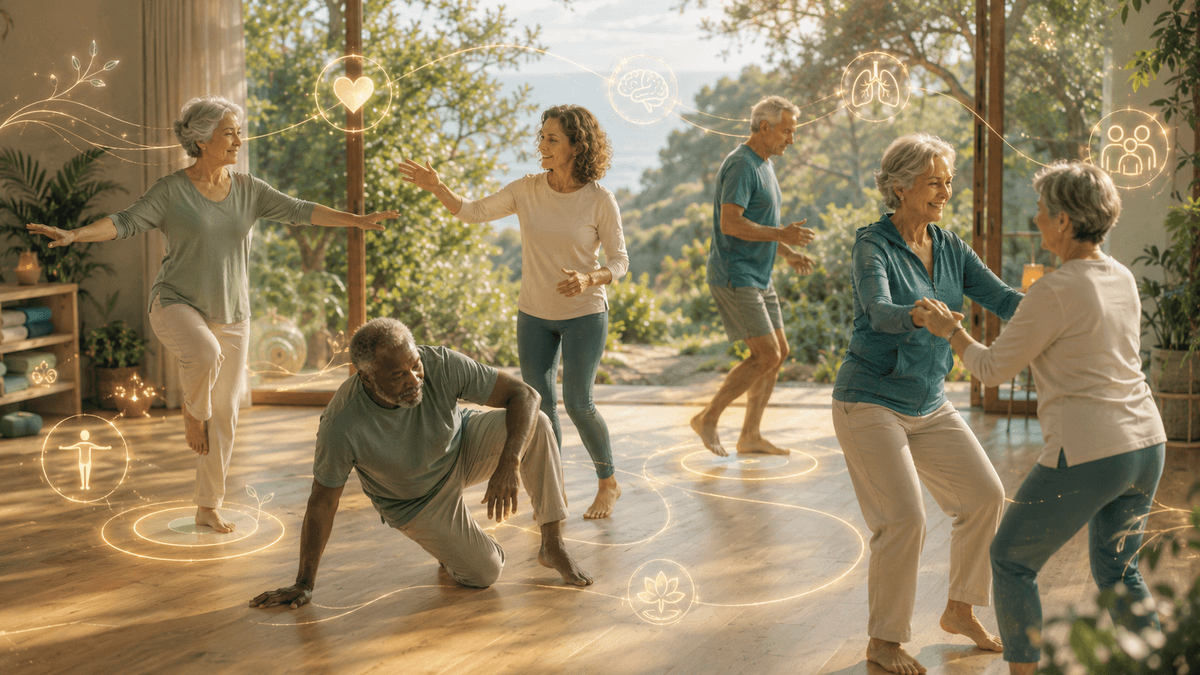
At Empowered Ageing, we want to help people wake up to the real value of movement.
Not movement as punishment.
Not movement as image.
Not movement as mere calorie-burning.
Not movement reduced to gym language.
We want to restore a deeper human understanding:
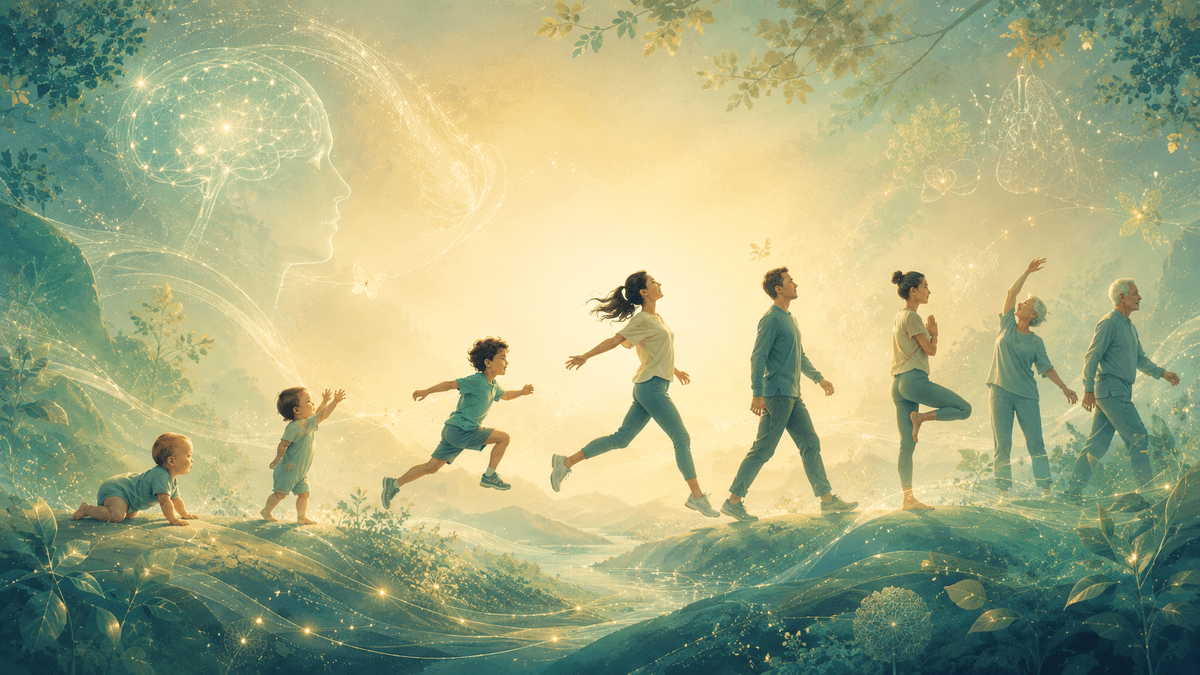
Movement is one of the great organisers of life.
In childhood, it helps build the person.
In adulthood, it helps sustain the person.
In later life, it helps protect, recover, enrich and awaken the person.
That is why our work is not only about physical qualities.
Yes, we work on strength, mobility, balance, coordination, agility and confidence.
But through movement we also want to support:
- resilience
- focus
- patience
- self-trust
- emotional strength
- adaptability
- inner presence
- motivation
- connection
- joy
- meaning
Because the human being is not divided into separate boxes.
The body affects the mind.
The breath affects emotion.
The movement affects awareness.
The challenge affects identity.
And when movement is practiced with the right mindset, with care, with progression and with purpose, it becomes much more than exercise.
It becomes a path of development.
Final reflection
Perhaps one of the greatest misunderstandings of our time is this:
People think movement is only physical.
But human life begins in movement.
Human development begins in movement.
Confidence begins in action.
Resilience is trained through challenge.
Presence is trained through embodied attention.
And many forms of mental, emotional and even spiritual growth become easier when the body is included instead of ignored.
At Empowered Ageing, this is one of the truths we want to help bring back into consciousness.
Not because movement is everything.
But because without movement, a vital part of being human is diminished.
And when movement is reclaimed with intelligence and meaning, much more than the body can improve.
The person can begin to come alive again.
Recommended Reading
Here are some strong follow-up readings for people who want to go deeper into the ideas behind this article:
1. Play — Stuart Brown with Christopher Vaughan
A widely recommended book on why play is not childish or trivial, but a biological and psychological necessity across the lifespan. It argues that play supports adaptability, intelligence, social skill and creativity.
2. Harvard Center on the Developing Child — resources on brain architecture and serve-and-return
Very useful for understanding how early development happens through embodied, relational interaction and why early experience shapes the brain so powerfully.
3. American Academy of Pediatrics — “The Importance of Play in Promoting Healthy Child Development”
A classic professional reference on why play supports physical, cognitive, social and emotional well-being.
4. Stanford Encyclopedia of Philosophy — “Embodied Cognition”
A more intellectual read, but excellent for understanding the idea that mind is not separate from body and action.
5. The Body Keeps the Score — Bessel van der Kolk
Useful for readers interested in the relationship between body, trauma and healing, though some aspects of the book and author have also been debated and criticised, so I would position it as a thought-provoking read rather than an unquestionable authority.