

Throughout my life and professional work, I have observed two main ways of approaching health.
One is passive.
The other is active.
Both may include doctors, therapists, coaches and other professionals. The difference is not whether we receive help. The difference is the role we choose to play in the process.
The passive approach
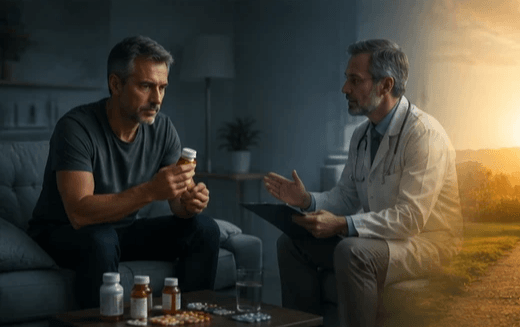
In a passive approach, we expect the solution to come mainly from outside.
We take medication.
We receive a massage.
We attend physiotherapy.
We ask a doctor or therapist to remove the symptom.
These interventions can be necessary and extremely valuable. Medicine saves lives, physiotherapy restores function, and different therapies can reduce pain and improve wellbeing.
The problem begins when we believe that our responsibility ends there.
We expect someone to fix us while our habits, choices and way of living remain unchanged.
Passive care is attractive because it usually demands little energy from us. We receive the treatment, but we do not necessarily change.
What responsibility really means
I find it useful to think of responsibility as response-ability:
My ability to respond.
Responsibility is not blame.
It does not mean that we caused every illness, injury or difficulty in our lives.
It means recognising that, whatever our present circumstances may be, we still have some capacity to choose our response.
I can seek professional help.
I can ask questions.
I can practise the exercises I was given.
I can change my food choices.
I can improve my sleep.
I can explore my emotions.
I can ask for psychological support.
I can become more aware of what is helping me and what is harming me.
Responsibility begins when I stop waiting for every answer to come from outside and begin developing my own capacity to respond.
Why active health is more difficult
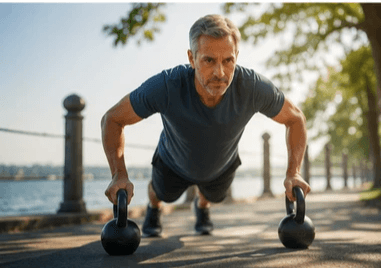
The active approach requires energy.
It also requires us to tolerate discomfort.
Exercise demands physical effort. It can initially bring tiredness, muscular discomfort, frustration and fear.
We may become aware that our body is weaker, less mobile or less coordinated than we believed. We may feel afraid of falling, failing or being judged.
Movement can also awaken emotions.
Frustration appears when something is difficult.
Fear appears when we do not trust our body.
Impatience appears when progress is slower than expected.
But these emotions are not necessarily signs that we should stop.
Learning to recognise, accept and work through them can become part of our physical and personal development.
We do not grow only because our muscles become stronger.
We also grow because we become more patient, courageous, adaptable and capable of dealing with difficulty.
Changing our habits also creates discomfort
Improving nutrition is not simply a question of knowing which foods are healthier.
It may mean eating less of something that gives us immediate pleasure.
It may require planning, preparation and saying no to familiar habits.
Part of us wants long-term health.
Another part wants comfort now.
Meditation can also be uncomfortable.
Sitting quietly for five, ten or thirty minutes may bring us into contact with thoughts and emotions that we normally avoid.
It can feel easier to use social media, watch television, speak with friends or remain constantly busy.
There is nothing wrong with entertainment or social contact. The problem arises when distraction becomes our only way of avoiding ourselves.
Psychological or emotional work can be equally demanding.
Speaking with a psychologist or therapist may help us recognise beliefs, fears, wounds or relationship patterns that need attention.
Awareness can initially be painful.
However, what remains unconscious often continues to influence our health, choices and relationships.
Inner work requires courage because we cannot delegate it completely to someone else. A professional can guide and support us, but we still have to participate.
Complaining can also become a passive response
At difficult moments, we all need to speak about our pain and receive support.
There is an important difference, however, between expressing what we feel and becoming permanently trapped in complaint.
Sometimes complaining gives temporary relief, sympathy or attention. It may be an unconscious way of avoiding fear, change or difficult decisions.
The question is not whether we are allowed to complain.
The question is:
“After expressing what I feel, am I prepared to take the next possible step?”
Compassion and responsibility can exist together.
We can acknowledge that something is painful without giving up our ability to respond.
The Empowered Ageing approach
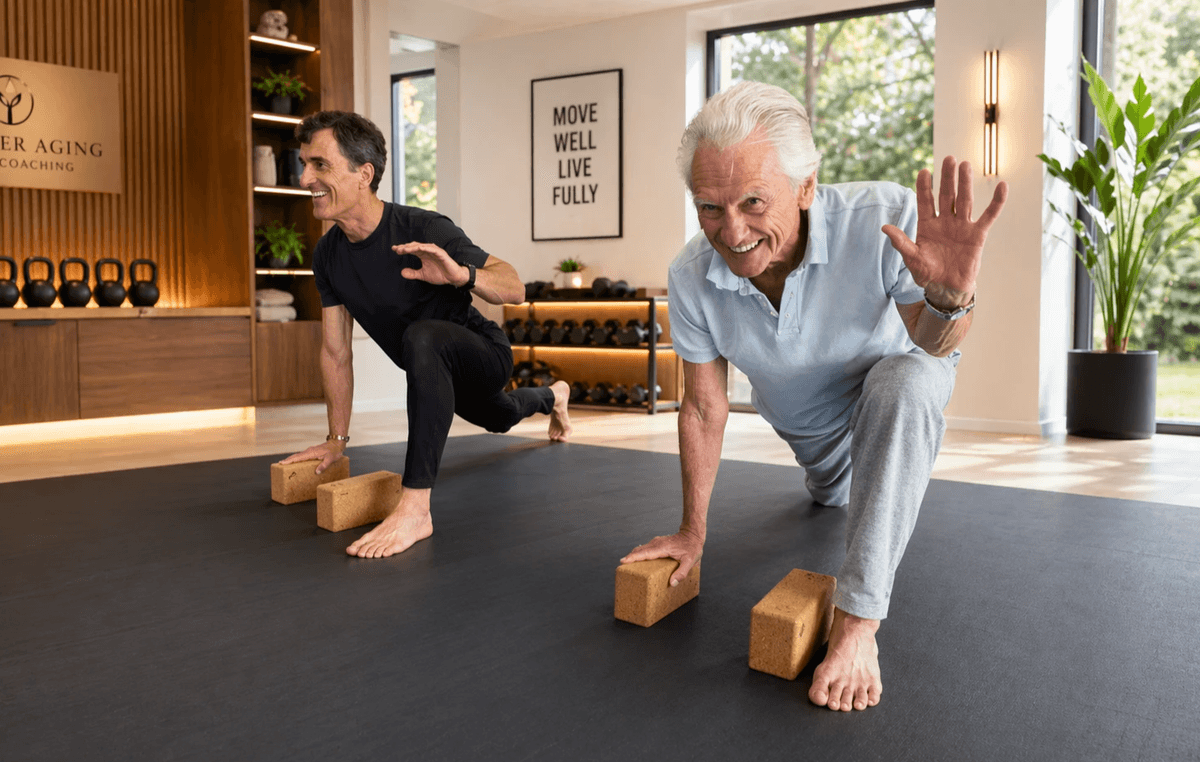
At Empowered Ageing, our principal area of expertise is movement.
We help people develop strength, mobility, balance, coordination and confidence.
But movement is not the complete answer to every health problem.
A person may also need medical care, physiotherapy, nutritional guidance, psychological support, emotional work or help in their relationships.
Health is physical, mental, emotional, social and spiritual.
These dimensions influence one another.
For this reason, we encourage people to remain open to working with different professionals when necessary.
Our objective is not to create dependence on Empowered Ageing or on any other professional.
Our objective is to help people become more capable of participating in their own health.
A question for reflection
Think about one area of your health that you would like to improve.
Then ask yourself:
“Am I mainly waiting for the answer to come from outside?”
“What discomfort am I trying to avoid?”
“What response am I capable of giving today?”
The answer does not have to be dramatic.
It may be a ten-minute walk.
A different meal.
Five minutes of silence.
A phone call to a professional.
An honest conversation.
One small action repeated consistently can become the beginning of a new relationship with health.
Professional support matters.
But lasting change often begins when support from outside meets responsibility from within.
One final reflection
If you have read this far, I would like to leave you with one simple question.
When it comes to your health...
Are you mostly waiting for change to come from outside, or are you becoming an active participant in creating it?
The truth is that most of us have been both.
There have been moments when we needed others to carry us, guide us or help us heal. There is absolutely no shame in that.
But there also comes a moment when healing asks something of us.
It asks us to move when movement feels uncomfortable.
It asks us to change habits when the old ones feel easier.
It asks us to face emotions we have avoided for years.
It asks us to learn, to grow and to take one small step after another.
Health is rarely created by one decision.
It is created by thousands of small decisions made consistently over time.
At Empowered Ageing, this is what we believe.
We will always do our very best to guide, educate, support and inspire you.
But the most important person in your health journey will always be...
You.
Written by Arlindo Martins
Founder & Head Coach
Empowered Ageing