

For much of my younger life, I approached health in the same way many people do.
When something hurt or did not feel right, I looked for someone to fix it.
I visited doctors. I took medication. I tried physiotherapy, osteopathy, massage and other treatments.
Sometimes they helped.
Sometimes they did not.
Over time, however, I began changing not only the treatments I used, but also the questions I asked.
Instead of asking only:
“Who can solve this problem for me?”
I began asking:
“What can I actively do to improve my health?”
Today, I see health as a partnership.
Professional support matters, but so does my participation.
I gradually moved from a mainly passive attitude towards a more active approach to my health, something I explored in my previous article, Passive Care or Active Health?.
The experiences I share here did not give me one magical answer. They taught me that the body is complex and that meaningful change may require movement, nutrition, medical care, emotional work, healthier relationships and greater awareness of how I am living.
My tonsils changed my perspective
In my twenties, I experienced frequent and severe inflammation of my tonsils.
For several years, the problem returned almost every month.
I tried medication, strong antibiotics and different medical treatments, but nothing created a lasting improvement.
Then I attended a personal-development weekend led by Luís Martins Simões.
During that weekend, we explored emotions, communication, personal beliefs and the way we related to ourselves and other people. The course also included a spiritual and energetic dimension that was new to me at that time.
I became aware that I had difficulty expressing some emotions and communicating what I genuinely felt.
After that weekend, something remarkable happened.
The recurring inflammation almost completely disappeared.
More than twenty-five years later, I have never again experienced the same intensity or frequency. Occasionally, I may feel some discomfort in my throat, but it does not develop into the severe inflammation I experienced in my twenties.
Can I scientifically prove that the emotional work directly caused this improvement?
No.
But the experience changed the way I understood health.
It made me consider that my physical body, emotions, stress, beliefs, communication and relationships might be much more interconnected than I had previously realised. Scientific research also supports the broader principle that psychological stress can influence immune processes, although it does not mean that emotions are the sole cause of any particular illness. (PubMed)
Movement transformed my back
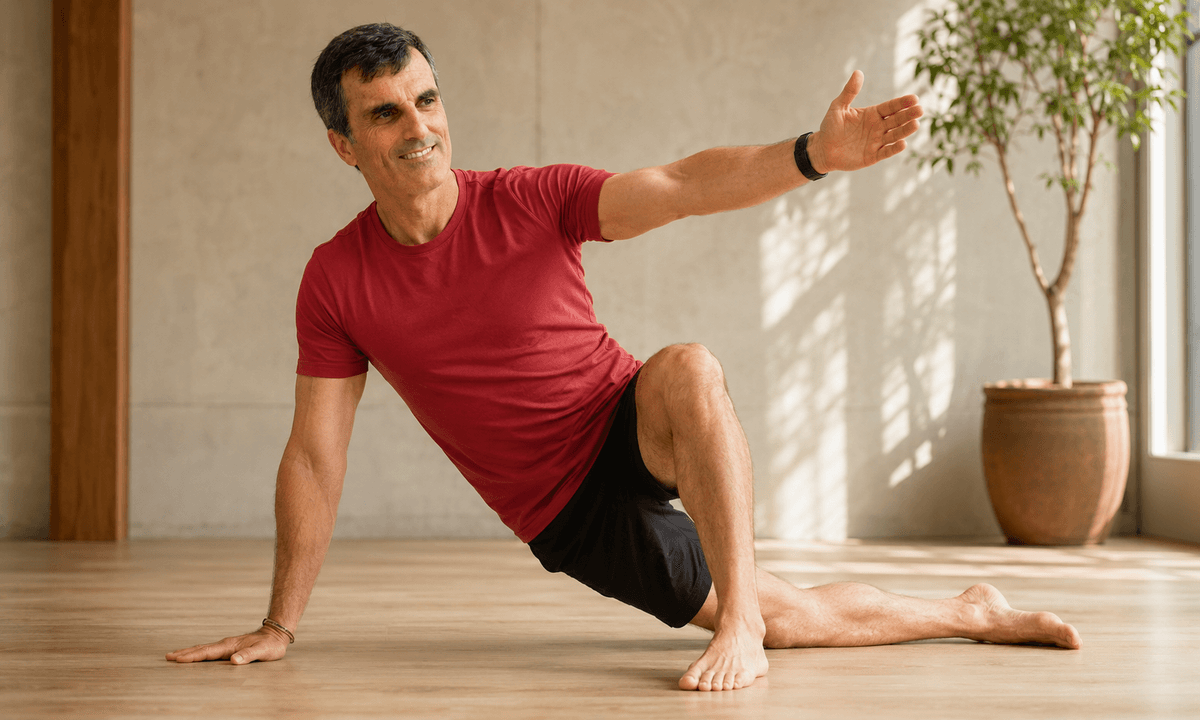
My second major lesson came through chronic lower-back pain.
The problem began in my thirties, more than twenty years ago, and continued for approximately six years.
At that time, I was not physically active. Despite being a physical education teacher, I lacked motivation to follow a regular exercise programme.
I plan to write more about this in a future article because I believe it is important to be honest: I have also experienced motivation problems towards exercise, and sometimes I still do.
Today, I move and exercise almost every day. However, that does not mean that I am always intrinsically motivated.
I daily do my physicall activities routines because I understand its value, because I have created a routine and because I accept responsibility for my health—not because I feel enthusiastic every day.
During those years, my back crises were sometimes so severe that I could not work as a physical education teacher. At certain times, they occurred once or twice every month and could leave me unable to move normally for approximately a week.
I was told that the problem was around the L4–L5 area and that surgery might eventually be considered if the condition did not improve.
Fortunately, before following that path, I began exploring movement.
I started with Pilates at approximately thirty-eight years of age.
Later, I practised yoga.
Then I discovered Foundation Training.
Eventually, I began Animal Flow, which has been an important part of my life for around twelve years.
Little by little, my body changed.
The crises became less frequent.
They became less intense.
They lasted for fewer days.
Today, I rarely experience a serious back crisis. I may not have even one in an entire year. When some discomfort does appear, it normally improves within one or two days rather than leaving me unable to function for a week.
Movement did not create an overnight miracle.
It gradually rebuilt my strength, mobility, coordination, confidence and physical capacity. Exercise and education are now among the evidence-supported non-surgical approaches recommended for many people living with chronic primary lower-back pain, although the appropriate programme must always be adapted to the individual. (World Health Organization)
More recently, I also began taking Zinzino omega-3 and nutritional supplements. Since then, I have personally felt further improvements in my back and in my daily energy.
I cannot prove that the supplementation alone produced those changes. My movement, nutrition, emotional health, sleep and other lifestyle factors were also changing.
But it became another part of my active and integrative approach.
A long-term skin problem
For more than fifteen years, I also lived with a recurring skin problem.
For many years, I managed it by avoiding sugar and using conventional treatments whenever the symptoms appeared.
I practically stopped eating sweet foods because I believed that even a relatively small amount could trigger the condition.
A few months ago, I received an integrative treatment from Vera Dias.
That session was accompanied by a deeper exploration of stress, emotional patterns and the way I dealt with conflict.
After that treatment, the condition improved dramatically.
I was gradually able to reintroduce small quantities of sugar and enjoy an occasional cake or sweet food without experiencing the same recurring reaction.
Naturally, I do not use this as an excuse to consume excessive sugar. I continue to be conscious of my nutrition.
Once again, I cannot establish that one treatment was the sole cause of the improvement. This is my personal experience, not a promise that the same approach will have the same result for everyone.
However, it encouraged me to continue exploring the relationships between physical symptoms, stress, emotions, beliefs and the way I respond to difficult situations.
Nutrition, energy and my medical results
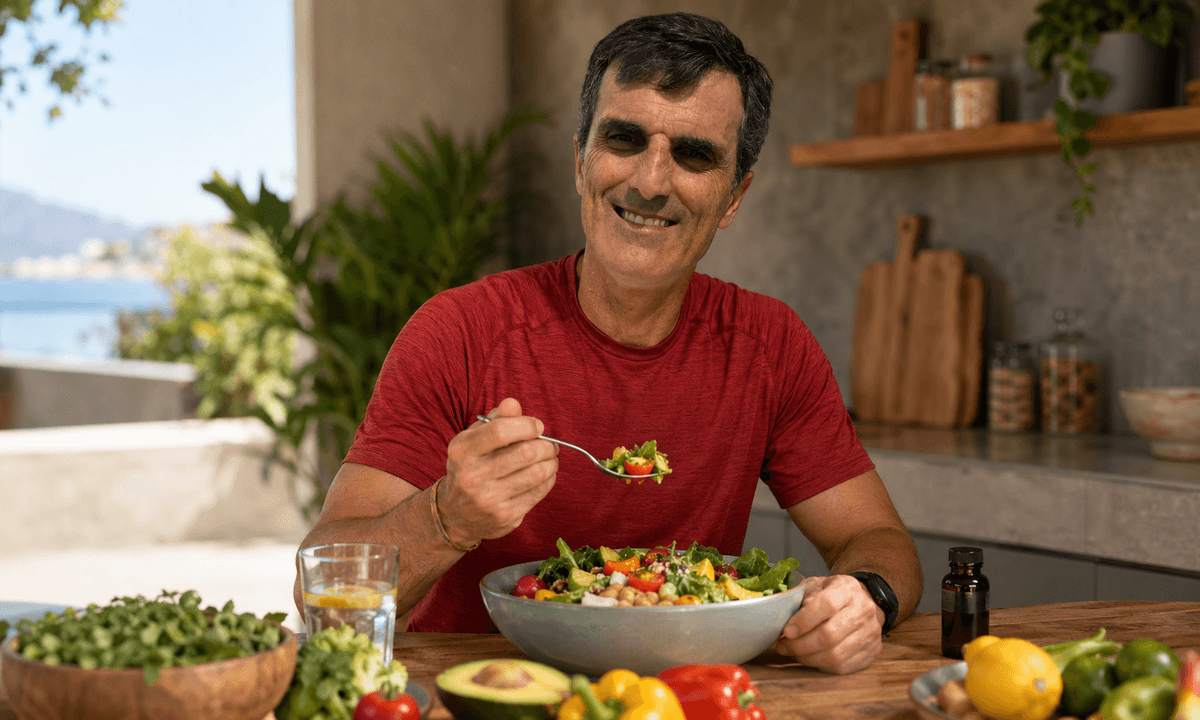
Another important experience came through my work with Brigitte Spurgeon.
Brigitte helped me examine my nutrition much more carefully and gave me a structured and demanding plan to follow.
Before starting her programme, I had completed medical examinations that showed some concerning prostate-related results.
I followed Brigitte’s recommendations strictly for approximately two months.
I then repeated the medical examinations.
The results that had previously concerned me were within the normal reference range.
At the same time, I noticed a considerable improvement in my daily energy.
I cannot say that nutrition alone caused the change. Medical results can be influenced by many factors, and one personal case does not prove a universal effect.
However, I can say that I took active steps, followed the programme consistently and observed a measurable difference when I repeated the tests.
That experience reinforced an important lesson:
Advice only becomes active healthcare when we apply it.
Receiving a nutrition plan is passive.
Changing how we shop, cook and eat every day is active.
What twenty-two years of sleep problems taught me about relationships
I have experienced sleep problems for more than twenty-two years.
During that time, I tried almost everything I could reasonably imagine.
I used medication and many different natural products. While living in Sydney, I also worked with professionals who specialised in sleep and completed numerous psychological sessions intended to help me understand and improve the problem.
I did not rely only on passive treatments. I also adopted many active strategies.
I exposed myself to natural daylight early in the morning to help regulate my biological clock. I experimented with stopping work at five or six o’clock in the afternoon. I changed routines, tried to reduce stimulation in the evening and applied different recommendations related to relaxation and sleep hygiene.
Some of these approaches created small improvements.
However, none produced a significant or lasting transformation.
During the last two years, I noticed a modest improvement after beginning Zinzino omega-3 and nutritional supplementation, particularly in my general energy. But the greatest change in my sleep during those twenty-two years has happened in the last six months, since beginning a new and supportive relationship with my partner.
My sleep has improved more noticeably than it did with any of the other strategies I had previously tried.
I cannot scientifically prove that the relationship alone caused this change. My nutrition, supplementation, daily routines, emotional development and other areas of my life may also have contributed.
However, the difference has been too significant for me to ignore.
For many years, I understood in theory that close and healthy relationships influence our health. But understanding something intellectually is very different from experiencing it directly through our own body.
A supportive relationship can influence how safe, calm, understood and emotionally connected we feel. It may affect stress, emotional regulation, daily habits and the capacity of the nervous system to settle at the end of the day.
In my own experience, this became visible through my sleep.
This is especially meaningful because sleep is one of the principal foundations of health. It influences energy, mood, concentration, memory, immune function, recovery, metabolism and cardiovascular wellbeing.
My experience also taught me that creating better health is not limited to exercise, nutrition or medical treatment.
It may include examining the quality of our relationships.
Today, I am increasingly intentional about the people I invite into my life. This includes friends, clients, professional partnerships and close personal relationships.
This does not mean surrounding myself only with people who always agree with me or avoiding every difficult conversation.
It means becoming more conscious of which relationships offer honesty, mutual respect, emotional safety, affection and opportunities for growth—and which ones repeatedly create instability, exhaustion, fear or disconnection from myself.
Relationships are not separate from health.
They are part of the internal and external environment in which our health is created.
My sleep problem reminded me of something essential:
Sometimes we can try to change the symptom for years, while one of the most important influences may be the emotional environment in which we are living.
This will not be the explanation for every person with sleep difficulties. Sleep problems can have many medical, behavioural, environmental and psychological causes, and persistent insomnia deserves appropriate professional assessment.
But in my personal journey, the improvement that accompanied a healthier and more supportive relationship was the most powerful change I experienced in more than twenty-two years.
We are an integrated living system
The human being is much bigger than one muscle, one joint, one organ or one symptom.
We are not a collection of isolated parts.
We are an integrated living system in which physical, neurological, psychological, emotional, relational, social and spiritual dimensions influence one another.
This does not mean that every symptom is emotional.
Sometimes a problem is primarily structural.
A massage may help.
Two or three physiotherapy sessions may resolve it.
Medication or surgery may be necessary.
At other times, movement may be the main intervention that is missing.
But when symptoms continue despite repeated treatment, it can make sense to widen the investigation rather than repeating the same approach indefinitely.
Modern pain science also recognises that chronic pain is influenced by interacting biological, psychological and social factors and that multidisciplinary care may be more appropriate than relying on one isolated intervention. (IASP)
Movement helps, but sometimes movement also needs help
As a movement coach, I believe deeply in the power of movement.
My own back is one of the clearest examples.
However, I have also learned something equally important:
Movement helps. But sometimes movement also needs help.
A client may need physiotherapy.
Another may need medical investigation.
Someone may need nutritional guidance.
Another person may benefit from psychological coaching, psychotherapy or emotional work.
Someone else may need to examine their sleep, relationships, stress or sense of purpose.
Sometimes several approaches need to work together.
This is why, at Empowered Ageing, I may recommend the work of other professionals.
I recommend Vera Dias to people who are open to exploring emotional patterns, beliefs, stress, conflict and the possible relationships between these areas and their physical wellbeing.
I also recommend Luís Martins Simões, whose work has influenced my understanding of consciousness, emotions, personal growth and the possibility of listening to physical symptoms with greater curiosity.
For nutrition, I recommend Brigitte Spurgeon, whose structured guidance had a meaningful impact on my own energy, habits and medical results.
These professionals do not replace doctors or appropriate medical care.
They add other perspectives to the whole picture.
How I care for my health today
Today, my active approach includes several areas.
I exercise or practise movement almost every day, even when motivation is not naturally present.
I am careful about what I eat.
I use selected supplements and monitor how I respond.
I continue learning about my emotions, beliefs and behavioural patterns.
I pay increasing attention to the relationships I create and maintain.
I seek professional help when I recognise that I do not have the knowledge to solve something alone.
And I try to remain open to the possibility that a symptom may have more than one contributing factor.
I do not do all of this because I believe I can control every health outcome.
I do it because responsibility means developing my ability to respond.
What else is my body inviting me to explore?
When a symptom appears or keeps returning, the first step may still be medical assessment.
But after establishing safety, perhaps we can also ask:
What else is my body inviting me to explore?
Is it movement?
Nutrition?
Sleep?
A different relationship?
Psychological coaching or therapy?
Emotional work?
Rest and recovery?
Medical investigation?
A spiritual practice?
A difficult conversation?
A habit I already know I need to change?
The answer will not be the same for everyone.
My invitation is simply to remain open, curious and actively involved.
I cannot promise that emotional work, movement, nutrition or any other individual approach will solve every problem.
No honest professional should make that promise.
But I can say this with complete honesty:
Becoming an active participant in my health has transformed my life.
It has helped me move better, live with less pain, experience more energy, sleep more peacefully and understand myself more deeply.
My body has not always given me the answers I wanted.
But it has repeatedly invited me to ask better questions.
Written by Arlindo Martins
Founder and Head Coach
Empowered Ageing
This article describes personal experiences and is intended for education and reflection. It does not replace individual medical diagnosis, treatment or advice from an appropriately qualified healthcare professional.