

I have lost count of how many times someone has arrived at my studio and said something like this:
"Arlindo, every time I try to exercise, I end up hurting myself."
Sometimes it is the shoulder.
Sometimes it is the knee.
Sometimes it is the back.
Sometimes it is a tendon, a hip, a foot, or an old injury that suddenly seems to return.
After two or three negative experiences, many of us begin to believe:
"Maybe exercise is not for me."
"Maybe my body is too fragile."
"Maybe I am too old to start again."
I understand that fear.
When we start exercising because we want to improve our health, and instead we feel pain or get injured, it can be deeply discouraging.
But in many cases, the problem is not exercise itself.
The problem is the way exercise was started.
And sometimes, the body is not being damaged by movement.
Sometimes movement is simply revealing what was already fragile, weak, stiff, overloaded, tense or unprepared.
This is an important difference.
Because if exercise only means injury, we lose hope.
But if exercise reveals what needs attention, then we can begin again with more awareness, better guidance and a safer strategy.
The Body Can Hide Weaknesses For Years
Modern life allows us to avoid many movements that the human body was designed to perform regularly.
We sit for long periods.
We drive instead of walking.
We use lifts instead of stairs.
We avoid getting down to the floor.
We avoid carrying weight.
We avoid balancing.
We avoid bending, rotating, reaching, squatting, climbing, crawling or moving in unusual positions.
Over time, the body adapts to what we do most.
But it also adapts to what we no longer do.
If we stop using strength, strength decreases.
If we stop using mobility, mobility decreases.
If we stop challenging balance, balance decreases.
If we stop practising coordination, coordination becomes less reliable.
The problem is that these losses often happen quietly.
We may still manage normal daily life and believe everything is fine.
But in our days, daily life often asks very little from the body.
We are living through one of the most sedentary moments in human existence.
Then, when we start an exercise programme, something changes.
The body is suddenly asked to move in ways it has not moved for years.
And hidden weaknesses begin to appear.
A shoulder may have lost range of motion.
A hip may be stiff.
A tendon may be weak.
A knee may be compensating for an old injury.
The spine may have lost mobility.
The feet may have lost strength and sensitivity.
The nervous system may no longer feel confident with balance.
These problems may have been present for a long time.
Exercise did not necessarily create them.
Exercise revealed them.
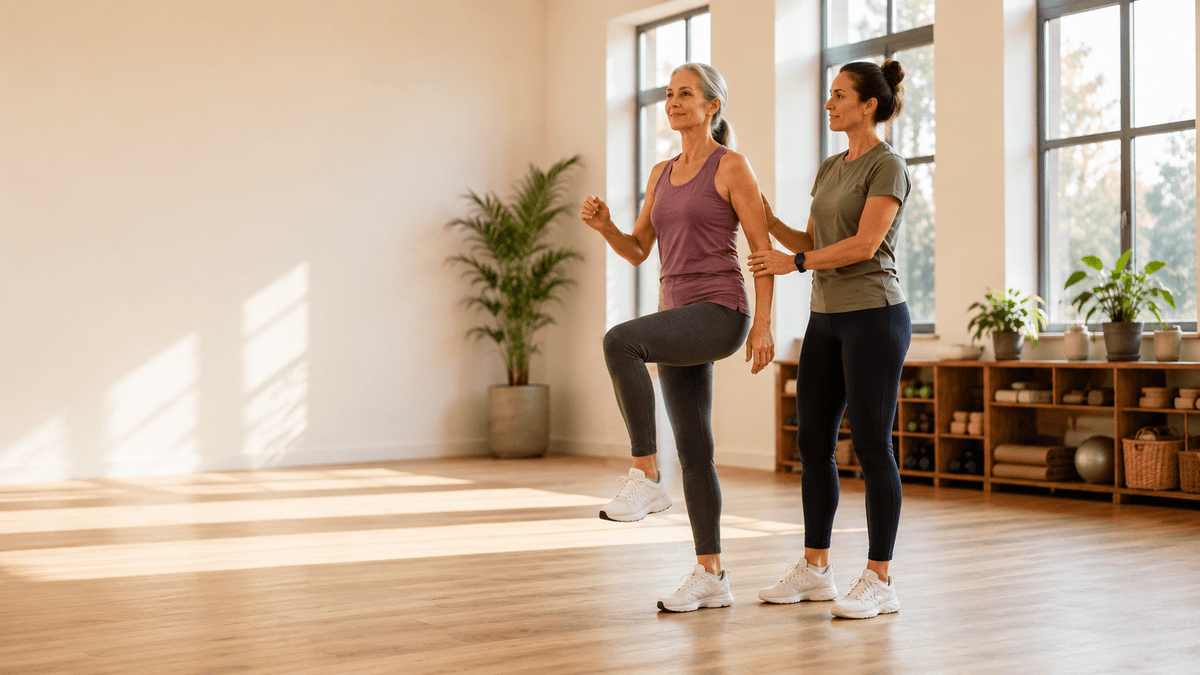
Exercise Does Not Always Create The Problem
Sometimes exercise can create an injury.
This is true.
If the load is too high, the technique is poor, the recovery is insufficient, or we are pushed beyond what our body can tolerate, injury can happen.
But very often, exercise simply exposes a problem that was already developing beneath the surface.
Imagine a wall with a crack hidden behind wallpaper.
Removing the wallpaper did not create the crack.
It revealed it.
Movement can do something similar.
A new exercise programme may reveal:
- Loss of strength
- Loss of mobility
- Poor balance
- Poor coordination
- Old injury patterns
- Poor posture habits
- Tendon weakness
- Joint irritation
- Muscle imbalances
- Fear of movement
- Excessive tension
- Poor recovery capacity
- Lack of confidence in the body
At first, this can feel like bad news.
But it can also be seen differently.
If a weakness is discovered, it can now be addressed.
If a limitation becomes visible, it can now be respected and improved.
If the body is giving feedback, we can listen and adapt.
The goal is not to panic.
The goal is to understand what the body is telling us.
The Biggest Mistake: Too Much, Too Soon
One of the most common reasons we get injured when we start exercising is simple:
We do too much, too soon.
The intention is usually good.
We feel motivated.
We want to change.
We want to recover lost fitness.
We want to become stronger.
We want results.
So we start with enthusiasm.
But motivation can move faster than biology.
The heart and lungs may respond quite quickly to exercise.
But muscles, tendons, ligaments, joints and connective tissues often need more time.
The body cannot be rushed just because the mind is ready.
Adaptation is a biological process.
Not a motivational one.
We may feel emotionally ready to train hard.
But our tissues may not yet be physically ready to tolerate that load.
This is where many problems begin.
Too much intensity.
Too much volume.
Too much frequency.
Too much complexity.
Too much repetition.
Too little recovery.
Too little preparation.
This is why one of the most important principles when beginning exercise is:
Start lower than you think you need.
Then progress gradually.
It is better to begin too gently and build consistently than to begin too aggressively and stop because of pain or injury.
Normal Discomfort Is Not The Same As Injury
When we begin exercising after a long period of inactivity, it is normal to feel some physical sensations.
The body may feel tired.
Muscles may feel worked.
There may be mild soreness one or two days later.
Movements may feel unfamiliar.
Balance may feel uncertain.
Coordination may feel clumsy.
This does not automatically mean something is wrong.
However, there is an important difference between normal adaptation and a warning sign.
Normal Adaptation May Feel Like:
- Mild muscle soreness
- General fatigue after effort
- A feeling of stiffness that improves with gentle movement
- Temporary discomfort that reduces within a short period
- Awareness of muscles that have not been used for a long time
Warning Signs May Include:
- Sharp pain
- Pain that increases during the session
- Pain that changes the way you walk or move
- Swelling
- Pain that lasts or worsens over several days
- Numbness, tingling or weakness
- Pain that repeatedly appears in the same joint or tendon
- A feeling that something is not right
Listening to the body is not weakness.
It is intelligence.
The body is always communicating.
A good programme respects that communication.
Recovery Is Part Of Training
Many of us think that improvement happens during exercise.
But the body improves when it recovers from exercise.
Exercise provides the stimulus.
Recovery creates the adaptation.
During recovery, tissues rebuild.
The nervous system learns.
Strength improves.
Coordination becomes more efficient.
Confidence develops.
But if recovery is poor, adaptation becomes more difficult.
Recovery can be affected by:
- Poor sleep
- High stress
- Poor nutrition
- Dehydration
- Too many training sessions
- Emotional overload
- Illness
- Medication effects
- Chronic inflammation
- Lack of rest days
For mature adults, this becomes especially important.
The goal is not simply to train more.
The goal is to train in a way the body can absorb.
Progress does not come from punishment.
Progress comes from the right balance between challenge and recovery.
Fear, Tension And Protective Patterns
There is another factor that is often ignored in exercise programmes:
Fear.
Many of us who return to exercise after years of inactivity carry fear in the body.
Fear of pain.
Fear of falling.
Fear of injury.
Fear of looking foolish.
Fear of not being able to keep up.
Fear of being judged.
Fear of discovering how much capacity we have lost.
When fear is present, the body often becomes protective.
Muscles tighten.
Breathing becomes shallow.
Movement becomes less fluid.
We may move with hesitation.
The nervous system becomes alert.
This protective tension can change the way we move.
And when movement becomes tense, rigid or defensive, some areas of the body may become overloaded.
This is why confidence is not just emotional.
Confidence is physical.
When we feel safe, we move differently.
When we feel guided, we move differently.
When we are not rushed, we move differently.
When we are allowed to progress at our own rhythm, we move differently.
At Empowered Ageing, this is central to the work.
We are not only training muscles.
We are rebuilding trust between us and our body.
Sometimes The Cause Is Not Only Movement
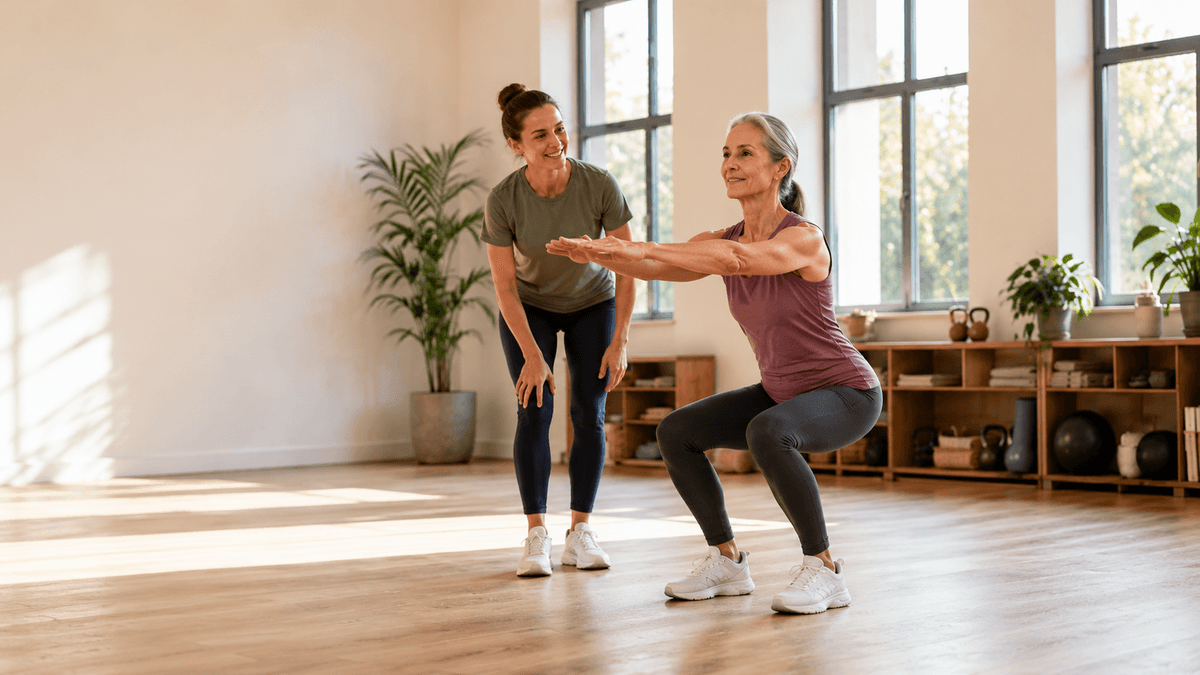
As a movement coach, my area of expertise is movement.
I observe how we move.
I assess strength, balance, coordination, mobility and confidence.
I look at how the body responds to load.
I adapt exercises according to each person's current capacity.
But sometimes pain or physical symptoms are not only caused by movement.
Sometimes the body is expressing something more complex.
Pain may be influenced by many factors, including:
Structural Factors
There may be joint degeneration, previous injuries, postural adaptations, scar tissue, tendon problems, disc issues, or long-term compensation patterns.
Inflammatory Factors
Some of us may have higher levels of inflammation, poor recovery, nutritional imbalances, sleep problems, or health conditions that affect how the body responds to exercise.
Nervous System Factors
When the nervous system is stressed, protective or sensitised, we may experience pain more easily. The body may react strongly even to movements that are not dangerous.
Emotional Factors
Stress, anxiety, grief, fear, unresolved emotional tension or long-term emotional suppression can influence the body. Many of us carry emotional history physically, through tension, breathing patterns and protective postures.
Lifestyle Factors
Too much sitting, repetitive work, poor breathing habits, lack of sunlight, poor hydration, low energy, or lack of daily movement can all contribute to physical symptoms.
Psychosomatic Factors
Sometimes the body expresses emotional, psychological or energetic stress through physical symptoms. This does not mean the pain is imaginary. The pain is real. But its origin may not be purely mechanical.
This is why movement alone is not always enough.
And this is why collaboration matters.
Why Empowered Ageing Works With Other Health Professionals
At Empowered Ageing, I do not pretend that movement solves everything.
Movement is powerful.
Movement is essential.
Movement can transform the body and our confidence.
But some of us need support from other professionals at the same time.
That is why I work in connection with trusted professionals such as Vera Dias, Joel, Carlos Chan and Brigitte Spurgeon.
Each professional brings a different perspective.
Depending on the person, support may involve physiotherapy, psychosomatic and bioenergetic work, biomagnetism, Traditional East Asian Medicine, nutrition, gut health, recovery strategies, inflammation support, or other complementary approaches.
The purpose is not to replace medical care.
The purpose is to see the person more completely.
Sometimes I can adapt the movement programme, but the body also needs help reducing tension.
Sometimes strength is needed, but inflammation must also be addressed.
Sometimes mobility is needed, but emotional tension is influencing the body.
Sometimes confidence is needed, but the nervous system first needs to feel safe.
This is why a mature approach to health cannot be one-dimensional.
The human body is not only mechanical.
It is physical, emotional, neurological, energetic, social and deeply personal.
Why Empowered Ageing Often Begins With 1:1 Coaching
Empowered Ageing offers small groups and group classes.
Group classes can be wonderful.
They provide community, motivation, rhythm, joy and shared progress.
But group classes are not always the right starting point for everyone.
This is one of the biggest lessons I have learned through experience.
In the early years of Empowered Ageing, I saw that some people wanted to join group classes but were not physically ready.
They arrived with too many limitations.
Too much pain.
Too much fear.
Too little strength.
Too little mobility.
Too many unknowns.
And sometimes, despite good intentions, the group environment became too much.
We can feel overwhelmed.
We can push too hard.
We can compare ourselves with others.
We can feel embarrassed.
We can get injured.
Or we can leave with the belief:
"Exercise is not for me."
That is exactly what I want to prevent.
This is why, today, Empowered Ageing has a much more careful approach.
Our main service is private 1:1 movement coaching because the majority of people who seek our help arrive with physical limitations that need individual attention.
Before someone joins a group class, I want to understand their body.
I want to see how they move.
I want to understand their limitations.
I want to know what creates fear.
I want to observe balance, strength, coordination, mobility, control and confidence.
If I believe someone is not ready for a group class, I will not allow them to join yet.
Not because I want to exclude them.
But because I want to protect them.
Because the wrong starting point can create injury, fear and discouragement.
The right starting point can create trust, progress and hope.
Private Coaching Is Not Forever
Starting with private sessions does not mean we will always need private sessions.
Sometimes we only need a few private sessions.
Sometimes we need one month.
Sometimes we need several months.
It depends on each person.
The purpose is not dependency.
The purpose is preparation.
Private coaching allows us to:
- Assess the real starting point
- Identify hidden weaknesses
- Reduce fear
- Improve basic strength
- Improve mobility
- Improve balance
- Teach safe technique
- Build confidence
- Adapt exercises to the body
- Prepare for group classes when appropriate
This pathway helps us succeed.
It also protects the quality of the group.
A group class works best when people are prepared enough to participate safely, follow the rhythm, respect their limits and enjoy the process.
The goal is not to put everyone in the same class as quickly as possible.
The goal is to guide each person into the right environment at the right time.
Exercise Should Not Become Another Trauma
Many of us already carry negative experiences with exercise.
We were pushed too hard.
We felt judged.
We felt embarrassed.
We were told to ignore pain.
We compared ourselves with others.
We felt like failures.
We got injured.
We stopped.
Then, years later, we try again with fear.
At Empowered Ageing, I believe exercise should not become another traumatic experience.
Exercise should become the moment where we begin to trust our body again.
This requires patience.
It requires listening.
It requires progression.
It requires humility from the coach.
It requires honesty from the client.
It requires a different belief system.
Not:
"No pain, no gain."
But:
"The right challenge, at the right time, creates progress."
Not:
"I must keep up with everyone else."
But:
"My body has its own history, rhythm and needs."
Not:
"If I feel pain, I have failed."
But:
"If my body gives me a signal, I can learn from it and adapt."
Not:
"I am too old to improve."
But:
"My body can still adapt when I give it the right conditions."
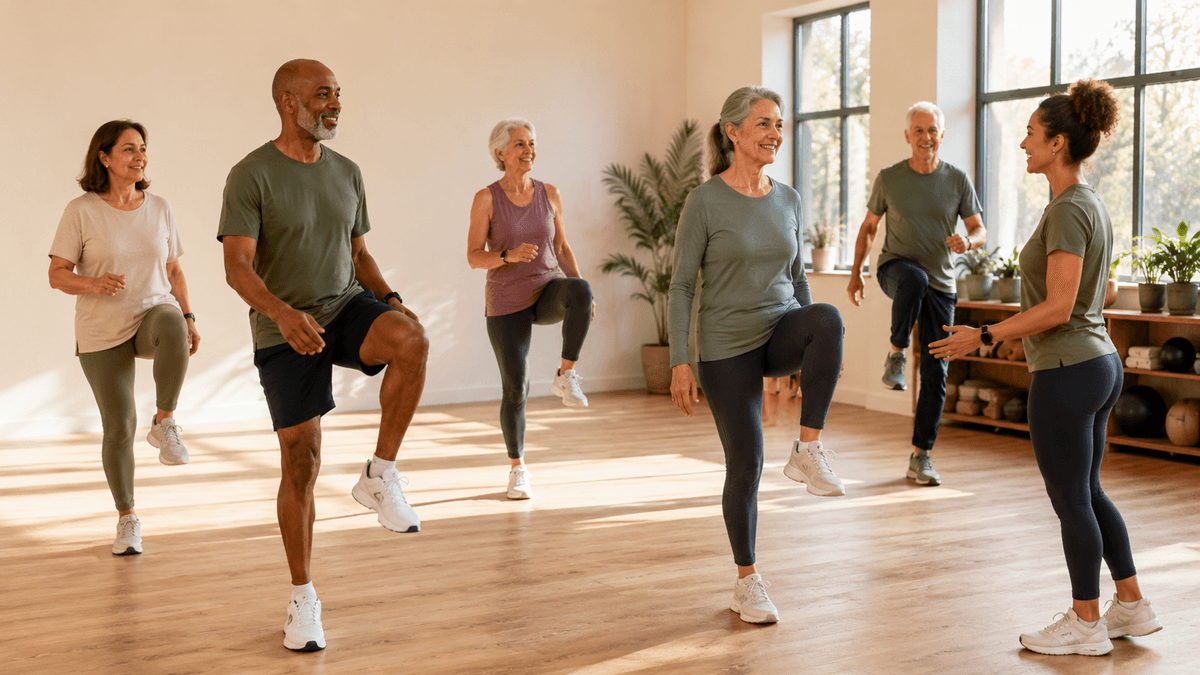
The Belief System That Helps Us Progress
To begin exercising safely, we often need more than a programme.
We need a new relationship with our body.
Here are some beliefs that can help:
1. Start Where We Are, Not Where We Think We Should Be
Many of us start from the image of who we used to be.
Or who we want to become.
But the body can only begin from where it is today.
Respecting our current starting point is not weakness.
It is wisdom.
2. Progress Gradually
The body likes consistency.
Small, repeated, well-tolerated steps are usually safer and more effective than occasional intense efforts.
3. Listen Without Fear
Every sensation does not mean danger.
But every repeated signal deserves attention.
The skill is to listen calmly and respond intelligently.
4. Do Not Compare Ourselves With Others
Every body has a different history.
Different injuries.
Different habits.
Different fears.
Different strengths.
Different recovery capacity.
Comparison often creates pressure.
Awareness creates progress.
5. Recovery Matters
Rest is not laziness.
Recovery is part of the training process.
6. Pain Is Information
Pain is not always a reason to stop forever.
But it is always a reason to pay attention.
7. The Goal Is Long-Term Capacity
The goal is not to prove how hard we can train today.
The goal is to become more capable, confident and independent for the years ahead.
How To Begin More Safely
If we are starting or returning to exercise after a long period of inactivity, these practical principles can help.
Begin Gently
Start with exercises that feel manageable.
The first goal is not exhaustion.
The first goal is to create a positive conversation with the body.
Increase One Thing At A Time
Do not increase intensity, duration, frequency and complexity all at once.
Change one variable slowly.
Then observe how the body responds.
Respect Pain Signals
If pain appears repeatedly, increases, or changes the quality of movement, adapt.
Do not ignore it.
Prioritise Technique
Good movement quality matters.
Especially when the body is fragile, stiff or fearful.
Build Strength
Strength is essential for healthy ageing.
But strength must be built progressively.
Include Balance And Coordination
Many injuries and falls are not only about weakness.
They are also about poor balance, slow reactions and lack of coordination.
Give The Body Time
Tendons, joints and connective tissues often need time to adapt.
Consistency matters more than intensity.
Seek Guidance When Needed
If we have pain, previous injuries, balance issues, fear of falling, medical conditions or long-term inactivity, professional guidance can make the process safer and more effective.
When To Seek Medical Advice
This article is educational and does not replace medical advice.
If we experience severe pain, unexplained swelling, chest pain, dizziness, shortness of breath, numbness, tingling, sudden weakness, pain after a fall, or symptoms that worsen or do not improve, we should seek appropriate medical support.
Exercise should be adapted to the person.
And when needed, it should be coordinated with healthcare professionals.
The Good News
If we have been injured when starting exercise, it does not mean exercise is not for us.
It may mean the starting point was wrong.
It may mean the progression was too fast.
It may mean the body needed more preparation.
It may mean there were hidden weaknesses.
It may mean fear and tension were influencing movement.
It may mean we needed a more individualised approach.
It may mean we needed support from more than one professional.
But it does not mean there is no hope.
The body is adaptable.
At any age, we can improve strength, balance, mobility, coordination and confidence when the process is appropriate.
The key is not to force the body.
The key is to work with it.
To listen.
To observe.
To adapt.
To progress gradually.
To respect the whole person.
Sometimes the pain that appears when we start moving is not a sign that we should stop.
Sometimes it is the body saying:
"Please pay attention to me differently."
And when we do, movement can become one of the most powerful ways to rebuild not only physical capacity, but also hope.
Final Message
At Empowered Ageing, we do not see exercise as a test of toughness.
We see movement as a process of education, awareness and transformation.
Our goal is not to push people into programmes they are not ready for.
Our goal is to help each person find the safest and most effective pathway into movement.
For some people, that pathway begins in a group.
For many others, it begins with private 1:1 coaching.
Not because they are weak.
But because their body deserves to be understood before it is challenged.
When the starting point is right, movement becomes safer.
When movement becomes safer, confidence grows.
When confidence grows, progress becomes possible.
And when progress becomes possible, we begin to experience something deeply empowering:
"My body can still change."
"My body can still learn."
"My body can still become stronger."
That is the heart of Empowered Ageing.
Written by Arlindo Martins
Founder of Empowered Ageing
Movement Coach for Healthy Ageing, Autonomy and Vitality
Call To Action
If you have tried to exercise before and ended up in pain, injured or discouraged, it may not mean exercise is wrong for you.
It may simply mean you need a more careful, individualised and progressive starting point.
At Empowered Ageing, we help mature adults rebuild strength, mobility, balance and confidence through private movement coaching and carefully selected small group classes.
Book your free Movement & Health Review Call and discover the safest starting point for your body.
Recommended Reading And Scientific References
- World Health Organization. Guidelines on Physical Activity and Sedentary Behaviour. 2020.
- Chodzko-Zajko WJ, Proctor DN, Fiatarone Singh MA, et al. American College of Sports Medicine Position Stand: Exercise and Physical Activity for Older Adults. Medicine & Science in Sports & Exercise. 2009.
- Garber CE, Blissmer B, Deschenes MR, et al. Quantity and Quality of Exercise for Developing and Maintaining Cardiorespiratory, Musculoskeletal, and Neuromotor Fitness in Apparently Healthy Adults. Medicine & Science in Sports & Exercise. 2011.
- Centers for Disease Control and Prevention. Physical Activity Guidelines for Older Adults.
- National Institute on Aging. Exercise and Physical Activity Guidance for Older Adults.
- Soligard T, Schwellnus M, Alonso JM, et al. How Much Is Too Much? International Olympic Committee Consensus Statement on Load in Sport and Risk of Injury. British Journal of Sports Medicine. 2016.
- Booth J, Moseley GL, Schiltenwolf M, Cashin A, Davies M, Hübscher M. Exercise for Chronic Musculoskeletal Pain: A Biopsychosocial Approach. Musculoskeletal Care. 2017.
- Pomarensky M, La Touche R, et al. Management of Chronic Musculoskeletal Pain Through a Biopsychosocial Lens. 2021.
- Butler DS and Moseley GL. Explain Pain. Noigroup Publications.
- O’Sullivan P, Caneiro JP and colleagues. Research and clinical education on beliefs, pain, movement and person-centred musculoskeletal care.