

The Take-Off Phase: Why the Beginning Feels So Hard
For many people who are not used to regular physical activity, the first six months of training are the most challenging phase of the entire journey.
This is not just physical.
It is, above all, a mental and emotional battle.
Understanding what is happening in your body and mind during this period can be the difference between giving up… or transforming your life.
Your Body Is Trying to Save Energy

As we age, the body naturally becomes more focused on energy conservation.
From an evolutionary perspective, this makes perfect sense. For thousands of years, survival depended on saving energy whenever possible.
So when someone who has been inactive starts moving more, the body resists.
The brain interprets effort as unnecessary energy expenditure and tries to protect you by creating:
- Fatigue
- Lack of motivation
- Low enthusiasm
- Endless “logical” excuses
You may recognise thoughts like:
- “The weather isn’t great today.”
- “I didn’t sleep well.”
- “My back feels a bit sore.”
- “I’ll start tomorrow.”
- “I’m too busy today.”
Most of the time, these are not real limitations.
They are simply the mind trying to avoid effort.
The Brain Seeks Immediate Pleasure

Another important factor is that the human brain is wired for immediate reward.
Neuroscience shows that dopamine plays a key role in motivation. Activities that provide instant gratification (like scrolling on your phone or watching TV) activate this system quickly.
But movement is different.
At the beginning, physical activity often brings:
- Discomfort
- Effort
- Breathlessness
- Lack of coordination
So the brain labels it as something to avoid.
Only later — with consistency — does the body start releasing more endorphins, and movement becomes: energising, enjoyable, and even addictive in a positive way.
The Airplane Metaphor: Why It Gets Easier
Just like an airplane…
Most of the fuel is used during take-off and ascent.
Once the plane reaches cruising altitude, it flies with much less effort.
The same happens with your body.
At the beginning:
Muscles are not conditioned
- The cardiovascular system is inefficient
- Movement patterns are unfamiliar
- Coordination is low
- Everything feels harder.
But after a few months:
Movement becomes smoother
- Energy levels increase
- Confidence improves
- It’s like reaching your cruising altitude in life.
The Butterfly Story: Why Struggle Is Necessary
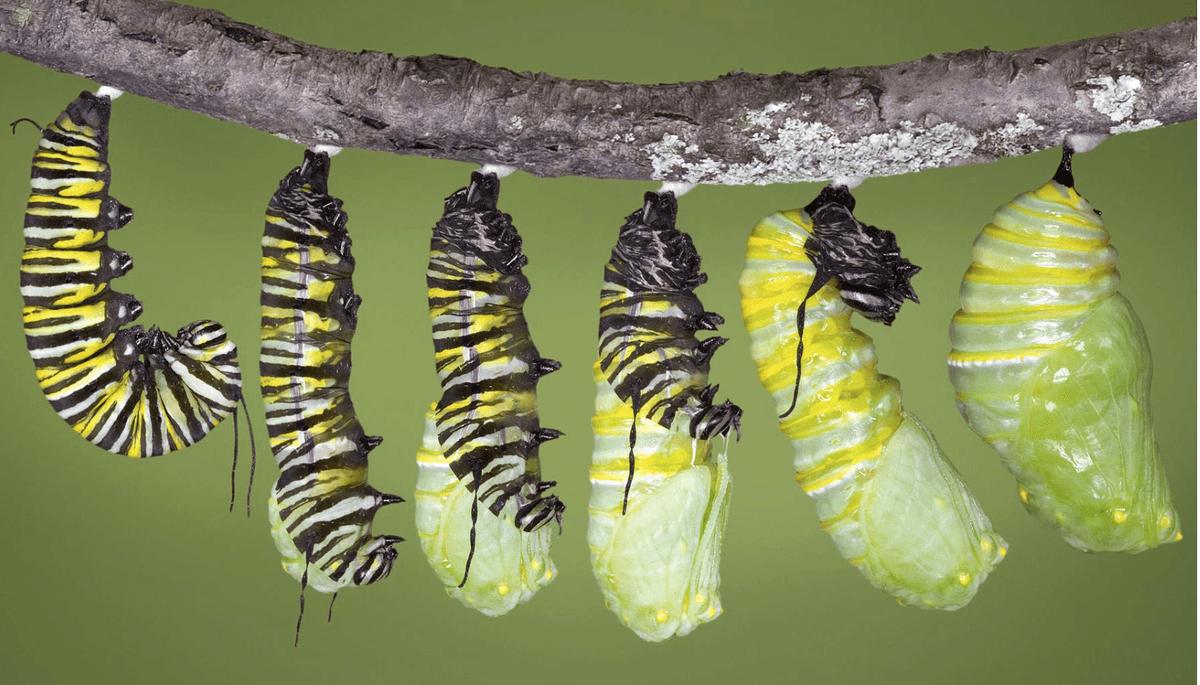
There is a powerful story that illustrates this.
A man saw a butterfly struggling to emerge from its cocoon.
Wanting to help, he carefully opened it.
The butterfly came out easily.
But its wings were weak.
It never flew.
What the man didn’t know is that the struggle is essential.
That effort pushes fluid into the wings, allowing them to develop strength.
Without the struggle, there is no flight.
The same applies to us.
Without effort:
- Strength declines
- Mobility decreases
- Balance deteriorates
- Independence is lost
Avoiding effort may feel easier today…
but it creates limitation tomorrow.
Small Wins Create Motivation
One of the most powerful strategies during the first months is: creating small, consistent wins.
When training is adapted to your level, you begin to feel:
“I did something today I couldn’t do before.”
- “I feel more stable.”
- “I am improving.”
- “I am capable.”
- These small victories are critical.
They activate motivation, confidence, and a sense of progress.
The Importance of Guidance and Community
Having the right support makes a huge difference.

A good coach or program should:
Adapt exercises to your level
- Ensure safety
- Provide encouragement
- Create a positive and inspiring environment
- Science consistently shows that social support is one of the strongest predictors of long-term adherence to physical activity.
You are far more likely to continue when you feel:
Seen
- Supported
- Encouraged
The Most Important Element: Purpose
But above all…
You need a reason.

"Why am I doing this?"
If you don’t have a clear answer, quitting becomes easy.
Your purpose might be:
Living with more energy
- Staying independent
- Playing with your grandchildren
- Travelling freely
- Exploring nature
- Ageing with vitality and dignity
- Without purpose, motivation fades.
With purpose, you persist.
(You can explore this further in our dedicated article on discovering your vision/purpose.)
Transformation Starts with One Step
The first months are hard.
That is normal.
But those who go through this phase discover something powerful: the human body is incredibly adaptable.
More strength.
More mobility.
More confidence.
More life.
Just like the airplane that reaches altitude…
Just like the butterfly that finally flies…
There comes a moment when movement is no longer effort.
It becomes who you are.
A Personal Invitation
At Empowered Ageing, our mission is to support you through this most important phase.
With structured, conscious, and progressive movement, we help people:
Rebuild strength and mobility
- Regain confidence in their bodies
- Rediscover joy in movement
- Create long-term sustainable habits
- If you feel that now is the time to begin — or begin again —
this may be your moment.
Because the life you want may be just a few movements away.
Call to Action
If this message resonates with you:
Send us a message
- Book an introductory session
- Or simply come and experience a class
- Let us support your take-off.
Written by Arlindo Martins
Founder of Empowered Ageing
Helping people move better, feel stronger, and live with vitality.