From time to time, I hear something from clients that always makes me reflect.
“I cannot train this week because I have family visiting.”
“I will stop for two weeks because friends are staying with me.”
“I am going away on holiday, so I will restart when I come back.”
At first, this may sound reasonable. Life changes. Routines are interrupted. People visit. We travel. We spend more time with family and friends.
But then I ask myself a simple question:
When people have visitors, do they stop eating?
When they go on holiday, do they forget to sleep?
Do they stop taking a shower?
Do they stop brushing their teeth?
Of course not.
These routines continue because they are seen as normal, necessary and non-negotiable.
But movement is often the first thing to disappear.
And this reveals something important.
The problem is not the visit
The real problem is not that family or friends come to visit.
The real problem is that physical health is often treated as optional.
Something we do when life is organised.
Something we do when we have time.
Something we do when nothing else is happening.
But our body does not stop needing movement just because life becomes busy.
Our joints still need mobility.
Our muscles still need strength.
Our balance still needs stimulation.
Our nervous system still needs regulation.
Our energy still depends on how well we care for the body.
Movement is not decoration in our life.
It is one of the foundations that allows us to enjoy life with more vitality, confidence and independence.
The deeper question is not “What should I do?”
At Empowered Ageing, we often say that the most important question is not only:
“What exercises should I do?”
The deeper question is:
“Why do I move?”
Because when movement has no meaning, it is very easy to abandon it.
But when movement is connected to something deeper, it becomes part of who we are.
We move because we want to stay independent.
We move because we want to have energy for our family.
We move because we want to be useful.
We move because we want to keep participating in life.
We move because our body is our home.
This is the difference between external motivation and internal motivation.
External motivation depends on mood, weather, time, encouragement or convenience.
Internal motivation comes from meaning.
It comes from understanding that movement is not a punishment, not a duty, and not just a way to burn calories.
Movement is a way to protect our future.

We do not stop training because life changes
This is an important shift in mindset:
We do not interrupt movement because we have visitors.
We adapt movement to life.
We do not stop caring for the body because we travel.
We find a simpler way to continue.
We do not wait for the perfect routine.
We create a flexible routine.
This is one of the biggest differences between people who stay active long term and people who constantly stop and restart.
Consistency does not mean perfection.
Consistency means finding a way.
Practical ways to keep moving when you have visitors
If family or friends are visiting, movement does not need to disappear.
Here are simple ways to continue:
1. Invite them to join you
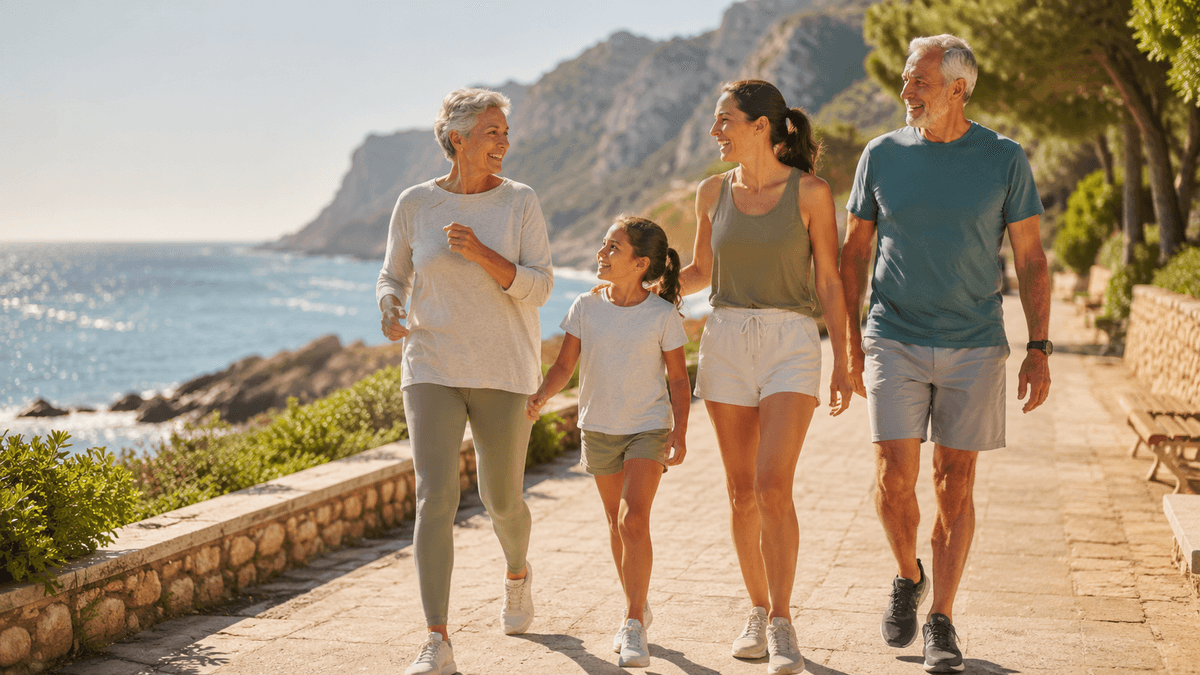
Bring your visitors to a class, a walk, a gentle mobility session or a short home practice.
Very often, people are curious.
They may even enjoy seeing how you take care of yourself.
And without realising it, you may inspire them.
2. Train while they rest
Visitors do not need entertainment every minute of the day.
While they read, rest, have breakfast slowly or relax, you can do 20 or 30 minutes of movement.
This does not take you away from them.
It helps you return with more energy.
3. Turn movement into a shared activity
Go for a walk together.
Visit a park.
Walk by the beach.
Explore the town on foot.
Play with the grandchildren.
Sit on the floor and get up again.
Use daily life as movement.
Movement does not always need to look like formal training.
4. Shorten the session, but do not cancel the habit
If your normal session is one hour, do 30 minutes.
If you cannot do 30 minutes, do 15.
If you cannot do everything, do the most important things.
The goal is not always to train hard.
Sometimes the goal is simply to keep the relationship with your body alive.
5. Protect your training time with kindness
You can say:
“I will do my movement practice for 30 minutes, and then I am fully available.”
This is not selfish.
This is healthy.
Taking care of your body is not a rejection of others.
It is a way of being more present, more energised and more alive with them.
What about holidays and travelling?
The same principle applies.
When you travel, you may not have your usual studio, class or equipment.
But you still have your body.
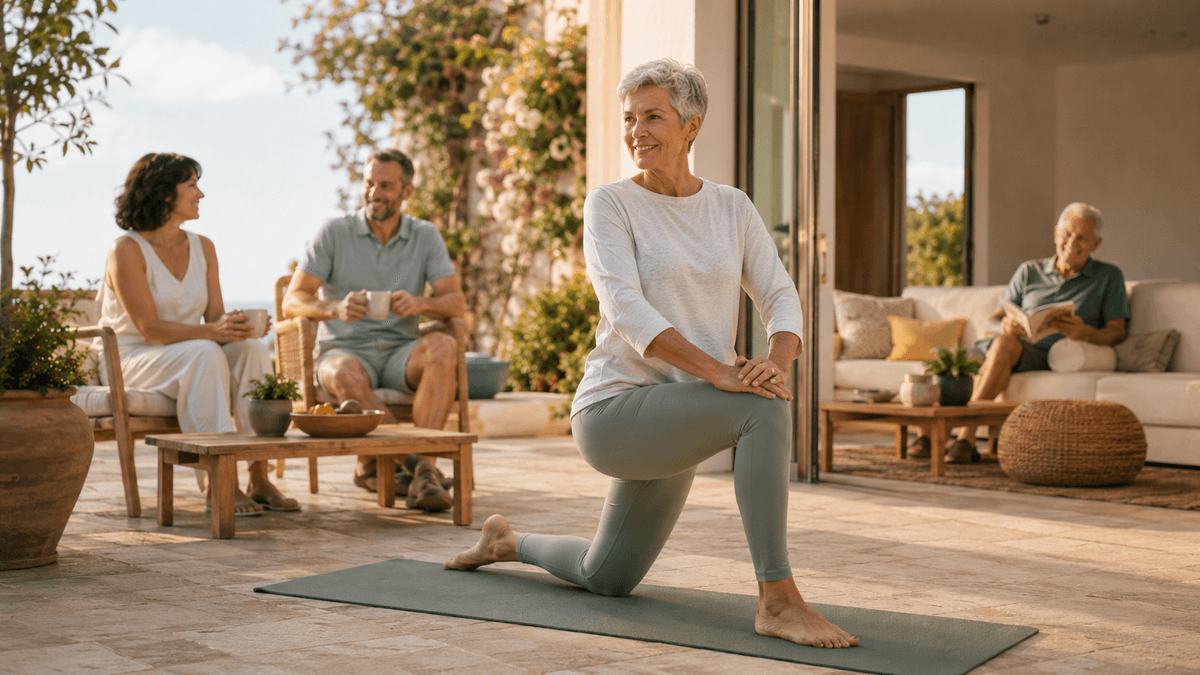
You can walk.
You can stretch.
You can practise balance.
You can use stairs.
You can get up and down from the floor.
You can do simple strength exercises in your room.
You can move in the morning before the day begins.
You can move for 20 to 30 minutes every day.
It is better to do 20 to 30 minutes every day throughout the year than to train intensely for a few months and stop every time life changes.
The body responds to regular messages.
When we move regularly, we tell the body:
“I still need strength.”
“I still need balance.”
“I still need coordination.”
“I still need energy.”
“I still need to participate in life.”
Your example matters
There is another powerful point.
When family and friends see you taking care of yourself, you become a reference.
You show that ageing does not mean giving up.
You show that health is not something we only think about when there is a problem.
You show that movement is part of a meaningful life.
Sometimes the best way to influence others is not by giving advice.
It is by living the example.
A final question
The next time you think about stopping your movement routine because life is busy, because people are visiting, or because you are going away, ask yourself:
“Why is movement the first thing I remove?”
And then ask a better question:
“How can I adapt my movement to this moment of life?”
Because your health should not go on holiday.
Your body is with you every day.
And the more you care for it, the more freedom, energy and presence you will have to enjoy the people and moments you love.
At Empowered Ageing, we believe movement is not something separate from life.
Movement is what helps us live life better.
To explore this idea more deeply, I invite you to read other articles on this blog about motivation, purpose, consistency and the importance of connecting movement with a deeper personal meaning.
Written by Arlindo Martins